

400,000+ business leaders (and teams at IBM, AWS & Zapier) start their day with The AI Report. 5 minutes. Plain English. No hype.
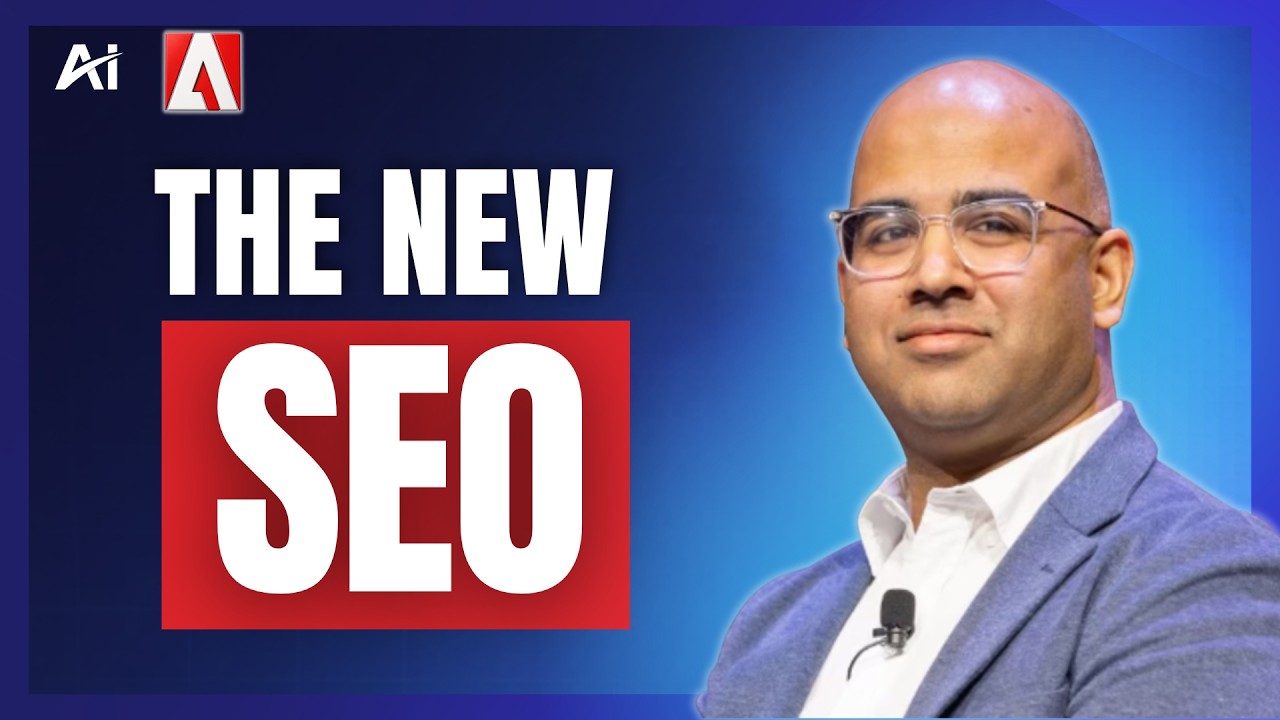
Vivek Pandya, Adobe: AI Traffic to Retail Is Up 393%
Adobe's Vivek Pandya on why AI traffic to retail sites is up 393%, now beats other channels by 48% on conversion, and how brands get seen in AI search.

Watch on YouTube · Listen on Spotify or Apple Podcasts
Vivek Pandya, director of Adobe Digital Insights, says generative AI traffic to retail sites is up about 393% year on year and now outperforms all other marketing channels on conversion by 48%, which makes generative engine optimization an opportunity he compares to social media ten years ago and search engine optimization twenty years ago. He tells host Liam Lawson why about a third of content is not machine readable, how AI agents check reviews, Reddit and social media before recommending a brand, and what the data alone cannot show.
Key takeaways
- AI traffic to retail is up about 393%. Generative AI traffic from LLM platforms to retail sites is up about 393% year on year, the starkest trend Adobe Digital Insights is seeing. (03:57)
- From underperforming to outperforming in a year. A year ago, this traffic converted about 38% worse than other marketing channels. Now it outperforms all other marketing channels by 48%. (03:57)
- Better revenue per visit and bounce rate. Revenue per visit from AI traffic is 37% better than other channels, and the bounce rate is 32% better, a tailwind on a metric brands invest heavily to improve. (06:08)
- About 40% of US consumers use AI to shop. In roughly two years, about 40% of consumers in the US have used AI at some point in their buying journey. (10:49)
- A third of content is not machine readable. Adobe's free LLMO tool gives pages a machine readability score and a missing word percentage score. In aggregate, about a third of content is not machine readable. (08:10)
- AI agents triangulate before they recommend. Agents check whether a brand is as good as its site claims by looking at review sites, Reddit and social media. Brands that do well on multiple fronts get recommended with confidence. (08:10)
- AI's influence spills into other channels. People also use AI for shopping lists and research, then arrive through organic search, paid search and social, already pre-qualified. (10:49)
What does Adobe Digital Insights do?
Adobe Digital Insights looks across Adobe's data products to give customers and the market aggregate insights and guidance, says Vivek Pandya, who leads the team as lead insights analyst and director. Its calling card is online shopping and retail spending, such as what Black Friday spending looks like, and the data spans a trillion visits.
The data comes from customers using Adobe products such as Adobe Analytics, LLM Optimizer, CJA and AJO. Vivek says customers mostly want to know how the broader economy and the digital economy look, and how trends like generative AI affect them. His team synthesizes that into guidance: what to be mindful of, how a company sits relative to its industry, and how other industries could affect it. The team covers the US, has digital economy work in the UK and also looks at global trends.
How fast is AI traffic to retail sites growing?
Generative AI traffic from LLM platforms to retail sites is up about 393% year on year, says Vivek Pandya, and about 40% of consumers in the US use AI in some part of their buying journey. He links it to cost of living pressure and a desire for speed and efficiency: shoppers want an almost Netflix-type experience, with a synthesized recommendation, a view of where the value is and the peace of mind that it has been vetted and triangulated.
The bigger shift is in purchasing. This traffic has been growing for two years. A year ago its conversion rate was still underperforming other marketing channels by about 38%. Now it is overperforming all other marketing channels by 48%, as shoppers grow confident that the LLM agent has synthesized the information and put forward the right recommendation.
Why are shoppers now buying through AI?
Comfort is a huge part of it, says Vivek Pandya: people are getting comfortable with the experience on AI platforms and with passing through to retail, travel or financial sites. The models have also gotten better at understanding the context a user brings to the answer engine.
Adobe looks for validation beyond conversion. Vivek says revenue per visit from this traffic is 37% better than other channels and the bounce rate is 32% better. Brands invest heavily to keep people on their sites, so he calls that a 32% tailwind, and a reason for brands to make sure they get the visibility rather than someone else.
How can a business get recommended by AI search?
Brands should treat generative engine optimization as a rare opportunity and lean in early, says Vivek Pandya. About ten years ago the race was to build followings on social media, and twenty years ago it was search engine optimization, organic listings and rankings. Now it is generative engine optimization, and improving visibility has two main parts.
The first is machine readability. Adobe's LLMO tool, which Vivek says is free to download from the store, gives a page a machine readability score and a missing word percentage score. Looking across many retail pages, about a third of content is not machine readable. His advice is to structure and organize content clearly across every page type, including home pages, store locator pages, returns pages and FAQ pages.
The second is triangulation. AI agents look for validation that a brand is as good as its site claims, checking review sites and the conversation on Reddit and social media. If a brand does well on multiple fronts, the agent feels confident serving it up as a strong recommendation.
What does the data not show about AI shopping?
The AI influence is broader than the click-through traffic, says Vivek Pandya. Adobe also runs survey research alongside its data, and it shows people using AI to put together shopping lists or as a reference tool, then arriving through other channels.
That means organic search, paid search and social can all benefit when a shopper has an AI agent acting as a personal shopping assistant. Vivek sees an opportunity for brands to think about the pre-qualification that has already happened and the experience they offer once shoppers reach their sites and apps. An area he would like to study more is the lift from an on-site concierge that guides people through buying travel tickets, concert tickets or jewelry.
How does Vivek Pandya decide when to trust AI?
Vivek Pandya checks answers against multiple AI models, and runs a Google search, to get a consensus view before he trusts a result. He says Adobe gives users flexibility over which models they use for creativity tools or data analysis, which he believes gives people more peace of mind to use AI across their activities.
Why does the UK spend more online than the US?
In the UK, one of every four pounds is spent online, compared with about one out of every five dollars in the US, says Vivek Pandya. He puts the gap down to structure more than culture: the velocity of spending across the UK, how comfortable shoppers are, and different shipping modalities, compared with large rural areas of the US where broadband, wireless support and connectivity make online buying harder. The size of the countries and the types and scale of products bought also play a part.
He also points to the other side of the numbers: three out of every four pounds is still spent in store in the UK, and four out of every five dollars through traditional channels in the US. The unlock, in his view, is in hybrid experiences that converge online and in-store spending.
How does AI adoption in San Francisco compare with elsewhere?
San Francisco has its own pace with AI, says Vivek Pandya, who lives there. Talking with people across organizations, he sees wide variation: some ask whether you have an arsenal of agents and are running tons of optimizations, while others are still working through data challenges and strategy.
Family in London and the Northeast give him a different view. Outside San Francisco, he finds more people using AI on a personal level and finding it interesting, while their organizations still have room to drive adoption.
Why does Vivek Pandya do what he does?
Vivek Pandya says he does what he does for data storytelling: stories in the data can change strategy, change thinking and activate people. He tailors them to the audience, from marketing channels for enterprise customers to whether creative professionals trust and feel satisfied with AI-generated content, and to moments such as the World Cup and what it means for online spending and hotel bookings.
He started out as a pure marketer, at a time when people questioned whether marketing did anything. The digital marketing revolution made it possible to attribute marketing's impact to business goals, revenue and profits, which led him to become a data scientist. He recalls an argument over which creative to use that ended once he showcased the metrics, and describes data as a leveler that can move an enterprise forward and convince people of a case.
In his words
"Now a year on, this type of traffic is overperforming all other marketing channels by 48%." (03:57)
"So now we have a massive generative engine optimization opportunity." (08:10)
"About a third of content is not machine readable right now." (08:10)
"Are you as great as you say on your site? They're looking at cross-review sites." (08:10)
"I think stories have a really powerful opportunity to change strategy, change thinking, activate people" (20:09)
Chapters
00:00 Intro
00:21 What is Adobe Digital Insights and what does Vivek do
01:12 A trillion data points
02:18 How the data is processed and what enterprises are asking for
03:47 The biggest AI trends right now
06:04 What changed in consumer behaviour
07:35 How to set your business up for AI search success
10:24 What the data does not tell you
12:53 Where does Vivek's trust in AI start and finish
14:03 What speaks to Vivek about his role
15:19 How the job influences how he thinks outside of work
17:53 Living in San Francisco and what you learn being close to the technology
19:47 Why do you do what you do
About the guest
Vivek Pandya is the lead insights analyst and director of Adobe Digital Insights, the team that looks across Adobe's data products to provide aggregate insights, thought leadership and guidance to customers and the market. The team is known for its online shopping and retail spending data. He started out as a marketer in digital marketing before becoming a data scientist, and lives in San Francisco. Vivek on LinkedIn
About the host
Liam Lawson is CEO of The AI Report and host of The AI Report Podcast. Meet the team
Full transcript
Edited for readability. Quotes above are word for word from the recording.
Liam Lawson (00:12): Okay, Vivek, welcome.
Vivek Pandya (00:15): Thanks very much. Great to be talking with you.
Liam Lawson (00:17): Tell me a little bit more about yourself, what you're doing and why you're here.
Vivek Pandya (00:21): I head up the Adobe Digital Insights team. I'm the lead insights analyst and director of that team, which looks across all of Adobe's data products. We provide aggregate insights and thought leadership to our customers, and we provide guidance to the markets. What we have is a really dynamic view of how data and time is shifting and how that impacts different metrics. When we look at generative AI trends, we've seen a lot of dynamism that's been exciting to see.
Our calling card is online shopping and retail spending, so what Black Friday spending looks like. So many of these different sectors and industries are now being impacted by these broader generative AI trends, and we're able to see and unlock that in the data.
Liam Lawson (01:12): I've seen before that it was across a trillion different data points.
Vivek Pandya (01:16): That's right, a trillion visits. It's massive.
Liam Lawson (01:19): How do you feel sitting atop that? That must be a lot of responsibility. You're seeing this every day, you're informing decisions, you know how decisions are made. How does that feel?
Vivek Pandya (01:29): It feels exciting, from the standpoint that we're really trying to give our customers a view of not just how they fit within their relative metrics, however they're doing over time, but how they stand within their industry, and make them aware of these global trends that can impact prices, levels of spending and buyer journeys. All of that happens very quickly. So we really make sure that our systems are capable of ingesting and absorbing that data, and then defining and showcasing the trends effectively. Getting all that right is a huge responsibility, but we feel very privileged to look across this data set and then provide guidance to the customers.
Liam Lawson (02:18): I'm really curious, from a first principles basis, about how this works. When we're talking about ingesting this data and processing it, talk me through exactly how that happens.
Vivek Pandya (02:29): What we're able to do is look across our customer base and see what products they're leveraging. Many use Adobe Analytics. We have customers using LLM Optimizer, CJA, AJO. So there's a lot of data to tap into. The question becomes, what is really important? What are our customers looking to see? One of the things we've found is that the main topics they're thinking about are how the broader economy is looking, how the digital economy looks, and how trends like generative AI are impacting that.
So for us, it's about synthesizing that and seeing what trends are emerging in a really stark, significant way, so we can speak to them and say: this is what you've got to be mindful of, this is what's happening broadly, this is how you sit relative to the broader industry, and this is how other industries could also impact yours. We're able to do that for the US, we have the digital economy work in the UK, and then we're tapping into these trends for these companies, but also how it's looking globally and what the implications are.
Liam Lawson (03:47): There's a lot of talk about trends. For me, I run a newsletter and a podcast, and we're talking about everything at the moment. What are the big trends as it stands?
Vivek Pandya (03:57): I think the starkest trend we're seeing is this explosive growth of generative AI traffic from these LLM platforms to retail sites. That is up about 393% year on year. It's really indicative of the fact that about 40% of consumers and users in America are using AI through some portion of their buying journey. They're leaning on the platforms at a time when there's a lot to deal with: cost of living, and how they find what they want to buy. They're looking for speed and efficiency. In some ways they're looking for that almost Netflix-type experience, where you turn on streaming, you know what you want and it's going. That's the opportunity for places like retail, where consumers want a really synthesized recommendation around what they should buy, where the value is, and the peace of mind that it's been vetted and triangulated across the board.
What we've seen in a very short period of time is that this traffic has been growing over two years. A year ago, the conversion rate, the willingness to purchase on site, was underperforming other marketing channels. It was growing, but still underperforming them by about 38%. Now, a year on, this type of traffic is overperforming all other marketing channels by 48%. So you have a massive shift in the consumer and their willingness to purchase through this journey: discovering what they need through generative AI platforms, feeling confident that the LLM agent has synthesized and triangulated all the information out there, and then put forward the recommendation. That has huge implications for all these brands.
Liam Lawson (06:04): What changed in the consumer attitude? Did we just get comfortable?
Vivek Pandya (06:08): Comfortability is a huge part of it. We're seeing that these users are getting comfortable not just with the experience on the platforms, but with passing on to retail sites, travel sites or financial sites. The models have also gotten better and are doing a really good job of understanding the context the user is bringing to the answer engine. So there's a lot of opportunity to see how this scales in the years ahead, given what we've seen in the past two years.
What's also exciting for us is that we always look for more validation. We see conversion improving, but we're also finding that a key metric, revenue per visit, is up 37% in terms of overperformance compared to other channels. That's pretty stark and a massive opportunity. The bounce rate is 32% better. All these brands and enterprises are investing so much to improve their bounce rates and make sure people stay on their site, and this type of traffic is giving them a 32% tailwind. That has huge implications for how brands can capitalize on this traffic, make sure they're getting the visibility rather than someone else, and drive more impact through generative AI.
Liam Lawson (07:35): I think we could probably assume there's a scenario where this continues to trend in this direction. People trust AI more. I think OpenAI just acquired a company for personal finance two days ago. So people are trusting it to find the right mortgage, find the right car and make huge life decisions.
How would we set ourselves up for the future? Say I run a business, I sell creatine gummies, I'm in e-commerce, and I see AI and GenAI searches going in this direction. How do I set myself up for success?
Vivek Pandya (08:10): It's a great question, because there aren't always opportunities like this on a regular cadence. About 10 years ago, it was all about social: how do we leverage social, build huge followings, go first with social? And 20 years ago, it was about search engine optimization, organic listings and rankings. Now we have a massive generative engine optimization opportunity. So it's really important for brands to think about how they lean into this moment early and effectively.
They really need to think about the overall calculus of improving visibility. One component of that is machine readability. It's a new paradigm: optimizing your content so it's machine readable. We're able to look across many retail pages through our LLMO tool. That's actually something people can download from the store right now. It's available, it's free, and it gives you a machine readability score and a missing word percentage score. When we look at this in aggregate, about a third of content is not machine readable right now. So there's a huge opportunity for brands to think about how they structure their content, provide clarity and organize it so they improve their machine readability across all their types of content: home pages, store locator pages, returns and FAQ pages. All of that is important so they put their best foot forward from a machine readability standpoint.
The other part is the triangulation I was talking about earlier. Many of these LLM agents are looking for validation. Are you as great as you say on your site? They're looking at cross-review sites. They're looking at the conversation on Reddit and social media. Are you showing up as a brand and putting your best foot forward across all those fronts? If it sees you're doing well on multiple fronts, it's going to feel confident serving you up as a strong recommendation to the user.
Liam Lawson (10:24): It's not often I sit across from someone with this much experience here. I'm trying to figure this out for my own business, I'm speaking to people, and no one really understands it. Something I'm always curious about: you're measuring all these data points and touch points, but is there anything that's not in the data where you have an intuition about what's working?
Vivek Pandya (10:49): That's a key thing that keeps us up at night: what are we missing? Luckily we also do a lot of survey research, contextualized by all the data we have access to. Going back to that point, about 40% of consumers in the US have used AI at some level of their buying journey in just this two-year period. It's not just the people who see the results, click through and make their way to different types of sites. You're also getting people who are putting shopping lists together, or using it as a reference tool, and then maybe coming in through other channels. So it's having a broader influence, because many users are going to try to operationalize AI across their lives.
When you have that sort of momentum, it can have effects on other channels. All of a sudden you can see your organic search, your paid search and social benefiting from the fact that this person now has an AI agent essentially providing personal shopping assistance alongside them. That becomes a huge opportunity for these brands to think about all the pre-qualification that's done there, and what experiences they provide to the user once they get onto their web properties and apps. The other area we would love to get more into in the future is what happens once you have a concierge on the site helping you through an assisted experience, whatever journey you're on, whether you're buying travel tickets, concert tickets or jewelry. What is that experience like, and how much lift does that add?
Liam Lawson (12:53): I want to take things personal for a second. Where does your trust start and finish with AI outside of Adobe, outside of work?
Vivek Pandya (13:01): I think about it given the options I have as an individual. I have access to multiple models, so I'm always checking against different models: this is the guidance I'm getting from this model, this is what I'm seeing. I also do some good old Google search to see where things stand. That gives me a consensus-level view of where things stand from a trust standpoint. And when we think about Adobe and our position in this, we're giving users a lot of flexibility around models and what they want to use for creativity tools or data analysis. I think that gives you a lot more peace of mind and validation to use more and more AI across your different activities.
Liam Lawson (14:03): What is it about your role that speaks to you?
Vivek Pandya (14:06): Data storytelling. I'm a big fan of being able to look across all this data and find the insights that will matter to different audiences. If I have enterprise customers, I'm thinking about marketing channels and things like that, which will be of interest to them. People also know us for Photoshop, Premiere and all these creativity products, so if I'm talking to creative professional audiences, I have to talk about how they're outputting content. Are they trusting and feeling satisfied with the content AI is producing, for example? Being able to see what stories resonate with different audiences is incredibly gratifying.
And then there are different moments. We have the World Cup coming up, so what does that do to online spending, or to hotel bookings? Being able to provide that forecast and that guidance matters. I'm always trying to look around the corner a bit with the data story, at what's ahead, and the data and the analysis allow me to do that.
Liam Lawson (15:19): Has doing this job influenced how you think outside of work?
Vivek Pandya (15:23): It does. It makes me think about how quickly things can shift and change. You can try to anticipate a lot of that change, but you also have to zoom out and think about the things that are just inching along and having structural change. Back to my world of the digital economy, we talk a lot about how, in the UK, one of every four pounds is spent online. In the US, it's about one out of every five dollars. But then we also think about the other side: three out of every four pounds is spent in store, and four out of every five dollars is still spent through traditional channels. So what is the unlock there, in hybrid experiences, spending online and spending in store, and converging those things? In my world, you zoom in, you get very granular and into really discrete data points, and then you have to remember to zoom out so that it's relevant to your audiences and it resonates.
Liam Lawson (16:38): I don't know if it's just me, but I'm shocked that the UK has a higher rate of spending online than the US.
Vivek Pandya (16:43): It really is a factor of the velocity of spending in different parts of the UK, and just how comfortable people are. You have different shipping modalities in the UK. Whereas in the US, you have these big rural chunks that make it hard, from a productivity and broadband perspective, to lean on some of those online purchases.
Liam Lawson (17:15): So it's less of a cultural thing and more of a structural one.
Vivek Pandya (17:19): There is a structural component to it, absolutely. And the different types of items purchased, the scale of the products and the size of the countries can also lend to the penetration. Huge swaths of the US have this rural component, and it doesn't always lend itself well to broadband, wireless support and connectivity.
Liam Lawson (17:53): I want to finish off with two personal questions. You as an individual: where do you live just now?
Vivek Pandya (17:59): I live in San Francisco.
Liam Lawson: San Francisco, right? So I imagine with your job, you have to be tapped into what's happening. You've got to be close to it. You've got to breathe it. You've got to feel it.
Vivek Pandya (18:08): Yeah, absolutely.
Liam Lawson: So I'm curious, being so close to San Francisco, what else are you learning by breathing in that air every day, by speaking to people, by brushing up in the coffee shop? What are you learning about business? What are you learning about AI? What are you learning about the vernacular that's being spoken?
Vivek Pandya (18:25): San Francisco has its own pace with all this technology, and it's fascinating to connect with people in different organizations and in your own organization, and see which challenges are impacting all of them versus ones that might just be affecting your organization. That's been very illuminating: the pace of change, and the expectations. Do you have an arsenal of agents, are you doing tons of optimizations, or are you still working through your data challenges, with strategy work that still needs to be done? There's a lot of variation in how different organizations are approaching that.
I have family in London and family in the Northeast as well, so I get a bit of a mix of where people are at. That's both clarifying and grounding. On the West Coast and in San Francisco, we're very forward with a lot of these technologies. Then you get to other parts where people are using it on a personal level: I tested it out, I'm finding it kind of interesting. But maybe the organizations still have some room to drive adoption.
Liam Lawson (19:47): My last question is the same question I ask every single guest. I encourage you to take five to ten seconds before responding. Everyone takes it in a different direction, so feel free to go however you'd like. Vivek, why do you do what you do?
Vivek Pandya (20:09): I think it connects back to what I said about data storytelling. Stories have a really powerful opportunity to change strategy, change thinking and activate people, and delivering those types of stories in the data, giving different audiences a sense of what is happening in their space, feels exciting. There's always a part of me trying to see what's next, predict what's next, anticipate what's next. The more data you have to make predictions or form expectations, the more exciting it is in the space I'm in, because data storytelling really helps change the way people think about things.
Sometimes it goes beyond opinion. I remember one time, when I was working purely in digital marketing, there was an argument about which creative we should use. This person had this opinion, that person had that opinion, and I fell on one side of it. There was a lot of back and forth, and then I just showcased the metrics, and they said, well, I guess we're going with that one. It made it very clear what we were trying to aim for. Data is almost like a leveler. If you have the right data set and the right insight, you can really transform how an enterprise, a business or any company moves forward, and convince people of your case.
I don't think I was going to be a lawyer in another life, because I don't think that's my calling, but I do like the back and forth around what makes sense, what works, what has efficacy and what has impact. As I said, I started out as a pure marketer. This was some time ago, and there was questioning: is the marketing really doing anything? Let's just put the budget to marketing and that'll keep them satiated. But as I came of age, the digital marketing revolution kicked off, and all of a sudden we were able to attribute the impact of the marketing to driving business goals, revenue and profits. That put me on the data science path, and I became a data scientist off the back of that. So it's a big opportunity to show that it's not just about putting together some pretty pictures. It's about putting out compelling creative that persuades people and convinces people. And when it achieves its goals, it feels very gratifying.
Liam Lawson (23:31): Awesome answer. Vivek, thank you for your time. I appreciate it.
Vivek Pandya (23:34): Absolutely, it's been a pleasure. Thanks, Liam. It's been awesome.
Liam Lawson (23:38): Awesome. Thank you.
Get the five-minute AI briefing
Join 400,000+ business leaders who start their weekday with The AI Report. Subscribe free
