

400,000+ business leaders (and teams at IBM, AWS & Zapier) start their day with The AI Report. 5 minutes. Plain English. No hype.
Braden Warwick, PWL Capital: AI and Financial Planning
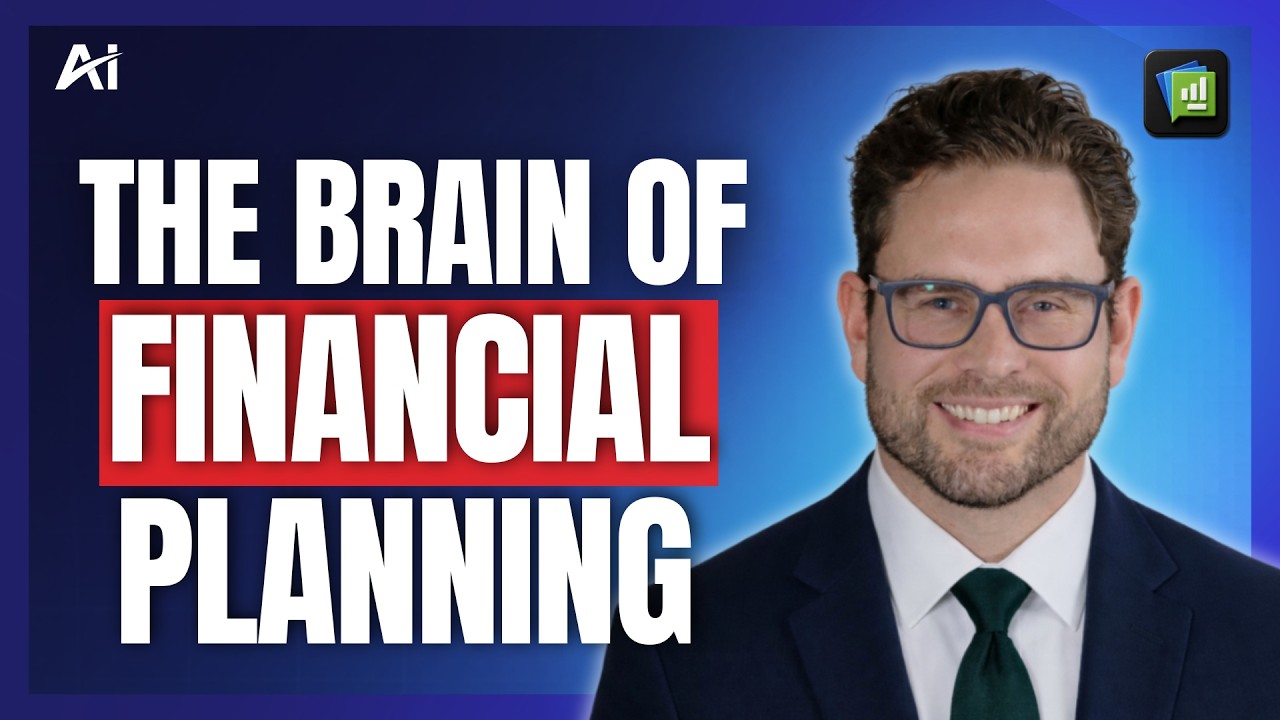
PWL Capital's Braden Warwick explains the six areas of a real financial plan, why PWL runs 1,000 Monte Carlo simulations and how it builds its own AI.

Watch on YouTube · Listen on Spotify or Apple Podcasts
Braden Warwick, Financial Planning Product Architect at PWL Capital, says a financial plan should be solved like an engineering problem: set the client's objectives, map the constraints, then test the plan against a thousand Monte Carlo simulations. He tells host Liam Lawson why many bank plans are "a sales pitch disguised as a financial plan", and how PWL uses AI on top of its own data lake to turn a checklist of more than a hundred planning items into a short client summary.
Key takeaways
- Advisors paid for advice, not products. Braden says advisors at large financial institutions are paid to sell products, while PWL's advisors charge a fee based on the assets clients hold with the firm and get no kickbacks. (03:54)
- A real plan covers six areas. Investment, cash flow, tax, insurance, retirement and estate planning. Investments get most of the attention, but they are only one piece. (05:29)
- Objectives first, then constraints. The client sets the goals. Constraints come from the Income Tax Act and from the client, such as the latest age they are willing to retire. (23:14)
- A thousand simulations, not one forecast. PWL runs each lifetime projection a thousand times under different market conditions, so a plan is a distribution of outcomes rather than one path. (28:10)
- Planning software still misses some uncertainty. Real estate growth is one example, so PWL's planners test expected, downside and upside assumptions. PWL also sends roughly four million data points of its own return assumptions into Conquest Planning. (33:27)
- An LLM drafts the client summary, the advisor finishes it. Notes on more than a hundred planning items are summarized by a GPT model into a couple of paragraphs that the advisor edits. (51:59)
- A meeting notes tool built on PWL's own data lake. PWL chose to build rather than buy so its AI sees the client's whole financial picture, not just one meeting. (57:38)
How did an aerospace engineer end up in financial planning?
Braden Warwick finished a PhD at Queen's on optimizing aircraft noise and vibration around 2020 and planned to become an engineering professor. Then COVID arrived, his first daughter was born, and staying in academia meant leaving a postdoc contract to move his young family from city to city. He wanted a stable life, work he enjoyed and a way to make an impact.
While working through his own personal finance questions, such as whether to buy a home, he found PWL Capital's content, including Ben Felix's YouTube channel and the Rational Reminder podcast. He reached out to offer to do research for the firm. The role grew from research into research and development, building tools and planning products, and he is now PWL's Financial Planning Product Architect. CEO Cameron Passmore asked him to build a proprietary financial planning deliverable and to make the firm's planning process consistent and scalable as it grows.
How is PWL Capital's advice different from a big bank's?
Braden Warwick says the difference is incentives: an advisor at a large financial institution is paid to sell products, while PWL's advisors are paid to give advice that improves their clients' well-being. Banks usually have a shelf of their own funds to put clients in. PWL has no products of its own to sell, charges a fee based on the assets clients have with the firm, and gets no kickbacks.
That shows up in the plan. Many plans at large institutions are an illustration, a chart of how your money grows if you buy the bank's products, which Braden calls "a sales pitch disguised as a financial plan". PWL does not sell financial plans on their own: the plan is a byproduct of a full wealth management relationship. Braden puts PWL's assets under management at roughly five to six billion dollars and says the firm has conversations with people at around $500,000, without an explicit minimum.
What are the six areas of a financial plan?
Braden Warwick lists six areas of financial planning: investment, cash flow, tax, insurance, retirement and estate planning. Investments get most of the attention online, but they are only one piece of the plan.
Cash flow planning, for Braden, is about understanding what you spend and being intentional, so that spending lines up with goals for your overall well-being and not just your finances. On tax and insurance, he says people often have separate investment, tax and insurance professionals working independently, and it is the financial planner's job to bring them together toward the same goal. Retirement is easy to push down the road in your twenties and thirties, but the decisions you make today affect it whether you like it or not. And everybody needs a will: without one, the government decides what your intentions were.
How do you solve a financial plan like an engineering problem?
Braden Warwick's article The Optimal Financial Plan approaches planning the way an engineer would: start with objectives, establish constraints, then solve for the strategy that best improves the client's well-being. The objectives belong to the client, not the planner.
He groups goals into three kinds: cash flow goals such as vacations, a bigger house or cars; legacy goals such as an inheritance or early help for children; and financial independence goals such as retiring at 55. People often have many goals, and in the goals exercise Braden built for PWL's website, some have entered 10, 15 or 20. Stated goals can also hide deeper ones: a client focused on not paying taxes may really want more money to spend on family or a bigger legacy.
Constraints come largely from the Income Tax Act, and from the client, such as not wanting to retire later than 65. Without them, the mathematically optimal answer for someone maximizing wealth would be to work until 95 and never draw on the portfolio, which is not optimal for most people's well-being. Braden says a planner wears three hats: a therapist's to understand what matters, an engineer's to solve the problem, and a behavioral coach's to help people stick to the plan.
What does a Monte Carlo simulation show in a financial plan?
Braden Warwick says a Monte Carlo simulation lets a plan withstand the unexpected as well as plan for the expected. PWL runs a thousand simulations: for a 30-year-old living to 95, the same 65-year projection is run a thousand times with different market conditions. If the expected return on a globally diversified stock portfolio is around 7%, roughly half the outcomes will be better and half worse, and the plan has to survive the worse ones.
That is why prioritizing goals matters. If markets underperform, you know which spending to cut. If they outperform, you might give more to charity or help children with a down payment or education. For Braden, financial planning is a distribution of outcomes, not one specific path. Life expectancy carries the same uncertainty: he says "the worst outcome is actually outliving your life expectancy from a planning perspective", because funding a life from 65 to 100 puts more stress on a plan than funding one from 65 to 90.
What does financial planning software still miss?
Braden Warwick says market volatility is only one form of uncertainty, and the software he has seen does not capture all of the others in its Monte Carlo analysis. Real estate is one example. If a client plans to downsize and that sale will fund a big part of retirement spending, PWL's planners model an expected, a downside and an upside real estate assumption, because that uncertainty is not in the thousand simulations. He also suggests testing a longer life expectancy than you would otherwise assume.
PWL uses Conquest Planning to run the numbers but sends over its own expected return assumptions as Monte Carlo data: roughly four million data points across its model portfolios, a thousand simulations and 80 years of projection. Braden says most other firms use Conquest out of the box with pre-set market assumptions.
How does PWL Capital use AI in financial planning?
Braden Warwick says PWL uses AI in two layers: for his own coding, and inside the tools its advisors use. He codes with Codex in VS Code, which has let him build tools for PWL's website and internal platform without a large developer team, work that would not have made sense for a firm PWL's size a decade ago.
On the advisor side, PWL has a planning checklist of more than a hundred items, built with Ben Felix and the firm's financial planning council. Which items apply depends on the client: married clients have pension splitting options, and homeowners and business owners have different strategies again. Advisors document their work on each item. Those notes, along with the client's goals and situation, are fed through an LLM that summarizes the work into a couple of paragraphs, which the advisor edits and adds their own flavor to. PWL uses a GPT model through Microsoft Azure Foundry for this and is careful about data residency, because the data is highly confidential.
Braden is clear that the human relationship stays central. AI should not replace the advisor's expertise; it should make sure nothing is missed, automate low-value tasks and give advisors more time for high-value work. The checklist also keeps service consistent as PWL grows from about 50 advisors, and lets clients see the background work done on their behalf.
Why did PWL Capital build its own AI meeting notes tool?
Braden Warwick says PWL built its own meeting notes tool, which he said was due out later in the year, because the infrastructure was already there. Several years ago, before the AI wave, PWL committed to a data lake that connects its portfolio management software, Conquest Planning, onboarding software and CRM, so client data no longer has to be entered by hand in each system.
An off-the-shelf note taker would only see the meeting. PWL's tool can draw on the client's whole financial situation: goals, plan, portfolio and household details from the CRM. Braden does not want a separate AI plugin from every vendor, and he values being able to swap in new models as better ones are released instead of being locked in.
What changed after OneDigital acquired PWL Capital?
Braden Warwick says little changed in how he works after OneDigital acquired PWL at the beginning of 2025. He still has full autonomy over what he builds. What changed is the backing: more resources for inorganic growth by acquiring other advice teams, support for the firm's AI work, and the chance to learn how a much larger company builds product.
What will a financial planning engagement look like in 2031?
Braden Warwick expects AI to improve people's understanding of financial planning, and sees that as good for PWL: someone asking Claude or GPT basic financial questions will probably learn more than a product-focused advisor would tell them. He believes the human relationship will remain for clients who want full-service wealth management. If PWL can capture the thinking of the best financial planners in an AI-based platform, he thinks quality advice could eventually scale to the mass market, though that is still to be determined.
In his words
"But the difference in our world is that our advisors are not paid to sell products, they're paid to provide financial advice." (03:54)
"They're showing an illustration, which is a sales pitch disguised as a financial plan." (05:29)
"We would run that same 65 year projection a thousand times, but with different market conditions." (28:10)
"So we didn't want to partner with just a meeting notes tool that only has the context of the client meeting." (57:38)
"I want to improve the financial well-being of Canadians." (1:11:47)
Chapters
00:00 Introduction
00:40 From aerospace engineering to financial planning
03:54 Why PWL approaches financial advice differently
07:31 The six areas of a real financial plan
11:48 Financial planning as an engineering problem
17:56 The psychology behind financial planning
23:14 Objectives, constraints, and uncertainty
28:10 How Monte Carlo simulations work
33:21 What financial planning software still misses
39:11 Building financial planning tools at PWL
44:16 Inside PWL's financial planning system
51:38 How AI is changing the advisor workflow
57:20 Why PWL built its own AI tools and data infrastructure
1:03:41 What changed after the OneDigital acquisition
1:06:34 The future of financial planning
1:11:47 Why Braden does what he does
About the guest
Braden Warwick is Financial Planning Product Architect at PWL Capital, a Canadian wealth management firm. He holds a PhD from Queen's focused on optimizing aircraft noise and vibration, and joined PWL in 2020 to do research before moving into building its financial planning tools and products. He wrote The Optimal Financial Plan and is an occasional co-host of the Rational Reminder podcast. Braden on LinkedIn · The Optimal Financial Plan
About the host
Liam Lawson is CEO of The AI Report and host of The AI Report Podcast. Meet the team
Full transcript
Edited for readability. Quotes above are word for word from the recording.
Liam Lawson (00:01): Braden, welcome to the podcast.
Braden Warwick (00:03): Hey Liam, thanks. I'm happy to be here.
Liam Lawson (00:06): I'm excited to talk today, and not just for selfish reasons, but part of it is selfish: I'm twenty-seven now, I'm starting to think about financial planning, and I just moved to Canada, so I'm thinking about my QPP and CPP and all these other terms that I don't understand. So I'm looking forward to talking everything AI and financial planning in Canada with you today.
Braden Warwick (00:29): It'll be a lot of fun. There's a lot to learn, so we'll try to distill it down to the basics, but I think there's a lot of cool stuff we can talk about and how it relates to AI. Looking forward to it.
Liam Lawson (00:40): Perfect. Before we get into what financial planning actually is and what you're building, I want to know a bit more about your background, because it's an interesting background for what you do. You did your PhD at Queen's optimizing acoustic properties in aerospace engineering. Am I right in saying that?
Braden Warwick (01:02): Yeah, that's basically it: optimizing aircraft noise and vibration.
Liam Lawson (01:07): Then you make the shift in 2020 to a Canadian wealth management firm. What's going through your head? Why did that switch make sense to you?
Braden Warwick (01:17): It's really interesting, honestly. I was probably around your age back then, around 2020. I had just finished a PhD, and I was planning on becoming a professor in engineering. I loved teaching, loved doing research, and I thought I could make a career out of it. But then COVID happened in 2020, and I really had to consider my plan for the future. My first daughter was born in 2020, COVID happened, and work from home became a reality.
I was in a postdoc contract, so I had to either pack up, move cities and drag my young family around from city to city hoping for an academic career, and that's just not something I was looking forward to. I wanted to settle down and have a stable life with my family, but also do what I enjoy and make an impact.
Along the road, during my PhD, I also, similar to you, had to figure out a bunch of these personal finance questions. Should I buy a home? What do I need to be aware of when I'm getting married and having a kid? Doing that research, I came across a firm called PWL Capital, which is where I am now. They put out a ton of content, and still do. Ben Felix has a great YouTube channel, and we've got a podcast called Rational Reminder. I really felt they were paving the way for financial planning research in Canada. So I reached out to see if they'd be interested in having someone like me do research for them.
Braden Warwick (03:12): One thing led to another and I came on board to do research. That evolved from research only to research and development, building tools and planning products, and now AI is another game changer. It's been a constant evolution, but a lot of fun.
Liam Lawson (03:33): That frames a question for me. I want to understand more about PWL. Obviously it's different from what an average Canadian would get when they walk into their bank and ask for financial planning services. What is it that PWL does differently from the banks?
Braden Warwick (03:54): It's a great question. I'm really speaking to Canada here. I don't know as much about other countries, but I'm sure it's similar to an extent everywhere. The finance industry is dominated by the large institutions. Canadians know the big banks and the big insurance companies. If I met someone on the street and told them where I work, nobody would know what PWL is. Most Canadians don't even know that we are an option, which I think is unfortunate, but it's something we're working to change.
The reality of the industry is that an advisor who works for a large financial institution is paid to sell products, and that's their primary incentive. The difference in our world is that our advisors are not paid to sell products, they're paid to provide financial advice that improves the well-being of our clients. That's our business model. We don't get any kickbacks from selling product. We charge a fee based on the assets clients have with us, to give them the best advice and help them reach their financial goals.
Liam Lawson (05:14): So when you refer to the products these banks are selling, what exactly are those? Different investment vehicles? And how does the fee actually work?
Braden Warwick (05:29): Good question. Primarily investment vehicles, but it could be anything. Banks sell credit cards, they've got mortgages, they've got a whole suite of products, but it's heavy on the funds when we're talking specifically about investment advice. They've got a shelf of funds, and they pick from that shelf and put clients in one of those funds, which are the bank's products. We don't do that. We don't have our own products that we sell to our clients. We use products based on what we deem most impactful to help our clients reach their goals, and we don't get any kickback for doing that.
That leads to your original question of what a financial plan looks like at those institutions versus PWL. I think so many advisors at the large institutions are really just showing an illustration, which is a sales pitch disguised as a financial plan. They're showing a nice chart: if you invest in these products with us, this is how your money will grow over time. That's an easy sales pitch. But a financial plan is so much more than investment planning, which gets a lot of the attention. Financial planning is actually six areas.
It's investment planning, which gets most of the attention. Even online you see Bitcoin, covered call ETFs, private equity. There's so much content spamming you with investment products, and it's what everybody wants to talk about, but it's only one piece of a financial plan. There's also cash flow planning, which I think a lot of people associate with budgeting.
Braden Warwick (07:31): From my perspective, the most important thing with cash flow planning is understanding what you're spending and where it's going, and being intentional with that spending so it's aligned with your overall goals, framed to improve your overall well-being and not just your financial well-being. There's also tax planning and insurance planning.
It's so common for people to think, I've got an investment guy, I've got a tax guy, I've got an insurance guy, but they're all working independently and doing their own thing. It's really the role of the financial planner to bring all of those professionals together and make sure all that work is going toward the same goal, which should be anchored around the client's well-being holistically.
There's also retirement planning, which people are aware of, but it's so easy to kick it down the road and think, I'm in my twenties or thirties, retirement is so far in the future that I don't need to worry about it today. The reality is that the decisions you make today are impacting your retirement plan down the road, whether you like it or not. So it's better to be intentional with those decisions now, knowing how they will affect your future, and make an intelligent decision about whether to save that money or spend it now. I've got a young family, I've got grandparents who are aging. Maybe I want to pay for an experience with all of them together, because that time won't last forever. How do I balance those spending needs with securing my own retirement? These are complicated questions.
Braden Warwick (09:28): They can only really be understood when you think about your goals holistically and the life you want to live. The sixth area is estate planning, which nobody wants to talk or think about, but the reality is that everybody needs a will. You've got a will whether you like it or not. You just might not like what the government decides your intentions were at death. So it's better to get out in front of that, have those conversations with your family, and make sure your will is in alignment with your intentions.
Liam Lawson (10:11): That's such an interesting framing, because my understanding of financial planning before this was just how to move money around to make more money. The way you're describing it is much more holistic: how are we optimizing for happiness and security? I think that's how I came across Ben in the first place. A YouTube video was recommended to me about the things to spend your money on to make yourself happy, things like going on a trip or a holiday, which I would never expect to come out of a financial planner's mouth.
Braden Warwick (10:50): Exactly, and I think that's the biggest misconception. Most people think financial planning is, like you said, moving money from point A to point B and thinking about what to invest in to maximize their return. But a comprehensive financial plan is so much more than that. It's understanding the tax implications of your decisions, how much you should be spending and saving, how those decisions will affect your retirement, and what tax strategies you have at your disposal to improve your outcome. It's making sure there are no unintentional surprises with your estate, and working through different risk scenarios: what happens if you or your spouse passes away early, or if markets don't perform as expected? All of those risks should be considered in the context of a financial plan.
Liam Lawson (11:48): I want to understand more about what a financial plan actually is. You wrote an article last year, I think, called The Optimal Financial Plan. You frame planning as constrained objectives, which sounds to me like an engineering way of looking at it. Can you take me through that on a first principles basis?
Braden Warwick (12:10): Totally. This ties in well with my background in the engineering world. One of the things I wanted to do in that transition was bring what I'd learned doing my PhD, and the research I contributed to that field, into the world of financial planning and help improve the way people think about it.
After I'd been at PWL for five years and learned from some of the best planners in the country, in my mind, I was able to write this article, which I'm sure you can link in the show notes, about how to solve a financial plan from the mindset of an engineer. For me, it all starts with your goals. What are the objectives you're trying to solve for? Like you mentioned, Liam, if you're just trying to maximize your return or move money around to different places, great, but is your ultimate goal just to make more money? Are you trying to retire early? To accumulate the most wealth? To spend the most you can over your lifetime, whether that's to enjoy experiences with your family or for yourself? Maybe you really like cars and want a little collection of sports cars. Whatever the case may be, it's not for me to decide. It's for the person to reflect on.
Liam Lawson (13:55): Can I pause and ask what you've seen in terms of the distribution of objectives? For me, I want to be satisfied and have a happy life, but I'm curious what the average distribution of what people want is.
Braden Warwick (14:10): That's a great question. From what I've seen, there are usually multiple goals. We have a goals exercise on our website that I built, and we've seen some of the results come in. I've seen cases where people have entered up to 10, 15, 20 goals. In practice, working with clients, we try to map that out. The goals exercise is designed intentionally to make you think through all the different things you'd like to spend on, whether it's vacations or hobbies or anything else, and to prioritize them. That way, if markets do really well, your money goes even further, and if markets underperform, you know where to pull back.
Broadly, we can categorize goals into cash flow related goals, like spending: vacations, a bigger house, cars, whatever is meaningful to you. Then there are legacy-related goals: I want to accumulate a certain amount so I can do something for my kids, either give them a big inheritance when I pass away or an early inheritance to help with homeownership. Then there are financial independence related goals: maybe I'm willing to sacrifice on expenses or experiences in the short term because I want to retire early, and what's most meaningful to me is being able to retire at 55.
Braden Warwick (16:30): The parallel with engineering is that it's not up to the engineer to decide what the objectives are, and it's not up to us as financial planners either. It's up to the client to decide whether their biggest priority is to retire early, or whether early retirement doesn't matter at all and they want to work until they're 70 and experience more things during their early career. It's not for us to decide. It's for us to coach them through it, help them think about the impact of those goals and really try to unearth what they are.
Another interesting piece is that a lot of clients come to us thinking they have their goals in mind, but when you peel back the onion, they actually mean something completely different. Sometimes they have goals related to not spending or not paying any taxes, but what they really want is more money to spend on themselves or their family, or a bigger legacy. Taxes get the spotlight because that's what they can see when they do their tax return at the end of the year.
Liam Lawson (17:56): You're almost like a therapist at some point.
Braden Warwick (18:00): That's definitely a main role of a financial planner. A financial planner has so many different roles. There's the engineering role of solving for the strategies that are optimal for the client to help them maximize their well-being. That's the engineering mindset I think is important for a planner to have. But there's also the behavioral side and the therapist side, like you said.
To get to the point where you can optimize someone's financial plan, you have to know what's important to them. You have to be able to frame the problem in order to solve it, and that's the therapist piece: gathering the information from clients and coaching them through understanding what's important to them. So you wear your therapist hat up front to nurture that relationship and figure out what you're working with. Once you've defined the problem, you put your engineer hat on and solve it. Then communication and implementation is step three, where you put the behavioral hat on and help ensure people actually adhere to the plan, which is another challenge.
Liam Lawson (19:20): I'm curious what you've noticed in the data, if you can speak about it. Looking at all these different objectives, have you noticed any correlations in demographics or psychographics with people's risk propensity and how much they want to spend now versus in the future?
Braden Warwick (19:40): It's interesting. I haven't done a full deep dive on this, I'll be honest, but generally speaking, we work with a lot of young professionals, and their appetite to take on risk is meaningfully higher than your classic retired couple in the decumulation phase. The stage of life is such an important piece. For retirees, all they have left is their portfolio, so to speak. They're not in the workforce anymore, and they need to make sure that portfolio lasts. People earlier in their careers have more appetite for risk because they have different opportunities available. If one career path doesn't work out, they can pivot. I'm a perfect example of that.
Liam Lawson (20:37): I'm curious whether this changes over time too, not just young professionals versus retirees. I'm seeing a trend on social media where Gen Z and the younger end of millennials are spending a lot more because they're under the illusion that, hypothetically, times are ending, so you might as well spend your money now. Is that something you've seen as well?
Braden Warwick (21:14): Anecdotally, definitely. To be honest, those people wouldn't be in a position to work with us as clients if they don't have a lot of assets right now, so on the client side, not really. But it's definitely a thing that the younger demographic has that mindset. A lot plays into it in the world we're in today: crypto and almost the gamification of investing, where it's so easy to get in and gamble on different stocks or crypto. Even the sports gambling industry is crazy now. You're watching a game on TV and it's filled with gambling ads. People think it's so difficult to reach their goals the standard way, by saving and investing, that they take these really high risks. It's unfortunate to see.
Liam Lawson (22:19): It's like a doomer mentality, almost. You're never going to be able to afford a home, so the only way is to take on these really risky investment vehicles.
Braden Warwick (22:32): Exactly. I think the only thing we can do to improve that is educate. We've got tools on our website, like the rent versus buy tool. You alluded to that decision. I think it's affecting a lot of young people's mental health, thinking they'll never be able to own a home. Educating people that they can still be okay financially without being a homeowner is hopefully a step in the right direction.
Liam Lawson (23:06): Let's bring things back to the optimal financial plan. We talked about objectives, but there are also variables and constraints. Tell me about them.
Braden Warwick (23:14): For sure. Step one, understanding the client's objectives, sets the framework for the entire plan. It defines the problem. Step two of defining the problem is establishing your constraints. I go back to tax planning, because that's probably where a lot of the constraints in financial planning are. A lot of them are put in place by the Income Tax Act, and it's our job as financial planners to stay within those constraints but also understand which levers we can pull within that space to optimize outcomes.
Other constraints are put in place by the clients themselves. Going back to the retirement example, even if early retirement isn't someone's top goal, they might still have a constraint on the maximum age they'd be willing to retire. They might not want to retire any later than sixty-five, for example. That's a very valid constraint that we'd put on the financial plan. And it's important to have these constraints. Say someone's goal is to maximize wealth, to accumulate as much money as possible. Obviously working as long as possible will let them accumulate the most money, but that's not realistic. We need to choose a retirement age that is realistic.
Braden Warwick (24:56): Even if it's not the client's number one priority, we still need to establish that constraint so the optimal outcome isn't a runaway event where they work until age ninety-five and never draw from their portfolio. That would be mathematically optimal, but from a well-being perspective it's probably not optimal for most people.
Liam Lawson (25:19): Let me tie a few concepts together, and tell me if I'm on the right track. I've spoken to people who work in life insurance, and they've pretty much got how long you live down to a mathematical probability. You're born in this place, you live here, your diet is this, and they know within a couple of years when you're going to die. Traditional financial planners are supposed to sell investment vehicles. They make money selling you things, so their goal is to do that, not essentially to make you more money. Whereas with your approach, if you have objectives, variables and constraints and you account for them, you can get it down to more of a probability than hopefulness. Am I on the right track?
Braden Warwick (26:11): For sure. You touched on a lot that I'll expand on. You talked about actuarial tables, figuring out when someone's going to die based on their age and different characteristics. We do the same thing. Those are inputs to our financial plan, part of the assumptions we make, to have a realistic life expectancy for our clients. It's also important to understand the uncertainty of that. If you're an insurance provider, you can run these numbers and know the life expectancy in aggregate for a large sample of the population. But on an individual basis there's a lot of uncertainty. Just because your life expectancy is, say, 92, doesn't mean you'll die at exactly 92.
So we have to plan for the expected, but we also have to be mindful of the unexpected and make sure the plan can withstand those events. In the case of life expectancy, the worst outcome from a planning perspective is actually outliving your life expectancy, because it increases the risk that you'd run out of money. Of course, from a well-being perspective that's great. A long, happy life is what we're trying to accomplish. But it puts more stress on the plan when you have to fund someone's life from sixty-five to a hundred versus sixty-five to ninety.
Liam Lawson (28:00): Gotcha. I was doing my research beforehand, and I'm not a technical person. Tell me about Monte Carlo simulations.
Braden Warwick (28:10): It ties into what I was saying: we need to plan for the expected, but the plan also needs to withstand the unexpected, and that's what a Monte Carlo simulation allows us to do. In our case, we run a thousand different simulations. Imagine someone who's 30 years old now, living until age 95. That's a 65-year projection of someone's life. We would run that same 65-year projection a thousand times, but with different market conditions. On average, the outcome of those thousand should be our expected return, maybe something like 7% for a globally diversified stock portfolio.
But 50% of those outcomes will be better than 7%, and 50% will be worse, over the investor's lifetime. So we have to make sure the plan can withstand the worse-than-expected outcomes. That's why I talked about understanding your goals and setting up your cash flow plan so you know which spending items are most important to you. You have a point of view on which spending items to add or subtract depending on how markets actually perform. If everything is on track and you've done your plan properly, you can accomplish all your goals, and that's great. If markets underperform for reasons outside our control, we still need to make sure the plan is on track for what's most important to us.
Braden Warwick (30:06): So we're able to prioritize the spending that means the most to us and subtract some of the things that mean a little less. On the flip side, if markets overperform, we also have different things in mind we can do with that money, whether that's giving extra to charity, or to kids to help with a down payment or education, things that wouldn't otherwise have been possible. From my perspective, it's important to think of financial planning as the distribution of outcomes rather than the specific path you're going to follow, because there's so much uncertainty involved, and things may do better or worse than expected for reasons outside your control. You have to be okay with that, and understand what needs to change in those circumstances.
Liam Lawson (31:02): So is a Monte Carlo simulation the default engine behind how most financial planners operate? And how is what you're doing additive to that?
Braden Warwick (31:14): It's a big question. Is it core to how most financial planners operate? I would say hopefully. Going back to what I said at the beginning, if people are really using financial planning as a guise to sell product, that's probably not how they're operating. They're probably just showing a nice simple chart of the wealth going up with the client buying their product. From my perspective, a good comprehensive financial plan should absolutely consider volatility in the form of Monte Carlo analysis or similar, so you can understand what the distribution of outcomes looks like.
What's interesting is that market uncertainty is just one piece of uncertainty. I also talked about uncertainty in life expectancy, and there are a lot of other forms of uncertainty in a financial plan. I don't think the software I've seen has been able to capture all of those different forms of uncertainty in the Monte Carlo analysis. So it's something to be aware of when you're running these projections: there may be other forms of uncertainty not being captured that you still need to think through, even if they're not baked into the numbers directly. Maybe even test different assumptions, like a longer life expectancy than you otherwise would, to make sure your plan can still withstand that.
Liam Lawson (32:54): So a Monte Carlo simulation is running the same simulation a thousand times so you get that probability. And the problem is that traditional financial planners may or may not use it, but they're not taking in all the variables and situations that should be accounted for.
Braden Warwick (33:05): Yep, that's exactly it.
Liam Lawson (33:21): So you think there's not enough data being processed through this, and that's where you're different?
Braden Warwick (33:27): There are a few things. I didn't touch on why we're different enough, so let me get back to that. If the bar is selling product with a financial plan, I think it speaks for itself why we're different there. But we're using Conquest Planning as our software provider, and their platform allows us to send over our expected return assumptions in the form of all of that Monte Carlo data. I think it's about four million data points, with all of our different model portfolios and all of those 1,000 simulations over 80 years of projection. So we have a financial plan that's consistent with our expectations of market performance, which I think is different from how pretty much everybody else uses Conquest. They use it out of the box with some pre-baked assumptions on how markets perform. That's one area that's different.
Another area, less from a tech perspective and more from a planning process perspective, is what I alluded to: the software itself doesn't have all of those uncertainties baked in. It doesn't have uncertainty in real estate, for example. Take a simple financial plan where someone is a homeowner now but plans to downsize in the future. Without uncertainty around the real estate growth rate, that isn't going to be baked into the Monte Carlo analysis. So our financial planners might have to use a lower expected real estate growth rate if it's a critical part of that person's plan.
Braden Warwick (35:24): If the real estate is worth a lot of money and the sale will be a significant contributor to their retirement spending, we'll probably have to model it using different assumptions: our expected assumption, a downside assumption where real estate underperforms, and an upside assumption as well, because that uncertainty isn't being captured in those thousand Monte Carlo simulations.
Liam Lawson (35:51): I want to get into the financial planning strategy database you've combined with an LLM and a strategy checklist, and the meeting note taker you've been building, in a second. But I'm noticing a parallel between you personally and what you're doing. You're looking at this as a very practical problem: how many different things can we account for, and how can we provide the most practical solution? At the very start of our conversation, you said you had a young family, you were doing PhD research, you'd be moving around a lot, and you looked for the practical solution of doing this instead. Do you ever think about the similarity in your mindset and how it's infused into what you're building?
Braden Warwick (36:41): That's a good observation. I hadn't really thought of it that way, but you're absolutely spot on. I think that's just how I am as a pretty pragmatic person. I try to make decisions rationally without too much emotional involvement. I think that's also why I was attracted to PWL in the beginning, because Ben Felix is wired the same way. I think we're probably having a big influence on how our advisors approach financial planning.
Liam Lawson (37:14): I love the way you're doing this, and I think you've got a massive competitive advantage, because at most of these companies it's held behind a secret door. They're not producing content and explaining how this works. They're saying, you need to be part of this exclusive club, here are all these acronyms you don't understand, and we're optimizing purely for wealth. That's why I don't understand this as a twenty-seven-year-old, and I should. But you're putting out all this content and explaining it. It's an insane rift in what you're delivering.
Braden Warwick (37:49): Totally. That's a key part of our business model. The more we can educate people on what a financial plan is and what they should be receiving from their financial advisor, the better we'll do as a business. Generally speaking, like you said, a lot of other firms try to keep everything under tight wraps, and I think it's because there's a lot of overpromising and underdelivering going on as a whole.
Liam Lawson (38:23): I hope the business continues to go well, because the way you describe a financial plan is the way I think about the world: how can I optimize for my goals rather than just seeing a number in my bank increase? I think a lot of people can relate to that, and it's more human. You've been at the company four or five years now?
Braden Warwick (38:44): Going on almost six years now.
Liam Lawson (38:48): Almost six years. I want to get into what we cover as a topic, AI. What were you doing pre-AI? Were you building that strategy database beforehand? What was your first introduction to LLMs, how did you start working with them, and take me all the way from there to now.
Braden Warwick (39:11): Good question. It makes sense to frame up my technical background too. When I was doing my PhD research, it was all computational, so I was writing code to solve engineering problems. I already had years of that under my belt. Then I came over to PWL and tried to leverage that same expertise to solve financial planning problems, so building tools started right away. We're talking 2020, and it was very rudimentary, I guess is the nice word for it.
When you're writing code for engineering, you're writing code that another engineer can go and play with. You're not building applications that financial advisors or other non-technical people can just interact with. So building the UX and UI was definitely not something I had done before, and those early versions were pretty rough looking, especially before AI coding came into play. But it still set the foundation in terms of building up my expertise in software development and understanding how those things work. Developing those skills, then watching AI explode onto the scene and leveraging it as early as possible to make my workflows much more efficient and scale what I'm doing, has been extremely powerful.
Braden Warwick (41:12): Keep in mind that the existence of someone like me at a firm like PWL really just doesn't exist elsewhere. I don't have a comparable position at any of the other wealth management firms in the country.
Liam Lawson (41:25): What is your official title?
Braden Warwick (41:29): My official title is Financial Planning Product Architect. I can't remember exactly, I think it was 2023 when I switched from research associate to this role. At the time, Cameron Passmore, our CEO, wanted me to focus on building a unique proprietary financial planning deliverable and making our process consistent and scalable as we grow. We have pretty ambitious growth aspirations in terms of building out our business and bringing on new advisor teams. What's core to that is making sure our financial planning quality of service stays consistent. We don't want to bring on advisors who aren't doing the same level of planning work I've described throughout this interview. We want to make sure that when people reach out to our firm, we have a high-quality product across the board, no matter which advisor they're talking to.
That's where we've really had to commit to building our own planning-focused platform. It's been a long journey, but we've had to figure out what we want the foundation of the planning experience to be, which is why we partnered with Conquest Planning to run the numbers. Then we've taken it a step further and figured out what tools and processes we need to run alongside it and integrate with it, so we can have that holistic financial plan and ensure our advisors deliver the best possible plan to our clients.
Liam Lawson (43:38): You mentioned the word proprietary, so I don't know how much you can say about the deliverable, but tell me what you can. If I come to you today and say I want this deliverable, is it LLM generated, does it pass through humans, and what do I actually receive? And you mentioned the brief was that it has to grow and adapt over time, so how has it changed up until now, and how do you expect it to change?
Braden Warwick (44:16): Great question. If you came to PWL today and reached out to an advisor, you'd embark on that journey. To be transparent, we don't sell financial plans directly. Even if you come looking for the product, you'll be working with us from a holistic wealth management perspective, and the financial planning product you get is a byproduct of that relationship.
The way we set it up is exactly as I described: it starts with understanding your goals. From my perspective, the first thing the advisor needs to understand is what you're looking to accomplish. A lot of the time that's obvious anyway, because when someone reaches out, there's usually a trigger: some dilemma they're going through, or they're working with another advisor and unhappy with the relationship, or they're going through a big life event and need some advice. So the immediate goals are usually pretty obvious, but like I said earlier, it's about peeling back the onion and figuring out the other things that might not be top of mind but are actually super important to this person. We have our goals exercise, which has a version on our website. I said it's proprietary, but we pretty much put out all of our content anyway, so I think I can talk about pretty much everything.
Braden Warwick (46:01): We have the goals exercise on the website and an internal version for our advisors to work through with their clients. Once that's in place, we can get into the planning. That's when our advisors move over to Conquest Planning and enter the assumptions, incomes, account balances, retirement dates and so on, and set up the projection based on the life the client is expecting to live. Then we can determine whether they're on track to reach their goals. If not, we figure out what steps we need to take to course correct and get back on track.
That's really the projection and decision making piece. Like I mentioned at the beginning, a ton goes into financial planning that isn't quantitative: reviewing the will, making sure your beneficiaries are set up, and all this other work that, assuming it's good financial planning, gets done in the background, and it's not obvious to the client that we're even doing it. So a big priority when building our platform was being able to track these things and make sure they're getting done. We don't want things slipping through the cracks. Not that our advisors weren't doing that work, but we want line of sight to make sure, especially as we grow and scale from 50 advisors to a hundred to a thousand advisors maybe one day. We want them all delivering the level of service our clients expect.
Braden Warwick (48:03): We also want to present that back to the client: here is all the work we've done, a hundred planning items for you over the past couple of years, so they can see the value we provide beyond the conversations and decision making, all the background work that makes sure the client is well taken care of.
That's what we're calling the planning checklist. It sounds straightforward and obvious, but it's actually quite complicated. We have over a hundred planning items that I've worked with Ben Felix and our financial planning council to nail down. The challenge is that it's a dynamic list. The relevance of each item depends on the characteristics of the client, not just their goals but their situation. If someone's married, they have pension splitting options at their disposal, whereas someone who's single doesn't have those same strategies. Whether they're a homeowner or not, a business owner or not: all these characteristics influence which planning items should be considered. And we need to be able to build up that master list over time, like you mentioned.
As we bring on new advisor teams, it's been critical not to just say, this is how we do planning, you'd better hop on board and do things our way, but also to listen to them, because they've built their own practices that we're acquiring, and they have their own expertise to contribute. If we can bring all of those great planners and great minds together, I think we can build this sort of evolving brain of financial planning that keeps getting better and better over time.
Liam Lawson (50:14): What it sounds like is that you're delivering based on a mathematical reality, not a belief of what is right or wrong. There's a statistical truth to what you're delivering.
Braden Warwick (50:26): That's the goal: make evidence-based decisions. That's how we've built our whole brand, around understanding the evidence, the trade-offs and what will have the biggest impact on your life. Sometimes that's mathematical and sometimes it's behavioral. The thing is being intentional with those decisions, understanding the trade-offs and the pros and cons of each, and making a well-informed decision.
Liam Lawson (51:05): Providing this, and having the brain for it, is only really possible through LLMs as we know them today. Doing it by yourself with pen and paper or an Excel spreadsheet would be very difficult. Have you noticed the aha moment happening for your clients? We work with a lot of big organizations on AI training and development, and there's always an aha moment when it clicks for them. With this deliverable, whether it's a PDF or a spreadsheet, you're mapping out all these data points and showing clients that you understand their situation. Does that aha moment happen because of what you've built?
Braden Warwick (51:59): I think so, and we've seen that recently with our advisors as we roll out this platform. Because we capture all of that information, feed it through the LLM and generate summaries, it's transforming the way our advisors work. It's definitely not replacing their expertise, but it makes sure all of those things are captured and surfaced, and then lets the advisor put their own custom spin on it.
The way it works is that we've got the checklist, with notes going into it documenting the work done on each item. When we want to create the deliverable, all of those notes on the different planning items, along with the client's goals and situation, are fed through the LLM, and it summarizes all that work into a couple of paragraphs. Our clients aren't looking for a hundred-page financial plan slapped down on their desk. They're looking for the one or two pager: I'm on track or I'm not on track, and this is what I need to focus on. They're trusting us, but they want to see the short form of where they're at. So the planning deliverable summarizes the key data points and has an LLM planning summary built with all of that information in mind, but it still lets the advisor edit it and add their own flavor. It's really pre-populating and giving them a leg up on their work, and making sure everything is considered and nothing gets left off by accident.
Liam Lawson (53:58): It's interesting to see how humans are working with AI. I see this a lot in sales teams. The LLM is doing the heavy lifting, producing a deliverable that tells a client, I hear you, I see you, I understand your situation. And you also have the advisor put their own spin on it and present it in their language, because they've built that trust individually. It's interesting to see this landscape develop between humans and AI.
Braden Warwick (54:26): Totally. We see a lot of value in the human relationship. I think that's primarily why a lot of clients work with us: having a human who understands what they're going through, who can relate to them, work through their problems and has experience with other households that have gone through similar problems. The human element is critical to what we do, and from my perspective we never want to replace that. But we can definitely leverage AI to enhance the advisor experience and make sure there's that level of consistency. From a workflow perspective it's the same story: if we can automate a lot of the low-value tasks the advisor is doing, it gives the advisor more time to spend on the high-value work.
Liam Lawson (55:22): Can you talk about what's under the hood? Which LLM are you using? Do you have a Claude subscription, are you building your own proprietary model, or adapting an open source model? How much can you share about the technical details?
Braden Warwick (55:36): For sure. We're using AI in a lot of different ways. There's how I use AI, which is primarily coding. I'm using Codex built into VS Code to help me develop applications, both tools for our website and these internal tools. It's been a huge game changer for me, honestly, because I don't have a massive team of developers working on this with me. I've been able to deliver a lot of product that just wouldn't have made sense for a firm our size to deliver a decade ago, or even five years ago for that matter. AI has enhanced our ability to deliver product, which is pretty crazy.
Then there's the AI that's built into these tools. We're using Microsoft Azure Foundry, and right now we're just using a GPT model. We also have to be aware of data residency and location considerations. We have to be mindful of where we send the data for processing, because it's obviously highly confidential. So we're using GPT for the summarizing in the deliverable I mentioned. There are multiple layers: the coding aspect, and then the meeting notes aspect, which we're also using GPT for.
Liam Lawson (57:20): That's what I was curious about. In the email thread with Ben beforehand, they mentioned the proprietary AI note taker that feeds into this client deliverable. Is that just GPT, or something else? And why not use one of the category leaders, like Jump or Zeppelin?
Braden Warwick (57:38): Great question. That's a work in progress for us. It's not out at the moment, but our own proprietary meeting notes tool will be out later this year. We built it ourselves for a couple of reasons. One, we already have the infrastructure in place. Several years ago, before AI, we committed to building a data lake, so we have all of our clients' financial data in one spot. Our industry is still a bit fragmented. We've got our portfolio management software, the planning software I've mentioned, Conquest Planning, an onboarding software and our CRM. So many firms our size deal with those independently, so data isn't flowing from one to the other. It's like the Stone Ages: they enter the client information in one, then manually in another, and another. We solved that problem years ago with the data lake, with data flowing from one system to another seamlessly.
So we already had the infrastructure, and an off-the-shelf meeting note solution just doesn't make sense. Once you have all that data in one place, you want to leverage AI and give it all of that information, because then the AI is that much more powerful. So we didn't want to partner with just a meeting notes tool that only has the context of the client meeting. We'd rather have our own meeting note tool that has the context of the client's entire financial situation: their goals, their financial plan, their portfolio, their household structure and details coming from the CRM. We want our AI to know everything, not just one slice of the overall financial picture.
I was in Toronto last week talking with Conquest, and they're talking about bringing on Lydia, a product built by Shaping Wealth that has been trained for a lot of these tough behavioral questions.
Braden Warwick (59:47): For example, if spouses have different goals in retirement, where one wants to travel and the other is really concerned about overspending, or they're going through a really tough situation where one person passes away. In those very tough conversations, where the financial planner has to wear the therapist hat like you mentioned, Lydia can help coach the advisor through it, which is pretty cool. Conquest is working on integrating that directly, but it's still missing the rest of the financial picture: the CRM information, the meeting notes. We didn't want to end up with standalone AI plugins from all of our vendors independently, because now everybody is going to have an AI plugin for everything. That's not what we want. We want a consistent, uniform experience that leverages the power of everything together, and I think that's really where AI is the most powerful.
Liam Lawson (1:00:53): I think you're ahead of the curve there. We're seeing this with everything. In general it's good to be model agnostic. You never know when one of these AI models will go down, and some tools rely on one model at a time. You never know how the bill or the pricing structure will change. So it's a great idea to have it all under your own platform and work with your own data. Context is incredibly important, and you know your customers' context better than anyone. And this isn't really relevant to you, but with the idea of the SaaSpocalypse, now more than ever, data is one of your moats. A platform can be your moat, but technology isn't really the big one anymore. It's the data you collect and how you interact with it.
Braden Warwick (1:01:50): For sure. And like you said, the ability to swap models in and out when the latest and greatest gets released is so powerful, and not being locked into a certain vendor for reasons outside your control is critical these days.
Liam Lawson (1:02:09): A couple of questions. Can you talk about the amount of assets under management you have?
Braden Warwick (1:02:15): We're roughly five to six billion dollars of AUM right now, I think.
Liam Lawson (1:02:21): Is it one to one point five for someone to start working with you? What's the minimum requirement?
Braden Warwick (1:02:28): We're having conversations with people around five hundred K. It really depends on the situation. We don't have an explicit minimum, so feel free to reach out. We've got Paige, who will quickly determine whether it's a good fit based on your scenario. We're happy to work with people who don't have the assets yet but are on track. It just depends on the situation.
Liam Lawson (1:03:00): OneDigital acquired, I think, a majority stake in the company in 2025, and that's part of the reason we're having this conversation today. I had a conversation with Mike and Vinay a couple of weeks ago, and he said I had to speak to the PWL guys. How has your role changed since that acquisition? I don't want to butcher their numbers, and I don't know if they're publicly disclosed, but they do billions and billions of dollars. Has the attitude changed? Do they let you run on your own? What expertise have they brought in, and how has your work changed?
Braden Warwick (1:03:41): It's really interesting. You're right, we were acquired at the beginning of 2025. At the beginning I didn't know what that would look like or what the implications would be for me. But honestly, it's been a lot of the same, for the better. They pretty much let us operate independently. I don't have people from OneDigital telling me what I should or shouldn't be building. I have full autonomy, and we're running our business the same way we were, except we have more horsepower behind us for scaling the business and acquiring other advice teams, like I mentioned.
We've really focused on the inorganic growth side, which we've always wanted to do but didn't have the resources to go out and purchase other businesses at the time. That's been extremely powerful for us. From the tech side, like you mentioned with Vinay, it's been really cool to learn from him. They're so much bigger than us by pretty much every metric, and it's cool to see how they operate and what it looks like to build product at a company their size versus at PWL, so that as we grow we can think about having that same structure and process in place. It's also been extremely inspiring, because I know they're both very excited about AI and how it will transform the industry. It's been great to have that backing and support for the work I'm doing. It has really helped transform the way we think about building out our platform and opened our eyes to what's possible with AI, both in building technology and in improving the advisor experience.
Liam Lawson (1:05:55): That's the similarity I see across both of these discussions. By the time this podcast comes out, I think Mike and Vinay will be two weeks before this. You both look at AI as a tool in service of humans. It's not, are we replacing humans with AI, it's how are we building this technology to make people more effective and productive. That leads into my last question on what you're building. Five years from now, in 2031, what does a financial planning engagement look like? How is it different from now, what survives and what disappears?
Braden Warwick (1:06:34): That's a great question. I do think AI as a whole will improve people's understanding of what financial planning is. Like I said, from our perspective, anything that improves consumer education and awareness of what quality advice should look like will have a positive impact on our business.
One of the things we're thinking through is that AI could transform our industry, and it probably will to some extent. What will that look like, and what will the impact be on our business? I don't think AI transforming the industry and PWL having a successful business are mutually exclusive. I actually think there's a lot of correlation between those two events, for the reason I mentioned. The more people understand quality financial advice, even just by opening Claude or GPT and asking basic financial questions, the more they'll probably learn compared with what a product-focused, sales-focused advisor will tell them. That better understanding of what they're missing by not working with a comprehensive, financial planning focused firm like ours will lead to better business for us.
I think the human element will absolutely remain for the clients we work with and the clients seeking a full-service financial planning and wealth management engagement. But I do think there's a lot of potential for
Braden Warwick (1:08:35): AI to help scale the quality of financial advice to the mass market. I think about what we're building now, trying to create this brain of financial planning and financial problem solving. If we're able to get the thinking of the best financial planners in the country into an AI-based platform, then I do think that deliverable could potentially scale beyond the human wealth management engagements we have today, to the mass market, I guess. But that's to be determined.
Liam Lawson (1:09:18): If you achieve that mission, it's one of the most universally beneficial things you could do. There's little that can elicit more fear and anxiety, especially in a young person, than money: what do I do with it, how do I work with it. And there's just not enough information out there. When I first got to Canada six months ago, I went into Scotiabank looking to transfer money from the UK and asked about their FX fees, and they had no clue. The average advisor at one of these banks is a twenty-one-year-old who might still be in university, doing a part-time job, and I knew more than them after researching it with Perplexity before going in. So if you can build something that counters that, I think it's only a force for good.
Braden Warwick (1:10:07): Totally. Fully agree.
Liam Lawson (1:10:10): One last broad question, and then one for you personally. Broadly, your thoughts on Wealthsimple?
Braden Warwick (1:10:19): That's an interesting question. I remember when they first started up, and I thought they were doing a lot of good things. I think it's great that they've made it really easy to invest in low-fee, passively managed funds. For the DIY audience that listens to our content and follows Ben and our podcast, I'm sure a lot of them are using Wealthsimple. I think it's great that they've made investing accessible for low fees. I don't necessarily agree with the latest direction they've been on in terms of promoting some things I wouldn't necessarily agree with from an investment standpoint. So, mixed opinions.
Liam Lawson (1:11:18): My last question is one I ask every guest. The only context I'll give you is that everyone takes it their own way. Some people talk about work, some about purpose, some about family. I'd encourage you to take five to ten seconds before answering to think about it. So, Braden, why do you do what you do?
Braden Warwick (1:11:47): When I had the conversation with Cameron Passmore, our CEO, before joining PWL, he asked me, why PWL? Why do I want to join? Why do I want to give up the career I was building in academia? And I told him that I want to make an impact. I want to improve the financial well-being of Canadians, and I want to be able to provide a good life for myself and my family in doing that. Almost six years in, I think I'm well on my way. I'm happy with what I've been able to accomplish in terms of the tools I've built, both on our website for Canadians to use and internally to help PWL clients.
I definitely feel it's making a difference, and that means a lot to me personally. And I love my family and love being able to take care of them. I love being able to work from home and spend a lot of extra time with them that I wouldn't be able to otherwise. So it's that combination of making an impact in my career, feeling like I'm helping people, and being able to provide for my family and do what I love.
Liam Lawson (1:13:20): Braden, thank you so much for your time. I really appreciate it. If people want to find out more about who you are and what you do, how do they go about doing that?
Braden Warwick (1:13:29): You can check out LinkedIn. I'm not really active on Twitter or X anymore, but I do have an account there if you want to follow me, and I'll probably post again at some point. Also our website, and the Rational Reminder podcast. I'm occasionally a co-host, so you can check me out there too.
Liam Lawson (1:13:53): Awesome. Thank you so much for your time, Braden.
Braden Warwick (1:13:55): Thanks, Liam. It's been great.
Get the five-minute AI briefing
Join 400,000+ business leaders who start their weekday with The AI Report. Subscribe free
