

400,000+ business leaders (and teams at IBM, AWS & Zapier) start their day with The AI Report. 5 minutes. Plain English. No hype.
Brett Jenks, Rare: Scaling an AI Agent to 16,000 Farmers
Rare CEO Brett Jenks explains how the nonprofit scaled Agent Tierra, its AI agent for farmers, from 200 to 16,000 users in Colombia by building trust first.
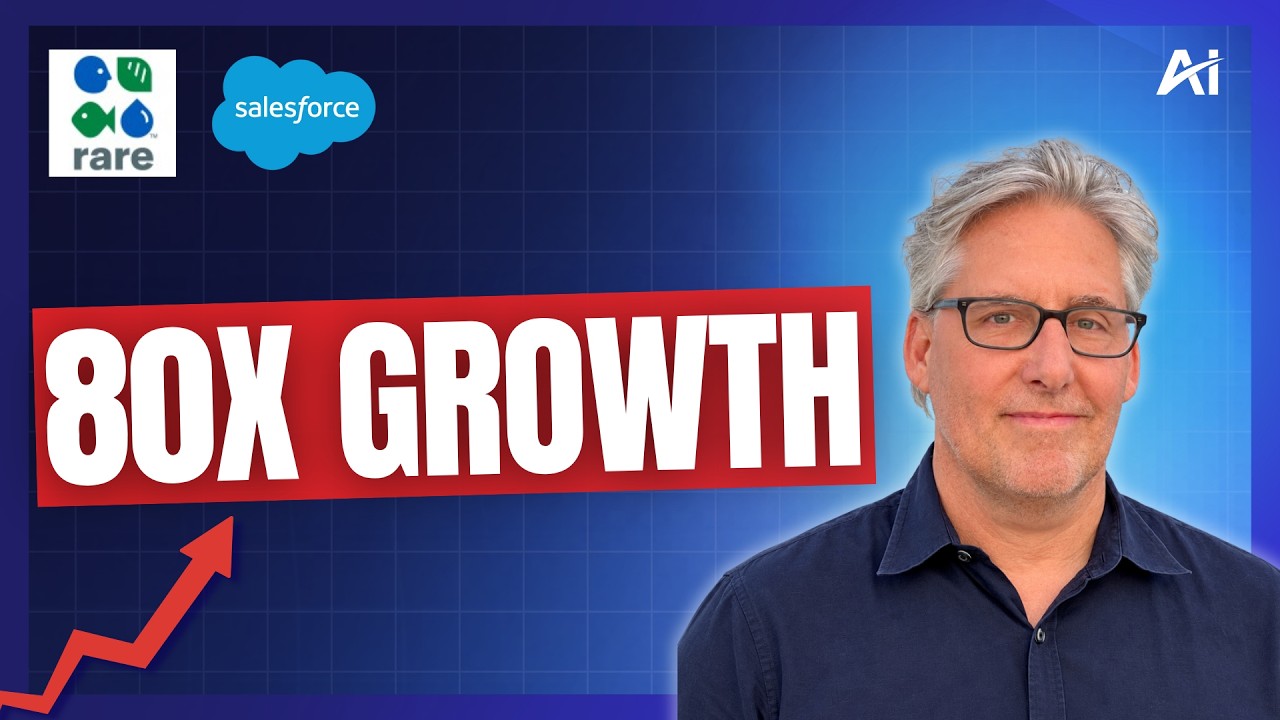

Watch on YouTube · Listen on Spotify or Apple Podcasts
Brett Jenks, CEO of the conservation nonprofit Rare, says technology can only scale behavior change once people trust the change and see their peers making it. Recorded at Dreamforce 2026, he tells host Liam Lawson how Rare took composting among farmers in Colombia from 6% to 94% before launching Agent Tierra, an AI agent on WhatsApp that now reaches 16,000 farmers.
Key takeaways
- Trust came before the technology. Rare started with about 200 handpicked early adopter farmers in Colombia who were curious and willing to take a few risks. (06:25)
- Composting went from 6% to 94% in a year. Working with those early adopters, Rare showed that composting among local farmers could rise from 6% to 94% within a year. (06:25)
- From 200 farmers to 16,000. Agent Tierra, an AI agent on WhatsApp, now reaches 16,000 farmers in Colombia. With 600 million smallholder farmers worldwide, Brett says the next big hurdle is scale. (09:21)
- Farmers change when they see other farmers change. A literature review by PhD neuroscientists led Rare to build proof points, trust and peer influence first, and to use technology to scale that effect. (10:43)
- 30% lower costs, 30% higher yields. Rare's first demonstration plots showed farmers cutting input costs by 30% and raising yields by 30% on average. (13:53)
- Locals are the experts. Across more than 60 countries, Rare hires local people and adapts proven practices to the local culture. (18:15)
- Plan on hundred-year timelines. Brett argues that resilience means managing today while looking three, five and ten years ahead. (21:56)
How did Brett Jenks go from journalism to conservation?
Brett Jenks says the through line of his early careers was "Looking to find meaning". After college he spent about two years as a journalist in Hudson County, New Jersey, then worked his way up on TV commercial sets in Boston, from cutting bagels and making coffee to producer and assistant director.
After a big wrap party at the end of a 16-day shoot, he woke up to find "get out of the film business" written and signed on the wall of his Boston flat, with no memory of writing it. He moved to Costa Rica to volunteer as a teacher in a rural school, stayed four years and worked with the Ministry of Education and the Ministry of Environment on rural education and conservation programs. He was about 25. Brett says he had no idea what a conservationist was before Costa Rica, but as soon as someone explained it, he knew that was what he wanted to do.
What is Rare's mission?
Brett Jenks says Rare has been built since the 1970s on one belief: conservation only succeeds if people are involved, empowered and engaged, and do much of the work themselves. For more than 50 years its mission has been to "inspire change so people and nature thrive".
That mission sent Rare into the science of human nature: why people are irrational, how they make decisions, how emotions work and how decision science can influence the way someone farms or fishes. Today Rare works in 60 countries, where local conservation leaders on its staff, in local government or in communities inspire people to fish and farm sustainably while investing in themselves.
What is Agent Tierra?
Agent Tierra is an AI agent that sits behind WhatsApp and helps local farmers understand weather patterns, soil composition and humidity, Brett Jenks explains. It also shares best practices: composting to make cheap fertilizer from your own land, fencing cattle out of the river and no-till harvesting that leaves crop residue as fertilizer.
Brett says these regenerative agriculture practices are well proven and good for the soil, nature and the farmer, but they are not widely used. Agent Tierra is Rare's attempt to change that. Farmers write to the agent the way they would message a friend, and the initial pilot had 100% satisfaction. Brett expects that figure to come down: the service is free and the only one of its kind in town.
How did Rare build trust with farmers before launching an AI agent?
Brett Jenks says Rare first had to build trust with an original group of farmers in Colombia who would adopt and prove out the practices. It handpicked about 200 early adopters and, within a year, showed that composting among local farmers could go from 6% to 94%.
That trust opened the door to more: advice on blights affecting cacao and better practices for tomatoes, potatoes and onions. About 50 of the original 200 farmers took on a new identity as teachers of these practices to the next several hundred farmers. Only then did Rare introduce the idea that one of the friends a farmer already talks to on WhatsApp could be a virtual agricultural extensionist: an AI agent. Rare has since gone from 200 farmers to 16,000 in Colombia.
Why do farmers adopt new farming practices?
Brett Jenks says farmers change when they see other farmers changing. Rare sent a couple of PhD neuroscientists to review the literature on behavior change strategies used with smallholder farmers, and that was their conclusion.
Once a group of farmers adopts a practice, gets excited about it and brags about it, and others can see the results, trust follows. Rare's approach combines proof points, trust and one group of farmers influencing the next. As Brett puts it, "Technology ideally just scales that phenomenon."
Are humans complex or simple?
Brett Jenks says humans are both: incredibly complex, yet "very much primates". We do not understand how our brains work, just as we increasingly do not understand how AI works. But most of the time we act like basic primates: tribal, protective of our own and unwilling to do anything that might get us kicked out of the group. That is why people dress alike, aspire to the same things and want to fit in, and Brett sees it as the simple part of human nature that has to be unleashed to drive change.
Does regenerative farming make farmers more money?
Yes, but Brett Jenks calls money "the best second question". The smallholder farmers Rare works with often have no bank accounts, no ID cards and no insurance, so asking them to change their livelihood is risky. The first phase has to be about trust and social influence.
The money follows. In Rare's pilots, composting let farmers use fewer applied nutrients and healthier plots needed fewer pesticides. Its first demonstration plots showed input costs down 30% and yields up 30% on average. After that, Brett says, the tricky part is helping people get on a path to self-realization in a sustainable way, because almost anyone would be happy with about twice as much as they have today.
How fast can organizations build AI agents now?
Brett Jenks says the technology questions behind an agent like Agent Tierra are "not that complicated anymore". Much of the knowledge already exists: agronomists have published what farmers need to know about regenerative practices. The work is putting that data behind an agent and deciding how people reach it.
People are now building agents in a day or a week, he says. His chief of staff built an agent over six weeks before going on maternity leave, to handle most of her work, so she will come back to an agent working for her. Rare is focused on Colombia for now, with Brazil and then Honduras next, starting with an expansion into Portuguese.
How does Rare adapt AI programs to different cultures?
Brett Jenks, who has worked in more than 60 countries across the global south, says "Culture is critical". Step one is a lot of listening: hiring local people who understand the culture and speak the language, and helping them adapt practices proven elsewhere to the local context.
Rare's belief is that locals are the experts, though they can still learn a great deal from people who have solved a problem elsewhere. Moving from Colombia to Brazil means a new language, different relationships between communities and government, different levels of trust between extensionists and farmers, and different gender equity issues. However you define culture, Brett says, those variables have to be addressed carefully wherever you work.
What keeps a global nonprofit CEO up at night?
Brett Jenks says three things keep him up at night: raising money to keep the lights on, keeping talented people inspired and the outside shocks that are always on the horizon. He lists economic crashes, dictators in countries where Rare operates, shifts in US government policy, tariffs on crops and fish, storms, fires and insurrections. Do the work long enough, he says, and you will see each of them more than once.
Why should leaders plan on hundred-year timelines?
Brett Jenks says humans are poor at planning and focus on the here and now: the next quarter on Wall Street, or six months if you are lucky. Resilience and strategic success require managing today while looking three, five and ten years ahead, and he argues civilization should "build with hundred year timelines in mind".
Despite the crises he has seen, Brett says he believes in people. People are corruptible, but generally they care about their families, friends and the people around them, partly because caring for others means they are cared for too. The question, he says, is how to get people to care more.
In his words
"Someone explained to me what a conservationist was and as soon as they explained it I said, That's what I wanna do." (02:40)
"We had 100% satisfaction, which I laughingly said is the highest it's ever gonna get." (09:21)
"Technology ideally just scales that phenomenon." (11:39)
"Our belief is locals are the experts." (18:15)
"It behooves us really as a civilization to build with hundred year timelines in mind." (21:56)
Chapters
00:00 Brett's four careers and the through line
01:39 The writing on the wall and the move to Costa Rica
02:26 How Brett found conservation
04:02 Rare's mission and the science of behavior change
06:09 What Agent Tierra is and how Rare built trust first
09:21 Bringing an AI agent to farmers on WhatsApp
10:27 Why farmers change when they see other farmers change
12:01 Are humans complex or simple?
13:25 The real incentive: lower costs and higher yields
16:13 How farmers use Agent Tierra day to day
17:51 Navigating culture across 60 countries
19:44 What keeps a nonprofit CEO up at night
21:44 Why humans struggle to plan for the long term
23:05 Do people naturally lean toward good?
24:21 One message for everyone on the planet
About the guest
Brett Jenks is CEO of Rare, a conservation nonprofit that works in 60 countries, and has led it for more than two decades. Before conservation he was a political reporter in Hudson County, New Jersey, and worked in TV commercial production in Boston. At about 25 he moved to Costa Rica to volunteer as a teacher in a rural school, stayed four years and built rural education and conservation programs with the country's Ministry of Education and Ministry of Environment. Brett on LinkedIn · Rare · More on Agent Tierra
About the host
Liam Lawson is CEO of The AI Report and host of The AI Report Podcast. Meet the team
Full transcript
Edited for readability. Quotes above are word for word from the recording.
Liam Lawson (00:00): Brett, welcome.
Brett Jenks: Thank you.
Liam Lawson: I've got a big one to start. You've had four careers that don't obviously connect for me. Chief political correspondent at 22. Film producer in Boston making Dunkin' and Amex commercials. Ecotourism entrepreneur in Costa Rica, and now 26 years running Rare. What's the through line? What were you doing the whole time?
Brett Jenks (00:26): Looking to find meaning, basically. I got out of college and I was a decent writer. I could put five sentences together in a paragraph. So I worked as a journalist in Hudson County, New Jersey, which was at the time maybe the most corrupt county in the United States. Remember the Marlon Brando film, On the Waterfront?
Liam Lawson: Never seen it.
Brett Jenks: Fifties. Anyway, super corrupt place. Every political leader that I covered eventually served federal time for some corrupt act. That's how bad it was. So I lasted about two years. Then there was a recession and nobody was hiring journalists, so I just started cutting up bagels and making coffee for producers on TV commercial sets, and eventually climbed the ranks: producer, assistant AD, that type of role. Glorified bagel cutter. And then I had an epiphany. I literally woke up one morning after a big wrap party, after a 16-day shoot.
Liam Lawson: So, hungover?
Brett Jenks (01:39): Hungover. All epiphanies start with a hangover. I had written it on the wall in my flat in Boston, "get out of the film business", and I had signed it, and I didn't remember writing it. So I like to say the writing was literally on the wall. I moved to Costa Rica and volunteered to teach in a rural school, just to do something with a little more meaning.
And that changed my life. I volunteered for 10 months. I ended up living in Costa Rica for four years. I worked with the Ministry of Education and the Ministry of Environment and started building programs for rural education and for conservation, and I have not done anything other than that ever since. I was about 25 at the time.
Liam Lawson (02:26): How instant was that click of "this is what I'm supposed to do"? You're around all these corrupt people, then you're around film producers who want to make money and everything has to be done on time, and then you find this thing. Was that connection instant?
Brett Jenks (02:40): It took a while and then it happened overnight. Partly it was just falling in love with the rainforest of Central America. Costa Rica's a beautiful place. Partly it was this country that had disbanded its military, a very idyllic stroke of genius. The president in the fifties said, okay, we won the civil war. If we have enough teachers, we won't need a military. So it's a very peaceful nation and a very agrarian country. In some ways it felt like going back to my roots in rural Ohio. It just felt like home, even though I was speaking a different language and it was Central America.
And I really got connected to the idea that, being someone of some privilege, coming from the United States, having an education, having some resources and networks, I could potentially do something valuable for the people who were taking care of me in my rural home in Costa Rica. I could help people, I could help nature, and it clicked. Someone explained to me what a conservationist was, and as soon as they explained it, I said, that's what I want to do. I'd had no idea what one was before I moved to Costa Rica.
Liam Lawson (04:02): From that epiphany to joining Rare to now becoming the CEO and running the organization, what is the through line? What was the mission when you first joined? Has it changed over time, or has the goal always been the same?
Brett Jenks (04:15): Rare, since its inception in the 1970s, has been focused on a pretty singular belief. If you're going to achieve conservation, if we're going to protect the landscapes, the climate and the wildlife that not only inspire us but that we literally depend on every day, whether we know it or not, then to succeed in that endeavor you have to not only involve people, you have to empower people, you have to engage people. People have to do it themselves in many ways.
So for more than 50 years, our mission has been to inspire change so people and nature thrive. If you break that down, inspiring change requires that you understand how people change and why they change. That sent us on a journey to understand human nature, if I can be so grandiose: why we're so irrational as human beings, how we make decisions, how emotions work, how decision science can help us understand how to influence the decision about how you farm or how you fish.
Brett Jenks (05:18): So that's been the mission, but we've evolved considerably within it over 50 years. Today, if you jump to the present, we're working in 60 countries around the world. Local conservation leaders, who are either on our staff, in local government or in local communities who are our partners, are inspiring people en masse throughout these countries to fish sustainably, to farm sustainably, to care for nature while also investing in themselves.
Liam Lawson (06:09): I want to talk more about what you're building with Agent Tierra. You have this philosophy of listening and understanding first, before building anything. Talk to me about that boots-on-the-ground approach to building Agent Tierra.
Brett Jenks (06:25): Agent Tierra is an agent that sits behind WhatsApp so that a local farmer can understand weather patterns, their soil composition, the humidity, best practices for composting cheap fertilizer from your own land, best practices for ring-fencing cattle to keep them out of the river, best practices for how you harvest and then leave the detritus as fertilizer without tilling. So, no-till practices. All of those practices are well proven in regenerative agriculture, but they're not commonly adopted yet. They're good for the soil, they're good for nature, they're good for the farmer, but they're not widely used. So we set out to solve that.
First, we had to build trust with an original group of farmers in Colombia who were going to adopt and prove out these approaches. We started working with about 200 farmers who we handpicked because they were the early adopter types. They were curious, they were interested, and they were willing to take a few risks to try some things differently. By working with the early adopters and identifying them carefully, we were able to demonstrate that within a year, from 6% of local farmers using basic composting practices, we could get to 94% composting. Step one in a really good change of approaches.
We also built a lot of trust with those local farmers. And by building trust, we were then able to start doing some additional things: from composting to, here's how we can address some of the blights on the cacao.
Brett Jenks (08:31): Here are some better practices for tomatoes, or for potatoes, or for onions, the basic foodstuffs that these poor local farmers are growing. By building that trust, by understanding the farmer, we were able to have about 50 of those original 200 farmers put on a new t-shirt and a new identity and become the professors of these practices to the next several hundred farmers. But we were also able to introduce a new idea: if you're already using WhatsApp to talk to friends and family, what if one of your friends could be an agronomical expert who happens to be a virtual agricultural extensionist, an agent?
Brett Jenks (09:21): So we built Agent Tierra specifically, and she's called Luce. Luce is now everybody's best friend. They write to Luce and they say, mi querida, my lovely Luce, can you help me with today's problem? Based on our initial pilot work, we had 100% satisfaction, which I laughingly said is the highest it's ever going to get. It's never going to stay there. But it's free. It's the only thing of its kind in town. So of course everybody loves it.
But we're off to a really good start. We have now gone from 200 farmers to 16,000 farmers just in Colombia. But recognize there are 600 million smallholder farmers all over the world, and almost all of them need a similar kind of service. So the next big hurdle is scale. What's it going to be like to go big globally?
Liam Lawson (10:27): Was access to information the sole reason this wasn't adopted before? Or is it that you have a really easy interface to interact with? Or is it that you came in, worked with them and talked about the incentives this will actually build?
Brett Jenks (10:43): Great question. The bottom line is that's the question we ask every day with every program around the world: what's going to bring about change? In this case, we literally sent a couple of PhD neuroscientists, believe it or not, to first do a literature review of all the behavior change strategies that have been used with smallholder farmers. They did the lit review and the white paper, and they came back and said, basically, our theory is farmers change when they see other farmers changing. Once you have a group of initial farmers adopting a practice, being excited about it, bragging about it, and more importantly, when you can see the proof in the tasting of the pudding, as they say where you come from...
Brett Jenks (11:39): ...you're able to then build trust that these guys are onto something. So the combination of building proof points, building trust, and then having one group of farmers go influence another group of farmers was the beginning. Technology ideally just scales that phenomenon.
Liam Lawson (12:01): The more you learn about human behavior, do you come to believe that humans are more complex or more simple?
Brett Jenks (12:08): That's the billion-dollar question. Maybe it's a trillion-dollar question. I think we're incredibly complex. We don't understand how our brains work, the same way we increasingly don't understand how AI is working. So it's incredibly complex, and yet we're also very much primates.
Brett Jenks (12:38): We're animals. And most of the time we act like pretty basic primates, which means we care for our own. We're very tribal. We're willing to defend each other. And we don't want to do anything that's going to get us kicked out, because a primate alone in the wild is very vulnerable. We tend to do much better in packs.
Brett Jenks (13:06): And you look around, it's why we all dress the same. It's why we all aspire to the same things. We eat the same foods. We want to fit in because it's to our advantage. That's the simple part of being a human that we need to figure out how to unleash in order to drive change.
Liam Lawson (13:25): I think you've answered one part for me: the society part. You mentioned getting this initial subset of farmers on board, and then people have that FOMO and they want to join in. I get that. Talk to me about the sufficiency part. People want to feel taken care of, they want to make sure they've got enough resources. So what is the incentive for them to adopt these practices? Does it make them more profitable? Does it make them more money? Does it make them more secure? What is the actual incentive here?
Brett Jenks (13:53): I think that's actually the second step. And I think you're right. Most economists look at any of the kinds of things we work on and say, okay, what's the material incentive? How much more money are they going to make? I'm fond of saying that's the best second question.
Because we're talking about very poor people, these hundreds of millions of smallholder farmers who feed many of us every day, by the way. We don't know their names, we don't know they've aggregated their crops and shipped them across the world, but they grew what we eat. They don't have bank accounts, they don't have ID cards in many cases, they don't have any insurance. They are as vulnerable as you get. And we're asking them to try something risky, to make a change to their livelihood. So the most important first phase has got to be about trust, and it's got to be about social dynamics, social influence.
But then it's one thing to say, okay, I'm going to incrementally improve my practice. In our pilots, we've seen a 30% reduction in input costs, because when you're composting, you can use fewer applied nutrients. When you have a healthier plot, you can use fewer pesticides. And when you're smarter about both, you can basically cut your costs 30% and boost your yields 30% on average. At least that's what our first demonstration plots showed. That's good enough for the second question, because now you're saving real money and you're making more money.
After that, it's a question of what the development curve looks like. Because any person anywhere on earth, and I'm going to overgeneralize grossly here, would say, I'd be really happy if I had about twice as much as I have today. Whether you're a billionaire or a centimillionaire or a smallholder farmer, it would be great to have twice as much.
Brett Jenks (15:59): That's also part of human nature. So the question is how do you help people get on a path to self-realization in a sustainable way? That's the tricky part.
Liam Lawson (16:13): I want to know what it's like as a hands-on experience. Say I'm on WhatsApp with Agent Tierra, and I'm not in Colombia, I'm in my back garden in Scotland, and I want to figure out how to use these sustainable practices this year. Am I taking pictures? Am I doing voice notes? How does it actually work?
Brett Jenks (16:30): We're focused exclusively right now on Colombia, and then Brazil and then Honduras. So we're starting to expand, first to Portuguese and then to another country in Latin America. But I'm sure there's something similar in Scotland, or it could be built. Basically, you've got data about the plants you're trying to grow in Scotland. There are agronomists who've already published pretty much everything you need to know about regenerative ag practices in Scotland. Then the question is, who's taken the database and made it available through an agent? And then what's the interoperability? Are you on an app? Are you using another service to get to the agent? Those are all technology questions that are not that complicated anymore.
It is getting easier and faster. People are now building agents in a day, building agents in a week. My chief of staff just took maternity leave, and over the last six weeks she built an agent to do most of what she's going to do, so she has an employee when she comes back from maternity leave, who's her agent. Given that, you should be able to improve your regenerative ag practices in your backyard in Scotland, like, next week.
Liam Lawson (17:51): I'm curious about the cultural differences and how they influence your approach. You mentioned Colombia, then moving into Brazil. So not only a difference in language, but a difference in the way people live, the way they approach society, family, FOMO and culture. How do you navigate that when you're implementing this new structure?
Brett Jenks (18:15): Culture is critical. Having worked now in more than 60 countries throughout the global south, it's everything. Step number one is you've got to do a lot of listening. You have to hire local people, and you have to help people who understand the culture and speak the language take practices that have been proven elsewhere and customize them, adopt them and adapt them so they can work in the local context. Our belief is locals are the experts. Now, that doesn't mean they can't learn a hell of a lot from someone who's already solved a problem somewhere else. And human nature is to borrow and extract and appropriate. Our job is to facilitate that.
So you go to Brazil, and yes, you have a different language. You go from Spanish to Portuguese. Different relationships between communities and government, different levels of trust between extensionists and local farmers, different levels of trust between farmers. You might have different gender equity issues. In some cases you have female farmers, and in some cases there's a lot of machismo. And that's just two countries. However you define culture, and whatever variables you could list, you're going to have to address those carefully, no matter where you work.
Liam Lawson (19:44): A good thing about this is it's infinitely interesting. Zoom out a second for me. When you're lying in bed at night, what keeps you up? What are you worried about?
Brett Jenks (20:00): I run a global nonprofit. What keeps me up at night is, one, paying the bills, keeping the lights on, raising money. Two, making sure we have really inspired, talented people working for us who feel like they're realizing their fantasy of having an impact on the world by working at Rare, and all of the complexity that comes with human resource management and talent development.
And there are also exogenous shocks all of the time. I know there's something out there on the horizon lurking, whether it's an economic crash, the act of some dictator in a country in which we operate, the US government shifting stance or policy, or what tariffs might do to the trade of some of these crops or foodstuffs or fish. Then there are storm surges and hurricanes and typhoons and fires and insurrections. If you do this work long enough, you will have seen a cycle of everything I just mentioned, multiple times.
So we keep abreast of what's going on, and after you see the news flash, we hope we get an email that everybody on our team in the country is okay, and next that everybody's okay in the communities in which we're working, and that there's a path forward that's going to leave everybody more resilient. So there are a few things to worry about, lying in bed.
Liam Lawson (21:44): In everything you mentioned there's some sort of crisis. What has that taught you about human behavior and how we adapt to those circumstances?
Brett Jenks (21:56): We tend to not like planning. We tend not to be very good at looking forward. Humans are very focused on the here and the now, maybe the next quarter on Wall Street, maybe the next six months if you're lucky. But resilience and strategic success require you to be able to manage today while looking ahead three years and five years and ten years.
It behooves us really as a civilization to build with hundred-year timelines in mind. We build a building, and many of them we're going to tear down in 30 years because they've had their ROI. But what does that say about what we actually value? So whether you're talking about building cities or building companies or building infrastructure, humans... far more successful the next hundred years as primates, as the dominant species on planet Earth, if we can just start looking a little further down the track.
Liam Lawson (23:05): What does your intuition tell you about people? I'm positively cynical. Maybe that's just growing up in the UK, where everyone's pretty stoic and cynical. I think probably most humans are to some degree good people, but corruptible. And I'm curious what you think. You've interacted with such a swathe of people from different backgrounds with different incentives. Do you think people naturally stray towards good?
Brett Jenks (23:36): I embrace my inner naivety and I believe in people. I think people are incredible creatures. Yes, we're corruptible. We have bad apples. But generally speaking, people care about their families. Generally speaking, people care about the people around them. They care about their friends. There are always sociopaths and psychopaths, but generally speaking, it's in our self-interest to care, because then we're also taken care of. The question is how to have people care more... We're still working on cracking that code. That's a big one.
Liam Lawson (24:21): Let me finish off with a question that relates to that. Somehow you've got a microphone and you can speak to all seven billion or however many people we have on the planet. What's one thing you would say to them?
Brett Jenks (24:34): Look around and look up at the night sky. There's, what, a couple billion stars in a couple... It's infinite. This is the only place that we know there's a sapient species. The only place we know there's life... We are doing a very good job of enriching ourselves, but we are not doing... We survive, and that's our job.
Liam Lawson (25:20): Thank you so much for your time.
Brett Jenks: Appreciate it. Great to meet you.
Get the five-minute AI briefing
Join 400,000+ business leaders who start their weekday with The AI Report. Subscribe free
