

400,000+ business leaders (and teams at IBM, AWS & Zapier) start their day with The AI Report. 5 minutes. Plain English. No hype.
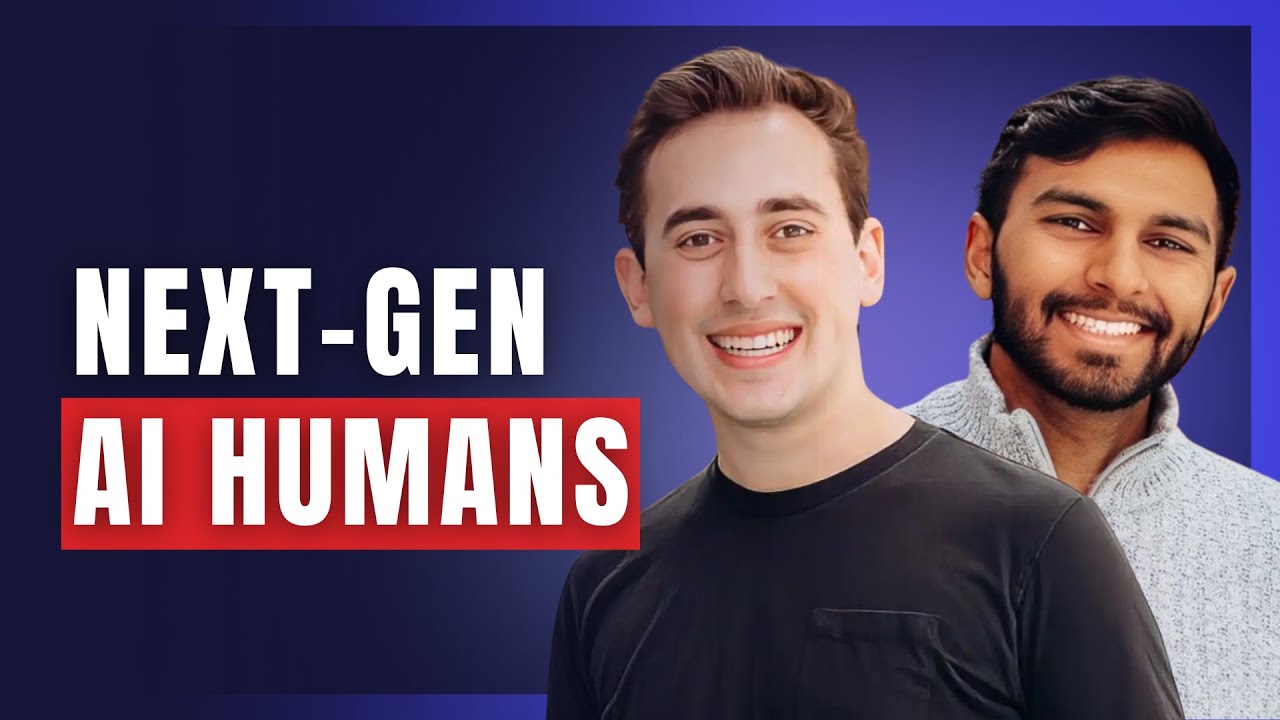
Quinn Favret and Hassaan Raza, Tavus: Building AI Humans
Tavus co-founders Quinn Favret and Hassaan Raza on human computing, why AI needs emotional intelligence, and Tavus Pals that reach out to you.

Watch on YouTube · Listen on Spotify or Apple Podcasts
Quinn Favret and Hassaan Raza, co-founders of Tavus, argue that the next era of computing is human computing: machines that learn the language of humans, instead of people learning the language of machines. Recorded at the Tavus office in San Francisco for The AI Report podcast, they tell host Liam Lawson why conversation is a "waltz" that machines still can't dance, how Tavus Pals reach out to you proactively, and why Tavus's AI humans will always disclose that they are AI.
Key takeaways
- Human computing is the next interface. Computing went from complex machines to command lines to GUIs. The co-founders say the next step is software that knows you, understands you and meets you where you are. (04:38)
- Fast replies alone don't make a good conversation. People who connect can respond to each other in as little as 250 milliseconds, but a machine told to reply that fast still sounds wrong, because good timing depends on context. (09:27)
- Four research areas: perception, understanding, reaction and action. Tavus captures signals such as facial expressions and tone of voice, works out the relationship between them, renders a realistic real-time face that reacts, and takes action like an agent. (12:09)
- Two ways in: the API or Tavus Pals. Developers build on Tavus's APIs and its CVI interface. Tavus Pals are a consumer product: AI assistants and companions you can text, call or video call, and that can reach out to you. (14:26)
- AI therapy is about access. For most of the world, the alternative to AI therapy is not a human therapist but no therapist, which is why Tavus works with clinical-grade AI therapy companies. (23:19)
- Always disclose. The co-founders expect Tavus to pass the Turing test within a year, but say its AI humans will always tell people that they are AI. (27:18)
- A team in 13 countries speaking 30+ languages. Tavus has grown from about 25 people to around 50 since the last recording, after raising a Series B, and the co-founders say that diversity matters for both the team and the data. (39:42)
What is human computing?
Human computing, as Quinn Favret and Hassaan Raza describe it, means teaching machines the art of how to be human, so that people no longer have to learn how a computer or a piece of software works. Tavus calls itself a research lab focused on human computing.
The co-founders trace the idea through the history of computing. Early machines were very hard to use. Command line interfaces opened them up to developers and tinkerers, and graphical interfaces opened them to everyday people. Each step made machines a little more human, but not all the way. Rather than people adapting, typing instead of talking and using emojis instead of gestures, the machine should learn the language of humans. Their example is a mother who is highly intelligent but less fluent with computers, and who should not have to compromise on the way she communicates.
They do not expect machines to become fully human. Machines were built to be unambiguous, logical and able to remember everything, while people are ambiguous and speak as much through gestures as words. The goal is a combination of the two: something with emotional intelligence that you can build a relationship with, which can still help you around the clock with unlimited recall.
Why is human conversation so hard for AI?
Quinn Favret and Hassaan Raza say conversation is hard for AI because it depends on many signals working together: words, tone, timing, facial expressions and body language. They describe it as a waltz, with machines "in the corner doing the robot".
Turn-taking is their example. People who really connect can respond to each other in as little as 250 milliseconds, but a computer told to reply that quickly still produces a bad conversation, because it lacks context. People sometimes let a thoughtful remark sit in silence, and sometimes reply very fast when the conversation has a good rhythm.
That is also why Tavus does not model its AI on the best human communicators. People communicate in very different ways, so Tavus builds human behavioral models that adapt within the first few exchanges: slowing down for a thoughtful speaker, speeding up when a conversation is lively. The co-founders say the diversity of conversations matters more than imitating the best communicators.
How does Tavus build AI humans?
Tavus builds AI humans around four research areas, according to Quinn Favret and Hassaan Raza: perception, understanding, reaction and action. Perception means capturing the right signals in a conversation, such as facial expressions, tone and prosody. They say Tavus is one of the only startups able to take in that much signal.
Understanding turns those signals into meaning by looking at the relationship between what was said, how it was said and how the other person reacted. Reaction means responding with the right words and emotion, which is where Tavus's real-time replica model comes in: rendering a realistic face that reacts as it talks. Action makes the AI human useful, so it can do things for you in the background while it looks like you are on a video call.
The co-founders say each of these is difficult on its own. The hard part is doing all of them together, in real time. They also say some of their research team has been working on teaching machines to be more like humans for the last 30 years.
What are Tavus Pals?
Tavus Pals are Tavus's consumer product: AI assistants and companions that you can text, phone or video call, and that can reach out to you too. Quinn Favret and Hassaan Raza describe them as agents and an LLM "for the rest of us", built for everyday people rather than developers.
Developers can also use Tavus through its APIs and its CVI interface to build their own applications. Pals are the fully embodied version. The co-founders contrast them with static apps that you have to learn and choose to open: a Pal is proactive and always on, and can call you when you are feeling down or reach out about your day.
They see it as a horizontal technology that fits anywhere human connection is needed, from customer support and customer success to therapy, companionship and assistants. Every new team member is asked which use case excites them most, and the answers range from education to entertainment to healthcare.
Should AI have emotional intelligence?
Quinn Favret and Hassaan Raza say the bigger risk is AI that never understands people: machines that become far more intelligent without becoming emotionally intelligent, and so less aligned with humans. They acknowledge risks and downsides, but say the positives far outweigh them.
AI therapy is their main example. Calling it a bad idea is, in their view, a privileged position, because most of the world cannot afford therapy and the alternative is no therapist at all. Tavus works with clinical-grade AI therapy companies. The co-founders also tell the story of AI Santa, a concept Tavus launched for Christmas: after it was taken down, a user with severe cerebral palsy and a speech disability wrote that Santa was the first to take the time to understand him, so Tavus set up a link he still uses.
On safeguards, they describe research into the ethics of the technology, policies on what Tavus does not allow, guardrails against hallucinations and dangerous talk, and a people first culture. They expect Tavus to pass the Turing test within a year, but say its AI humans will always disclose that they are AI.
What will work look like in 10 years?
In 10 years, Quinn Favret and Hassaan Raza expect people to stop thinking about using a computer at all. They call this the invisible interface: an AI pal that wakes you up, texts you the day's plan, reschedules when you are running late and brainstorms with you after a meeting.
They also expect AI coworkers that people treat no differently from human colleagues, sitting in meetings, and AI healthcare intake assistants that brief a doctor before an appointment. Tavus already uses an internal AI HR consultant and an AI SDR on its website, and the co-founders say several healthcare companies already use intake assistants.
On job displacement, they say there will be some, and they do not shy away from it. Their argument is that the job is to replace bad machines, not humans, and to give people access to things they would otherwise go without, such as a personal assistant. One of them points to grocery stores, which could have been almost fully automated but still employ people because the human touch matters, and argues that shorter work weeks should come with these systems.
How does Tavus hire?
Tavus hires for passion, craft and a wish to do one's life's work, say Quinn Favret and Hassaan Raza, followed by curiosity and strong opinions. They want people who think beyond their own role, push for what's best and come to build rather than to fill a job.
The team works across 13 countries and speaks more than 30 languages, which they say helps with testing in any language and with collecting diverse data. They see culture broadly: countries, regions, generations and education, from high school dropouts to people with PhDs. The team has grown from about 25 people to around 50 since the last recording, after a Series B round.
Employees have changed the founders' minds. Quinn says the team challenged how Tavus screens candidates, and after an hour in a room the founders decided they needed to reinvent how they hire. A researcher also showed that Tavus was recording human conversation in a way that introduced bias, because people put up a different face when told they will be recorded, and fixing it changed the output completely.
Why do Quinn Favret and Hassaan Raza do this?
Hassaan Raza says he wants to deliver the dream everyone has had of what it feels like to use a machine. Quinn Favret's answer goes back to his family: he grew up in Michigan, his grandparents immigrated from Armenia during the genocide, and his parents did not go to college. He dropped out of college himself, went into politics, then stumbled into tech.
Quinn says he has always looked for where he can make the biggest impact on the world, and that it turned out to be startups rather than politics. He sees Tavus as the highest-leverage place to do that, in education, healthcare, companionship for the elderly and how young people learn.
In their words
"We built machines to be these unambiguous logical communicators that can remember everything. And humans are ambiguous." (07:47)
"This conversation we're having right now, it's a dance. It's a waltz we're doing together and machines are in the corner doing the robot" (05:40)
"The alternative for them isn't a human therapist. It's no therapist." (23:26)
"These AI humans will always disclose that they are AI but you'll know and you won't care." (27:18)
"Taste and craft and passion for what you do is so important." (35:49)
Chapters
00:00 Preview
01:18 Introduction
01:42 The office and its museum of vintage computers
03:36 From command lines to human computing
04:56 The OS for human and AI interaction
07:22 Do we lose anything by not learning how machines work?
08:48 The waltz of human communication
11:53 Perception, understanding, reaction and action
14:17 Tavus APIs and Tavus Pals
16:03 Where the idea came from
17:59 Who benefits most: therapy, support and education
22:02 Emotional AI, AI therapy and the AI Santa story
24:58 Guardrails, people first and disclosure
27:34 The invisible interface in 10 years
29:56 Job displacement and replacing bad machines
32:06 A shorter work week
33:18 Five years building, before AI was cool
34:09 What other AI companies get wrong
36:10 What building AI teaches about being human
38:34 Growth, Series B and hiring internationally
41:13 What Tavus looks for in a hire
43:09 When employees changed the founders' minds
44:52 One interview question each
45:53 Why do you do what you do?
48:12 Closing
About the guests
Quinn Favret and Hassaan Raza are the co-founders of Tavus, a research lab focused on human computing. They started the company about five years before this recording and went through Y Combinator when they were one of only two or three AI companies there. Tavus offers APIs for developers and Tavus Pals for consumers. Quinn grew up in Michigan and worked in politics before moving into tech. Tavus
About the host
Liam Lawson is CEO of The AI Report and host of The AI Report Podcast. Meet the team
Full transcript
Edited for readability. Quotes above are word for word from the recording. The episode opens with a short preview of clips from the conversation. Speakers are identified from the content of the recording.
Liam Lawson (01:18): Quinn, Hassaan, thank you for having me. Welcome to the podcast.
Quinn Favret: Thanks for having us. We're excited to be here. It's been a while since the last one we did. I'm glad you could be at the office this time instead of remote.
Liam Lawson (01:25): This is so much better than Zoom. I think it was February or March last time we recorded.
Quinn Favret: Yeah, it must have been. It's close to a year. A lot has changed.
Liam Lawson (01:34): And seeing your office today, I'm going to have to show some B-roll of what this is and what's happening. Can you explain the inspiration behind this office?
Hassaan Raza (01:47): It's a few things. An office is a physical manifestation of the culture of a company. For us, we're really into being very hands-on and very creative, and we have a huge respect for vintage computing and for putting ourselves in the shoes of these amazing designers and developers who had no priors. We love tinkering. We really love being able to use old technology. We also love old cars. So it's a physical manifestation: we have this amazing museum of old computers that we can use and be inspired by. We can go fix them. We can create new things. That's our culture here.
Quinn Favret (02:34): I think it's more than that too. Part of the root of the office is that we are building something brand new, something that hasn't existed before. We need a space where the team can be incredibly creative and innovative, and feel inspired. That's why we've got the brick walls and the wood. It feels like a workshop in some ways. You've got the natural light, because it feels uplifting and comfortable. Everything was done with such intent and attention to detail, so the team can feel inspired and actually want to come here and put in the work and the time to build this future.
Hassaan Raza (03:07): 100%. If you're building the future of computing, then you should be able to go and see what it was like. Our team will often go to one of these old machines, turn it on and put themselves in the place of someone who had never used the internet before, or the person who designed it. Or they'll go read one of these early user guides and manuals. It's really inspirational and allows them to be creative in a completely different way.
Liam Lawson (03:36): You're really blending the past and the future together. Talk to me about what you think the future looks like and how Tavus fits into that vision.
Hassaan Raza (03:46): A lot of what we think about is what the future of using a computer and software looks like. If we think about the history of computing, and why we have some of these old machines, you can see how we went from machines that were super complex to use, to command line interfaces, which opened them up to a larger population: more developers, the tinkerers who could use these machines. Then we got GUIs, and now you've opened it up to everyday people being able to learn and use these machines.
If we track that evolution, machines have become, to some degree, a little bit more human, but they haven't quite gotten there yet. We've been watching and reading the sci-fi for all these years about machines that could really understand us, that maybe felt like us. So what we see is that the future of computing is human computing, where you don't have to learn how a computer works or how software works. It knows you, it understands you and it meets you where you are. That's what we're building here at Tavus.
Liam Lawson (04:56): It's interesting, because I've spent the last couple of days at Dreamforce, and one of the companies there is Figure. They've got these humanoid robots, but they're still so far from looking like a human and interacting like a human. There's still this cognitive dissonance: I know that's not a human, it's definitely a robot. When I was doing research on you, something that really stuck out to me was that you describe Tavus as the OS for human and AI interaction. Unpack that for me.
Hassaan Raza (05:29): Tavus in a nutshell: we're a research lab focused on human computing, which is teaching machines the art of how to be human. Humans are really complex communicators. This conversation we're having right now is a dance. It's a waltz we're doing together, and machines are in the corner doing the robot. So how do we get them to join us in the waltz?
A lot of our research focuses on teaching them to see the way that we see, to hear the way that we hear, and to understand the relationship between how we talk and the reactions that we have, and then to react back appropriately. If we can teach them to do that, you can teach these machines to really understand the nuance of what we're saying, and even to look a lot like us and have those micro-expressions as reactions. Once you do that, computers aren't this thing you have to learn, that some people are good at using and some people aren't. In the future you can use a computer the way you talk to a friend or work with a coworker. That's a future we're really excited about.
Quinn Favret (06:36): And it comes back to when we were growing up and starting to use computers: we had to adapt to the computer. We had to learn how to talk to it. We had to type instead of talk. We had to use emojis instead of gesture. All of these different adaptations, we had to make them. The base premise here is: how do we have the computer, the machine, meet us where we are?
Hassaan Raza (06:55): Change the dynamic. Flip the dynamic entirely, so instead of us learning the language of the machine, the machine learns the language of humans. That changes who can use a machine well and who can't. Our ability to take an idea and turn it into reality is very different from, say, my mom's. She's incredibly intelligent but maybe doesn't use a machine as well as I do, and the question is why she should have to compromise on the way she communicates. A machine should meet us where we are.
Liam Lawson (07:22): Do we lose anything by not doing that hard work of understanding how machines work and how code works, and speaking that different language? Theoretically, that makes our brains change, adapt and learn. If everything's just a conversation, are we losing something there?
Hassaan Raza (07:43): In a lot of ways we built machines that are our opposite. We built machines to be these unambiguous logical communicators that can remember everything. And humans are ambiguous. We're lossy. We speak as much through our gestures as we do with our words. So I think the future isn't that machines are entirely human, but that they're some combination of the two that is special. It's not fully human, but it's not fully machine either. It's humanlike in the sense that you can build a relationship with it. It evolves. It understands your emotions. It has emotional intelligence. But it can still help you 24/7, it still has unlimited recall, and it can still be very logical. Bringing the two together, making them meet, is the real special place, and that's where you want to go.
Quinn Favret (08:40): It's more man, it's more machine. You get the best of both worlds. Something in the middle. Not quite man, not quite machine, something beautiful in between.
Liam Lawson (08:48): I want to really break down what you described as the waltz. Say I'm an alien. I come to Earth and I'm trying to understand human communication. What's important? Is it voice, tone, body language? Break down those components for me.
Hassaan Raza (09:04): The reality is that it's so much of those things coming together in perfect harmony, and that's why it's a waltz. Take turn-taking, for example: me saying what I need to say and you responding. If you look at it purely on a mathematical or measurement level, you'd say humans who really connect respond to each other in as little as 250 milliseconds. So theoretically you could tell a computer, after I finish, respond in as little as 250 milliseconds. What you'll get is a conversation that's [expletive]. And the reason isn't that it's too slow or too fast. It's that it's unintelligent, or it doesn't have the right context, because humans are very dynamic. If someone says something thoughtful, maybe we'll just sit there and let the silence speak. If we're in a really great cadence, we'll respond really, really fast. It's very contextual.
So we do things by taking all these signals together: how you said something, how I interpreted it. A lot of it is understanding the relationship between these different signals. What face did you make, what did you say, how did I react to it? Breaking down the relationship between those things is really important. All of it matters, but in a vacuum it can feel like you just need to get one right, when you actually have to get the combination right. That's the most important thing.
Liam Lawson (10:41): And it's the fluidity of it as well.
Hassaan Raza: Absolutely.
Quinn Favret: It's ever evolving, ever ongoing, live.
Liam Lawson (10:47): Before we get into the technical components: hypothetically, you'd want to model this on the best human communicators you've seen. What are good examples of that?
Hassaan Raza (10:57): Maybe it's not the best human communicators, because humans are so diverse. Some of us communicate in very different ways. What we're doing is building really robust human simulation models, or human behavioral models, that can model really dynamic differences from conversation to conversation. In the first few back-and-forths you can detect that this person clearly speaks a little slower and is more thoughtful, and you adapt the conversation. Or, hey, we're really hitting it off, we're speaking really fast, we're so excited, so I'm going to do that instead. I think the diversity of conversations is actually more important than having the best communicators, and that way you can be very dynamic.
Liam Lawson (11:53): Break down your work for me and what you're building. From what I understand, you have different models specific to tone of voice, to body language, to understanding facial expressions. How are you building them, and how are they different from what other startups are doing?
Hassaan Raza (12:07): That's a great question. There are a few different areas: perception, understanding, reaction, and actions, or as we say, agentic.
Perception is one of the most important pieces of research that we do: how do you actually capture the right signals in human conversation? Being able to look at your face and extract expressions from it, hearing your voice and asking what the tonality is, what the prosody is, what emotions are there, and collecting a ton of signals. Tavus is one of the only startups that's able to take in as much signal as we can.
But once you have all the signal, you have to actually do something with it. So the understanding piece is even more important. A lot of our research and model work is focused on taking all these really amazing input signals and creating understanding out of them. This is where we talk about the relationship: we have really amazing data on what you just said and how you said it, and we also have data on how I reacted to it. What do we need to do with that next? What's the relationship we can extract from it? We spend a lot of time on the understanding piece.
Then of course we want to be able to react and actually say something back: based on what we've seen so far, I should react this way, and this is the emotion I should have when I react. We spend a lot of time on creating the most realistic real-time replica model, so we can render a face that looks really realistic. And once you have this amazing AI human, you want it to actually be useful, so it can take action the way that humans do.
Each one of those is incredibly difficult. Doing them all together, in real time, is where it really excels: you have this robust AI human that can see you, hear you and understand you, and it can talk back. It looks like you're on a video call, but in the background it's also doing things for you. It's the combination of these things coming together that's really special, so we build state-of-the-art models and really amazing agent systems to do that.
Liam Lawson (14:17): The models and the research are all very interesting, but I want to understand it from my perspective. If I want to work with what you're doing, how do I go about that? What's my experience?
Hassaan Raza (14:26): We have two entry points to use Tavus. One is our APIs and our interface, CVI, so you can use all these models and build really amazing applications on top of them. But we also have a new release called Tavus Pals, which is a fully embodied experience.
We talked earlier about what the future of computing looks like. Today, traditional applications are static GUIs that you have to learn how to use. They're just there, and you have to decide to go and use them. The applications of the future are more humanlike. They evolve with you. They understand you. They see you, hear you and respond to you. You can video call them, phone call them or text them, and importantly, they can do the same to you. They're proactive. They're always on.
Tavus Pals are this future type of application: you can have the perfect AI assistant that reaches out to you and meets you where you are, and you can talk to it just like you would a real assistant. Or you can have an amazing companion that has emotional understanding and can help you, and call you when you're feeling down or want to talk about something. We're really excited about this release because it lets consumers experience the future of what a computer and AI look like.
Liam Lawson (16:03): Where did the concept come from? Did people come to you saying they wanted this, or was it more a product of all the research you're doing?
Hassaan Raza (16:13): I think it came from us being really obsessed with how humans and computers interact today. A lot of our research focuses on affective and human computing, and some of our research team has been working on this problem for the last 30 years, trying to teach machines how to be more like humans. We've all been obsessed with how we bring Cortana from Halo and Data from Star Trek and Jarvis to life: how we realize that science fiction and make it real. That's really what we've all been about. Have people been asking for it? I think parts of it, but people didn't realize it was possible, and our job is to actually make it possible.
Quinn Favret (16:57): People are definitely asking for it in the sense that when I talk to people, they say, this is terrible, I'd love a solution to this. But it's so hard to wrap your mind around what it could be, or what is even possible with technology, because this is so futuristic and so cutting edge. Part of our job, and something a lot of AI companies are having to deal with, is painting the picture of what the future can look like and being prescriptive about what technology can do for us. That's part of the fun of building in today's age. It's so different than five years ago.
Hassaan Raza (17:31): Totally. We're also really obsessed with the concept of friction: how much friction there is in using technology today, and how these machines haven't evolved as much as we'd want them to. We have GUIs and now we have chat interfaces, but is that really how we want to be using our computers? So it really revolved around how we can make using computers second nature, so you don't even think about it.
Liam Lawson (17:59): I think you're uniquely positioned. I've just been at Dreamforce, and a big thing they talk about is Agentforce. Loads of companies there are building agents. Okay, great: what does that agent look like? You're in Slack, messaging back and forth with a chatbot. You're very uniquely positioned with how frictionless you're making this. You're one of the only companies I've spoken to that has put such concentrated effort into making this more human and frictionless.
And when I imagine the future of work, I want something conversational. I don't want to go in and type lines of code and put out bullet points. I want to log on to my laptop and say, I've got this great idea, I'd love to make it happen, how do we do it? You're the enablers of that. So my question is: who is going to get the most use out of this? Out of the interviews I've done, there are a million ways you could take this. Marketing, ops. Some of the people I speak to a lot are in therapy, for example, and I can picture it there. Talk to me about what that future looks like.
Hassaan Raza (19:13): We actually think a significant part of the applications of the future will be these humanlike applications, these pal-like applications. The future of therapy, or AI therapy, is something that's emotionally intelligent, has all these signals and can meet you where you are. You mentioned AI agents for businesses. They shouldn't be agents you have to learn how to use. They should feel like any other employee: you can text them, call them, they can do things for you and they can reach out to you. So in every domain where some level of human connection is needed, this is the perfect fit. Whether it's customer success, customer support, a great marketing buddy, a great companion or an assistant, all of these will need the human interface to interact with them. So we see it as a very horizontal application.
Quinn Favret (20:14): There have been some awesome use cases that we never would have guessed, which have just popped up as people start building. My favorite part of this: you met some team members earlier when you came in. We ask every single team member when they come on board what their vision for this technology is, what excites them, what use case they'd be excited about. And every answer is completely different. For me it's education. I get incredibly excited thinking about how education can look different in K through 12, if someone's able to ask all the questions they want to ask and have the personalized attention they need. For other people it's entertainment. For some it's healthcare. It's across the board, and that's the beauty of it.
Liam Lawson (20:58): Every area has a use for it already.
Quinn Favret (20:59): Exactly. And every day it's something new. So the challenge for us is how we build this broad interface that can work for everyone, but also works well enough that they can actually use it in all of these different cases.
Hassaan Raza (21:12): What we say to people when they ask what Tavus Pals are is that they are the agents and the LLM for the rest of us. They're not focused on being something developers have to learn how to use, or something for a more technical audience. The everyday person can get the best of what AI has to offer, and it truly understands them. It's beyond what any LLM chat like ChatGPT can offer, because it can reach out to you and it can really understand you. And it's not just chatting. You can video call it. Those are all really special pieces that make for an application that's a lot closer to your friend or your coworker than a machine is.
Liam Lawson (22:02): When you're building in such complexity, and you're almost building in this emotional understanding and resonance, are you at all concerned about where that ends up?
Hassaan Raza (22:14): With any new technology there's always some degree of risk and downside, but I think the positives, and where it can go, far outweigh any negatives. The alternative is that these machines never truly understand us. They'll get way more intelligent, but not emotionally intelligent, and that means they're less human aligned. Our vision is: how can we get machines to be so human aligned that they have emotional intelligence? Because we think that's the most important thing. There are certainly some risks and some downsides, but we're already seeing such a massive impact from what people build on Tavus today.
People often ask whether an AI therapist is a good idea. If you'd asked me a couple of years ago, I'd have said no, that's crazy. But if you really think about it, the opinion that AI therapy is not a good idea is sort of a privileged take, because we have the ability and the means to afford therapy. Most of the world does not, and the alternative for them isn't a human therapist. It's no therapist. So we love working with AI therapy companies that are clinical grade, that have been tested, and that are offering therapy to people who wouldn't have had access to it at all. We're really excited about the impact it can have.
Quinn Favret (23:48): You see it left and right. I remember vividly: we had a concept called AI Santa, which we launched last year. For anyone watching this, you'll see it pop up again in a week or two, which is super exciting. We launched Santa around Christmas time last year, and around January 1st, as scheduled, we took it down. We got an email from an absolutely amazing human, who said, Santa was the first person who actually understood me. I have severe cerebral palsy. I have a speech disability. And Santa's the first person who actually took the time to understand me, to give me space and get to know me. So of course we stood up an individual link that he still uses today to talk to Santa. It was this amazing story.
The other part of this question that's really important is that it's our responsibility to bring this to life in a way that is human aligned and human-centric. As the builders of this, we're not scared of it, because we're the ones bringing it to life in the right way, in the ethical way, and that's our responsibility.
Liam Lawson (24:58): How do you wrangle that responsibility? What conversations do you have? How do you come to terms with it?
Hassaan Raza (25:04): It's an evolving thing. We try to have a lot of discussions with our users, our customers and people who have never used AI in this form before. We do a lot of research, and part of our research is focused on the ethical aspects of this. Part of it is policy: what do we not allow, what things are harmful, and having a view on that. That's evolving too. We don't have all the answers today, but we really try to make sure the right guardrails are in place, and we do a lot of great work against hallucinations or any sort of dangerous talk on the platform. There are a lot of very thoughtful things that we do. It's an evolving thing, and it's something we've taken very seriously since day zero at Tavus.
Quinn Favret (26:00): There are the practical and tactical prongs that come out of that: data privacy and ownership, how our model development goes, and the use cases and guidelines that we allow. But it also comes back to the culture we've built here, which is people first. That's not just for the users or the customers, it's for the team too. Everything we do is human-centric, from the benefits we offer and how we hire, to the culture we've built, to how we build our models and our product. It oversimplifies it to an extreme degree, but everything is rooted in people first, and if we abide by that, it comes together.
Hassaan Raza (26:36): What it comes down to is that a lot of AI companies are focused on machines first, humans second: intelligence at all costs. Tavus is solidly human first, machine second. Our immense respect for the waltz, for how humans operate, drives everything that we do. Take disclosure, for example. Tavus will absolutely pass the Turing test in the next year, where you won't be able to tell unless you're told. But you will always be told. These AI humans will always disclose that they are AI. You'll know, and you won't care. Things like this, where we have such immense respect for humans and human connection, drive everything that we do.
Liam Lawson (27:34): Conceivably, the world's at your feet. Where do you see this in 10, 15, 20 years' time?
Hassaan Raza (27:40): I think in 10 years' time people won't even think about using a computer. That won't even be a concept. You're not going to wake up and think, I have to get on this thing and wrangle it, or I have to learn how to use it. It'll truly be what we call the invisible interface. The invisible interface will be commonplace, and using a computer will be second nature.
You'll be talking to your perfect AI pal assistant, which wakes you up and says, it's time to get ready for your day. It texts you all the things you need to do for the day. You're on the run, you're running late, and it says, I got you, let me move some stuff around. After a great meeting, you video call it and brainstorm with it. You have your amazing AI friends and your amazing AI coaches, and these things are just commonplace. I think that's the future we'll see in 10 years. These things will be so aligned. They'll understand you so well. They'll understand every emotion you have when you're feeling down, even the things you don't say.
Liam Lawson (28:48): And they're involved in every part of your life.
Quinn Favret (28:49): Right. And whether it's your specific pal that you've built a relationship with, or a pal that's working with or for someone else, say in healthcare or education, it will change how we fundamentally experience technology and how we're able to communicate with tech.
Hassaan Raza (29:02): You'll have AI coworkers that you think of no differently than your real coworkers. You'll just talk to them the same way, and they'll be in the meetings. It'll just be commonplace. You'll have your AI healthcare intake assistant that you talk to before you see the doctor, which makes sure the doctor knows everything about you and has way more context, so they can help you in a much better way.
Quinn Favret (29:25): We're not quite 10 years out yet, but we try to build that internally a little bit. We have an AI HR consultant internally that any of our team members can go and talk to. We have an AI SDR on the website.
Hassaan Raza (29:35): Honestly, I say AI healthcare intake system, but we already have multiple healthcare companies using those things.
Quinn Favret (29:43): And more so, in 10 years it won't just be in this office. It won't just be in San Francisco. It will be the new normal for how we work with machines.
Liam Lawson (29:56): It sounds pretty utopian. I want to live in that world. But the doctor intakes, the personal assistant, all of these different jobs: what happens to the people who are displaced? It's a hard question to answer, because no one knows. But if you were to make predictions, what do you think?
Quinn Favret (30:14): I think our job isn't to replace humans, it's to replace bad machines. Do you have a personal assistant? No. But there are a lot of humans doing jobs that a bad machine could do.
Hassaan Raza (30:24): That's totally true. What we're doing is equalizing access to things that people otherwise didn't have, and I think real human experience will be even more cherished. There are a lot of jobs that will continue to exist. What this means is that you can have a personal assistant you wouldn't have had otherwise. You weren't going to hire a real personal assistant, you were just going to have nothing. So it equalizes access. And certainly we know there will be some displacement. We don't shy away from that and say it definitely won't happen. But I think it will improve the everyday lives of everyone across the board, and that's what we're really focused on. There will be some, but our job is to replace the bad machines that are already out there, the ones that are removing the human from the experience. It's an overall regressed experience, and we're solving that problem.
Quinn Favret (31:18): There are two takes on this. One: take a grocery store and the self-checkout lane. In theory, most grocery stores could have been almost completely automated, yet there are still humans in there, because the human touch matters so much. It doesn't make sense to completely automate it, or it's a regressed experience in many ways. The other take is that this is where it really matters that we evolve the systems with us as well, and bring in a four-day work week or a three-day work week, because humans weren't inherently meant to work under fluorescent lights from nine to five. We're meant to communicate. We're meant to have the dance. We're meant to evolve and help society evolve with us.
Hassaan Raza (31:59): Utilitarian net benefit.
Liam Lawson (32:06): If you had a two-day or three-day work week, how do you think you'd spend that time? I imagine you two, as founders, would probably spend more time working on this, just in a different way.
Quinn Favret (32:17): For us, it might go from seven days to six days.
Hassaan Raza (32:21): We're very lucky here at Tavus that every person here is doing what they consider their life's work. This is what we want to do. We want to do this on the weekends and at night. We all have other hobbies, certainly these computers and the cars and everything, but this is our primary hobby and the thing we love the most. It's a work of love, really. A lot of people don't always have the opportunity to do that, and a reduced work week gives them the opportunity to work on or find a passion, whether it's reading or drawing or painting or anything else. One of the most impactful things you can do in life is look back and say, I spent time doing things that I loved so much, and that was my legacy. I think that will allow more people to do that.
Liam Lawson (33:18): I'm just coming to terms with that. You two have been building this company for how long now?
Quinn Favret (33:26): Just about five years. It's been a while.
Liam Lawson (33:28): Before AI was a cool thing to do.
Quinn Favret (33:30): Way before AI. When we were going through YC, we were one of two or three AI companies, and everyone was telling us we should do blockchain instead, or crypto, or NFTs. We've come a long way.
Liam Lawson (33:40): I bought a couple of NFTs.
Hassaan Raza (33:42): I think I made NFTs at some point.
Quinn Favret (33:44): Oh, did you have the chimp ones?
Liam Lawson (33:48): I didn't have any of them, because I'm definitely not that wealthy, but I've got a couple of defunct Gary Vee NFTs sitting in a MetaMask wallet somewhere. So I got fooled into that as well.
Quinn Favret (34:02): One day it'll be super valuable.
Liam Lawson (34:04): That's the promise I'm living by.
Hassaan Raza (34:06): You're going long on him.
Liam Lawson (34:09): So, five years in the industry. AI is exploding right now. In the past two years, VC investment has gone straight into AI. In your experience, as the old heads of this industry, what are other AI companies getting wrong?
Hassaan Raza (34:30): There are a few things. They know who they are. A famous programmer and hacker had a recent article that basically said there are a lot of people building who don't actually have a love for technology. They have a love for money, and some VCs love this, because some VCs just love money. Fundamentally, at Tavus we have a love for humans and a love for technology, and I think that's really important for creating impactful, long-standing work, rather than the get-rich-quick schemes we're seeing a lot of. That's my version of it: really understanding and believing in what you're building and saying, this is my life's work. Not just applying AI to something you know will make money. That's a totally valid thing to do. But that's what makes what we do very unique and special.
Quinn Favret (35:45): And it goes hand in hand with that: people don't build with taste. Taste and craft and passion for what you do are so important. It shows up in the small details, from how a product feels when you use it for the first time, to the experience you have throughout the journey, all the way to your first impression when you visit a website. That tastefulness is so important, especially in today's world.
Liam Lawson (36:10): What has building AI taught you about being human?
Hassaan Raza (36:15): That it's really hard to emulate humans. Humans are immensely beautiful, complex creatures. Just the nuance of it. Whenever we're at our summits or retreats, we do an exercise that I call the art of conversation. We pair people up, ideally people who haven't met each other before, and say: go for five minutes, set your phone down, record yourselves having a conversation. Everyone comes back, and we say: watch the conversation and start journaling how you felt, when you felt there was a connection built, and what happened.
You find all the smallest nuances. That laugh at the beginning broke the tension. The way they said this made me feel so special. It opens everyone's eyes: so much went on in this. The smallest nuances, like how long it took to answer, the intonation changing, the nonverbal cues, the gestures on your face. You raised your eyebrow and that told me something. The nuance of humans is what we've learned. It's the smallest of small things.
Quinn Favret (37:27): Truly. You and I have done that exercise together multiple times, and we've known each other forever, and you learn so much about each other. Oh wait, he totally does that every time he does this. That small thing made the total difference, and now that conversation felt enjoyable.
Hassaan Raza (37:47): Right. And you realize there are tells in people. If you just analyze them, you see, you're not very confident about this. Those beautiful tells and nuances and gestures are incredible to see, and so is the scale at which they operate.
Liam Lawson (38:04): You guys might be incredible at poker. I'm just saying, don't rule it out, in terms of bluffing people and being able to read them.
Quinn Favret (38:12): We have some people on the team who are great at poker. I don't think we fall into that group.
Hassaan Raza (38:18): I think what has happened is that instead we are too emotive. We put all our expressions on our face, where other people are really good at detecting them but maybe not portraying them.
Quinn Favret (38:30): Exactly. Our perception team is great.
Liam Lawson (38:34): I'm curious. Last time we spoke, you were 25 people. Now you're over 50. Is that right?
Quinn Favret (38:36): Just about. It's been a crazy few months here. Things have really taken off over the past few months. We've been super fortunate. We were able to raise a Series B and bring on some great partners, and the team has continued to flourish with awesome people. The research and engineering team specifically has grown, and the go-to-market team has followed. It's managed chaos.
Liam Lawson (39:04): There are two things I want to dive into there. First, when you're hiring, do you look at hiring internationally? When I think about communication, I think about different countries and cultures, how they communicate, how they use their hands, and how that plays into the conversation.
Hassaan Raza (39:20): 100%. By default we hire the best person, no matter where they are. Of course we have a preference for San Francisco, but if someone's exceptional, we'll hire them. So the diversity in our team is insane. I think this team speaks 30 languages, so testing is great, because we can test any language.
Quinn Favret (39:42): We're in 13 countries, that's where the team is based now, with over 30 languages. And up until a few months ago, every single person on the team except me spoke multiple languages. That was not something we screened for. It just happened.
Hassaan Raza (39:56): So hiring internationally is absolutely a part of it. But hiring people with different perspectives, and people who are incredibly opinionated, is really important, and that naturally means there is diversity. It's so important, because how I gesture is so related to the culture I was brought up in and its societal norms. So we have to really think about it, both for the team, so that we don't have biases, and for the data we collect. It helps a lot to have very diverse data.
Quinn Favret (40:32): And we say culture as if it's country to country, which is definitely a part of it. But even going from the Midwest to Texas to San Francisco, or from Gen Z to Boomer, or across education backgrounds: we have high school dropouts who work here, all the way to people who have done PhDs and multiple degrees. So it's culture in the broadest sense, and striking a balance of diversity across all the different ends of those axes is what makes it so special. There are people who think about things from perspectives we have never even considered or realized existed.
Liam Lawson (41:13): Beyond that diversity and beyond technical proficiency, what are you looking for in a new hire?
Hassaan Raza (41:19): Passion, craft, and a want to do their life's work. Someone who truly sees their work as a labor of love, with the outputs, the products, the models and everything we're making as a testament to their craft and their passion. That's the most important thing, and honestly it's been one of the biggest differentiators for Tavus: everyone here is so passionate and in love with the problem we're solving around human computing and teaching machines the art of how to be human. That's the number one thing we screen for.
Quinn Favret (41:58): And there are two things on top of it. One is curiosity, a love for learning. The problems we're tackling here have never existed before. They're brand new. There's all this new frontier, and we need people who can learn it and are curious enough to understand what we don't know. The other is an offshoot of being passionate and actually caring, which is having opinions. The way that manifests is really important. We need people who are incredibly opinionated, who have strong thoughts, want what's best and will push for it. That means they don't come here only to do their role. They see the larger outcome as part of their work, so they'll say, even if this isn't my domain, that isn't good enough and we need to fix it. They're thinking beyond the lines of their own role.
Hassaan Raza (42:51): They don't come here for a role. They come here to build.
Quinn Favret (42:52): Absolutely. And they want to build the best thing ever, and they will hold themselves and everyone around them accountable to that.
Liam Lawson (42:58): You're really looking for that independent thought. You're almost looking for them to come to the same conclusions independently of you.
Quinn Favret (43:04): And to challenge us on assumptions or different conclusions as well. But yeah, 100%.
Liam Lawson (43:09): What is something you believed where an employee went against the grain and turned the tide for you?
Quinn Favret (43:32): I actually think one of them was about how we hire. That's one we've been thinking about a lot lately, especially as we scale: how do we build the systems to hire? You, Hassaan, and I have our thoughts around that, because we've created a value system and we've seen it work for the employees we've brought on, both those who have worked out here and those who haven't. One of the things we've been challenged on recently is: are we doing this as well as we can, and screening as efficiently as we can? Our initial thought was, well, yes, we put so much time and thought and love into this. Then we spent an hour in a room, broke it down, and said, oh my gosh, we need to reinvent how we hire.
Hassaan Raza (44:10): I think the research team especially brings such different perspectives on a lot of these things. Take my understanding of the best way to capture human conversation. We had a researcher come in and say, no, we're actually recording it the wrong way. We shouldn't be doing it this way, because we're introducing biases. If you set someone up and tell them they're going to be recorded, they're going to put up a completely different face, so we need to do it a different way. And I was like, okay, this is amazing. It changed the output completely.
Liam Lawson (44:52): Interesting. I've got one more question on hiring, one question for you as individuals, and then we'll finish there. I'm coming for a job at Tavus. You've got one question to ask me to see if I'm a good fit. What would that question be?
Quinn Favret (45:11): Can't ask two?
Liam Lawson: No.
Hassaan Raza (45:12): Do we each get one?
Liam Lawson (45:12): Each get one.
Quinn Favret (45:15): Okay. We'll make you do it first.
Hassaan Raza (45:18): Okay. I'm trying to think what the top things I ask are. I have the top things I ask, but if I only have one question, I have to reinvent that. This might be something I wouldn't even ask in interviews. I think for me, maybe it's: what do you want your legacy to be?
Liam Lawson (45:40): It's a good question.
Quinn Favret (45:42): What did you enjoy doing most as a child?
Liam Lawson (45:45): Interesting. I don't want to unpack them, because I want the audience to think about why you've posed them. You've experienced this before. Last time we interviewed, I posed the same question I ask every guest. I provide no further context, and I encourage you to take 10 seconds of silence before you answer. You go first. Why do you do what you do?
Hassaan Raza (46:13): Because I want to deliver the dream that we've all had of what it feels like to use a machine.
Liam Lawson (46:26): Beautiful.
Quinn Favret (46:29): I forget what I answered on the last podcast, so I'm intrigued to go back and watch that. I'm sure it's the same or similar. I grew up in Michigan. My grandparents immigrated from Armenia during the genocide. They came over working two factory jobs, didn't speak the language, and were doing their best to bring my parents up and help them live good lives. My parents didn't go to college. They sent me to college for the first time. Funny enough, I dropped out two years later, so that was quite the conversation.
But I grew up with a deep responsibility, and responsibility isn't even the right word, a want and a desire to make the world a better place, and to bring the vision that my grandparents and my parents had to life. So I went into politics for a little while, and stumbled into tech. Throughout all of this, it was a consistent journey of asking where I could make the biggest impact on the world, where I could make the world a better place. Turns out it wasn't actually politics. It seems like it's in startups. Tavus is the place where we can have a ripple effect on the world and really make it a better place, from education to healthcare, to how the elderly communicate with machines and have relationships and companions, all the way to how young people are learning and able to structure their thoughts and organize. So I do what I do because this is the best place and the highest leverage I have to achieve that.
Liam Lawson (48:12): Thank you so much for having me in the office, showing us around, taking the time with us, and for all of your time, attention and what you're building.
Quinn Favret (48:21): Thanks for coming over. Glad we could have you over, and glad you could check out the office. Hopefully everyone else gets to see a few parts of it too in the clips. You're welcome back anytime.
Liam Lawson (48:32): Appreciate it, guys. Thank you.
Get the five-minute AI briefing
Join 400,000+ business leaders who start their weekday with The AI Report. Subscribe free
