

400,000+ business leaders (and teams at IBM, AWS & Zapier) start their day with The AI Report. 5 minutes. Plain English. No hype.
Andrew DiLullo, AdCrunch Digital: AI UGC Ads for $20 Each
Andrew DiLullo of AdCrunch Digital shows how he makes UGC-style video ads with ChatGPT, Descript and Arcads for about $20 each, and why volume wins.
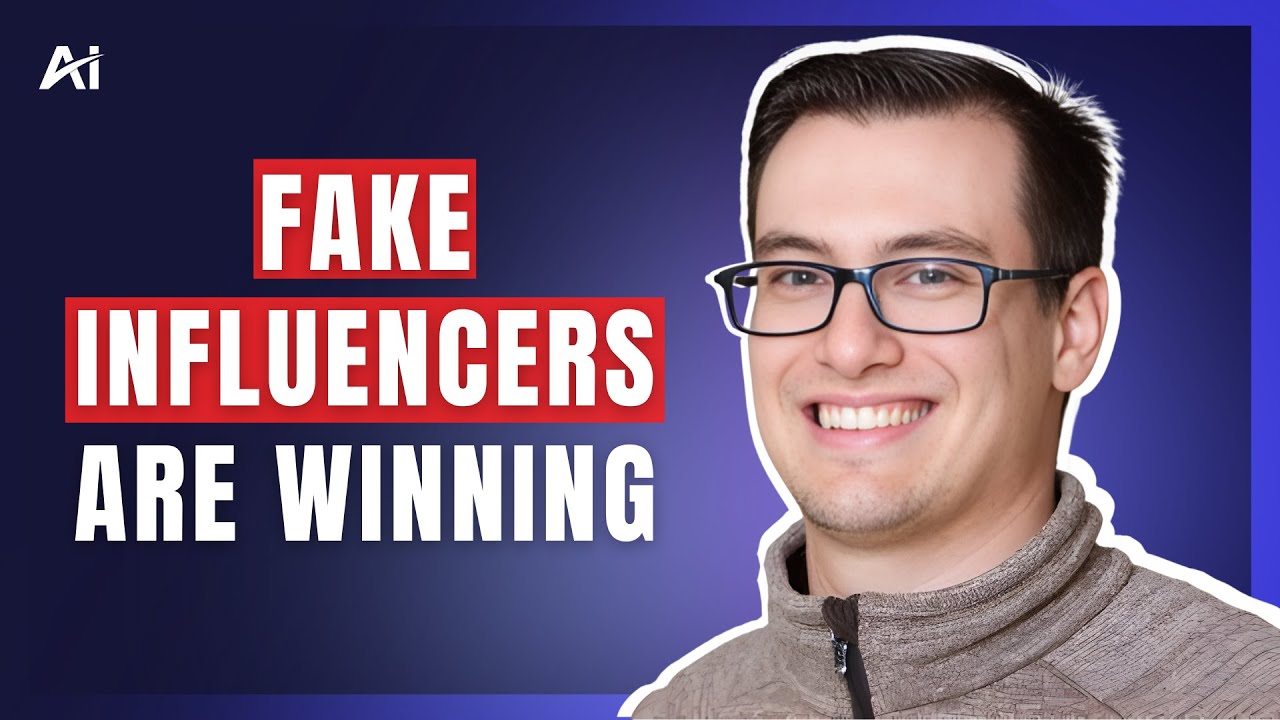

Watch on YouTube · Listen on Spotify or Apple Podcasts
Andrew DiLullo, a performance marketer and founder of AdCrunch Digital, says AI creator platforms have made UGC-style video ads so cheap, about $20 a video including editing, that the advantage now goes to whoever tests the most creative. He shows host Liam Lawson his full workflow, from pulling scripts off TikTok with Descript to rewriting them in ChatGPT and generating AI actors in Arcads, and explains why he still checks every claim the AI writes.
Key takeaways
- A UGC-style video now costs about $20. Andrew says AI creator platforms such as Arcads charge him about $10 a video, or about $20 once someone edits the background. A hundred videos cost about two grand, work he says used to cost $30,000. (24:05)
- Volume is the job. To get meaningful results on Meta, he says, you need to test hundreds of creatives. His first step with a new account is 50 hooks per angle, so three angles means 150 hooks, all drafted with ChatGPT. (06:51)
- Give ChatGPT data, not a persona. Instead of telling ChatGPT it is a master copywriter, he gives it a script he likes plus the full text of the product page, so it can find patterns in real data. (08:37)
- The second prompt does the real work. He asks ChatGPT to make the script more intense, start at the climax of the customer's problem, keep the original framework, write five versions for five buying reasons and search the internet and TikTok first. (11:36)
- Hide the AI tells. Shrinking the AI actor into a bottom corner over a looping background video, with captions near the mouth, brings what he calls huge conversion gains and makes the AI hard to spot. (04:33)
- Verify every claim. His team checks what ChatGPT writes, for example that sea moss actually helps with bloating, because false claims hurt the brand and kill repeat purchases. (16:54)
- Most agencies under-produce. He usually finds about 15 ads a month in the accounts he takes over, while his team puts out 50 to 100 pieces of content a month. (32:40)
Will Meta's push toward AI ads work?
Andrew DiLullo thinks a fully AI ad platform would be a bad move for Meta. Liam opens with Meta's recent announcement that it wants anyone to be able to run an unlimited number of ads on its system by next year. Andrew's view is that AI images of products are already good, but an AI influencer still cannot point at something or move its face like a person.
People go to Facebook to be entertained and to see what other people are doing, he says, and if it is all fake they will leave. He also expects lawsuits if Meta went to AI-only content, and suspects the announcement will end up as a set of AI options, much like earlier big announcements from Meta and Google that were later walked back.
Why are AI tools replacing UGC influencers?
Andrew DiLullo says UGC influencers will have to start looking for other jobs because AI creator platforms such as Arcads and Creatify can turn a script into a UGC-style video for about $10. Paying an influencer $300 for the same script no longer makes sense to him.
Andrew started in PR in 2017, moved to ads in 2019 and has worked in direct response marketing since, which he likes because you can see dollar in and dollar out. With editing, his cost is about $20 per video. He says that lowers the barrier so far that he can teach an intern to do work that once needed a 240k-a-year hire.
How does Andrew DiLullo turn a TikTok video into ad scripts?
Andrew DiLullo starts with a TikTok video he likes, from any industry, and pulls its script with Descript, which he describes as basically free and very accurate. He then asks ChatGPT one question: rewrite this script for my product.
The key is the data he pastes in with it. He selects the whole product page with Control A, copies it and gives ChatGPT everything: name, reviews, prices, ingredients, purchase and subscription options, benefits, mission and calls to action. He says the number one thing people misunderstand about ChatGPT is that it works on data, not on being told it is a master copywriter. The first rewrite is not meant to be good. It is a starting point for the prompt that matters.
What ChatGPT prompt makes ad hooks more intense?
Andrew DiLullo's second prompt asks ChatGPT to make the script more intense: generate intrigue, start at "the apotheosis or the climax" of the customer's problem, keep the same framework, and rewrite it five times around five different reasons someone would buy. Buying ads, he says, is mining attention: you just want to interrupt people.
He adds the buying reasons he already knows, for the sea moss brand he demonstrates bloating, weight loss, high blood pressure, high blood sugar, inflammation and low energy, and tells ChatGPT to search the internet and TikTok before writing so the scripts sound like real customers. He still edits the output, for example making a line more personal, such as eating the product at breakfast and not feeling hungry for lunch.
How do you make AI actor videos in Arcads?
Andrew DiLullo uploads his scripts to Arcads and picks actors, so 30 scripts with two actors become 60 videos. For the sea moss brand he wrote 16 scripts, and the whole process took about three or four hours. The actors are real people who upload footage of themselves speaking and moving, and the tool can filter by gender, age and setting, such as a gym, a kitchen or green screen.
He writes scripts for the AI, not for a grammar teacher: extra periods add emphasis, and quotation marks or question marks change how a line sounds. After generation, an editor puts the actor over a background such as the product website or a looping video. Liam notes that the platforms offer very conventionally attractive actors, and links it to the AI-generated profiles he sees sending connection requests on LinkedIn.
Is it ethical to use AI-written testimonials?
Andrew DiLullo argues that AI-written scripts are an amalgamation of what real customers think and say, and compares the debate to arguments over whether electronic music is real music. He questions the difference between an AI-written line and one someone writes and then records on TikTok.
Liam pushes back that the information must not be misinformation and that, as AI becomes indistinguishable from humans, bad actors could say anything. Andrew agrees claims must be checked: his team verifies what ChatGPT writes, because claims that are not true are bad for the brand and customers will not buy again. He also notes that on Meta, what gets ads removed is making claims, not using AI.
How can you tell an AI UGC ad from a real one?
Andrew DiLullo says the voice is the easiest giveaway right now: the inflection goes up or down in the wrong places. The eyes also move in ways human eyes would not, and seeing the same person promote different brands in your feed is a dead giveaway.
For most people it is already very hard to tell. He thinks it will be three or four years before even people looking for it can barely tell. The biggest gap is movement: AI actors cannot point at things. He would like tools that mirror a real person's motion, and guesses that is a year and a half to two years away.
Does raw content beat polished ad creative?
Andrew DiLullo says it depends on the platform. Highly produced ads still have a place, especially on TV, but day-to-day ads on Facebook, Instagram and TikTok are mostly educational or entertaining, showing what a person is doing and how they use a product.
Liam says much of the content he sees performing best is unedited and recorded on cheap microphones. Andrew does not expect production quality to rise on social platforms, and does not expect high-production ads to disappear either. He expects to see less and less of them.
Has AI made performance marketing more competitive?
Andrew DiLullo says he has not seen more competition yet, because few people work at the top level of any skill. Most agencies he audits post about 15 ads a month and underestimate the volume of creative needed to scale an account to $10,000 to $40,000 a day in spend.
That is why he will teach anyone his process: you still have to make 50 of these, know what makes a good script and a good hook, and put it all together. If he puts out five times as much content as other agencies, he says, he learns five times as fast. Liam adds that many people expect AI to deliver in one prompt and give up when it does not.
What is a hook sheet?
Andrew DiLullo's hook sheet is a list of 32 ad frameworks he adds to whenever he spots a pattern, then uploads to ChatGPT to write hooks or images. Examples include POV headlines, "stop wasting", problem and solution, myth and fact, "I have a confession" and "stop doing this, do this instead".
Liam's example of a strong ad is one The Hustle used: a cold-looking man and the line "Don't get left out in the cold". Andrew says the lesson is to iterate on a winning framework, for example "you're burning money if you're not reading this newsletter", rather than run one ad into the ground. He asks ChatGPT for 50 hooks, five per framework, then uses the same intensity prompt.
In his words
"AI is still not dynamic or fluid enough to look like a real person." (01:20)
"You need to give it a data set so that it can find patterns" (08:47)
"People don't understand the actual volume of creative you need to scale" (32:58)
"You still have to understand what constitutes a good script. You still have to understand what constitutes a good hook." (33:15)
"I learned five times as fast if I'm putting out five times as much content" (33:40)
Chapters
00:00 Welcome, Andrew DiLullo
00:34 Meta's plan for AI ads
02:46 From PR to performance: Andrew's ad journey
03:33 The fall of the UGC influencer
04:33 AI-generated UGC that converts
06:00 Andrew's AI creative workflow, step by step
07:45 Mining TikTok for ad scripts
09:21 Prompting ChatGPT with data
11:24 The secret to attention-grabbing hooks
13:55 The ethics of AI-generated testimonials
16:52 Telling real from fake in AI ads
18:27 Inside Arcads: generating AI actor content
20:45 The $20 ad video that looks organic
24:43 What types of ads work best for UGC
26:18 What's still missing from AI creative tools
27:59 Macro trend: raw over polished
30:08 Will high production quality disappear?
31:25 Has the AI ad boom created more competition?
32:58 Why most agencies still don't scale creative
35:12 Ad frameworks and the ChatGPT hook sheet
39:50 Posting AI avatars: brand accounts and claims
40:51 How to work with Andrew at AdCrunch Digital
About the guest
Andrew DiLullo is a performance marketer and the founder of AdCrunch Digital, which makes high-volume, UGC-style ad creative for brands. He started out in PR in 2017, moved into paid ads in 2019 and has worked in direct response marketing since. AdCrunch Digital
About the host
Liam Lawson is CEO of The AI Report and host of The AI Report Podcast. Meet the team
Full transcript
Edited for readability. Quotes above are word for word from the recording.
Liam Lawson (00:00): Andrew, welcome to the podcast. We've been working together for a little while on some Google Ads and YouTube Ads, and some important context for this conversation is an announcement from Meta a couple of weeks ago that they were looking to completely replace ads and have anyone be able to run an unlimited amount of ads on their system by next year. Before we get into what you do and how you're using AI, specifically in the context of ads, what do you think of that statement from them?
Andrew DiLullo (00:34): Yeah, I think to some degree Zuck is full of it. For images, sure: AI can take your products, create photos, have people holding them, do all that stuff. That's great. But there's still not the capacity for an AI influencer to point up to something or have normal human face movement. I genuinely don't think people are going to want to see just AI ads. They're on there to be entertained, and they're on there to see what other people are doing. If it's all fake, they're going to leave.
I don't know if his announcement is more like "we're introducing AI to the platform to make it easier to get started", but AI is still not dynamic or fluid enough to look like a real person. I also think there would be massive lawsuits against Meta if he goes straight to AI-only content. I think it would actually be a bad move for them. From my understanding, I do think it's going to be more like "we're rolling out these AI options".
Meta always seems to announce these big things. Same thing with Google: they said they were getting rid of cookies, and then it was "actually, we can't do that". And Meta was going to get rid of ABO a while ago, and then it was "actually, we can't do this". So I have a feeling this is going to be another one of those: "we're doing this", and then "actually, this is not a good idea".
Liam Lawson (02:06): I don't know what's going on behind the scenes, whether the product team isn't speaking to the marketing team, which isn't speaking to the engineering team, but the marketing team is one step ahead for some reason and everyone else is trying to catch up and fumble around.
Andrew DiLullo (02:20): Yeah, I don't know. I could see that happening in the next five years potentially, but right now I just don't think it's a good call for Zuck to go fully AI. Probably not a good idea.
Liam Lawson (02:36): Something we're going to get into today is UGC ads, so user-generated content ads. How long have you been in advertising yourself?
Andrew DiLullo (02:46): I kind of started out in PR in 2017. I've been in it for nine years. After a couple of years, in 2019, I switched to ads, and I've been doing straight direct response marketing ever since. It's very easy to see exactly what's going on. You can see dollar in and dollar out.
Liam Lawson (03:11): What have you noticed with UGC ads over the past five years, for example? In my conversations even two and a half years ago, it was just becoming a thing that you could do UGC ads at scale. Could you describe to the audience what they are and what you've noticed in terms of a trend with them?
Andrew DiLullo (03:33): Yeah, I think UGC influencers are going to start having to look for other jobs. Before, if you had a script, you had to pay somebody to talk through it. Now there are some pretty robust AI creator platforms like Arcads or Creatify. It costs me about $10 to generate UGC-looking content on those platforms. So why am I going to pay an influencer $300 when I can pay a UGC generation company $10 per video? It doesn't make any sense to keep using influencers.
And they're pretty decent. You have to mess with it a little bit. All in all, it probably costs me about $20 a video to test a script. A lot of times we put captions near the mouth, so it's hard to see them speaking, and we can put filters over it. We shrink them down. We change the background: that's a really big one. We see huge conversion gains by putting them in the bottom right-hand or left-hand corner and then having a looping video in the background of something related to what the ad is talking about. It's very hard to tell it's AI if you're not really paying attention.
Liam Lawson (04:53): That was going to be my question. How close to real life are they right now, and how long do you reckon before it's indistinguishable?
Andrew DiLullo (05:01): Right now, if you're looking at it a lot, you can tell. But sometimes even my wife will say, "Hey, look at this video," and I'm like, "That's AI. That's crazy." So for people who aren't very into this stuff, I think it's already very hard to tell. If you're really into it and you're looking for it, I think it's going to be three or four years until you'll barely be able to distinguish if it's AI or not.
The main problem is their eyes move in ways that normal human eyes wouldn't move. You can edit the voice to make it sound real, but the inflection is still a little odd. They might go up where they shouldn't go up, or down where they shouldn't go down. So I think the easiest way to tell right now is the voice. Or if you keep seeing the same person over and over again promoting different brands on your feed, that's a pretty dead giveaway.
Liam Lawson (06:00): That's a telltale sign. Talk me through your process exactly: what tools you're using and how you're using them. Take me from point A to point F.
Andrew DiLullo (06:12): Yeah, I just did this. I had a call with a sea moss brand yesterday. We'll go over the scripts that I put into ChatGPT, and how I took scripts from TikTok, put them into ChatGPT, had it rewrite them and finally got them to an influencer. Let me share my screen.
Liam Lawson (06:36): For people who are audio only, if you could describe what you're doing as well.
Andrew DiLullo (06:42): Yeah. I'm going to do this for a sea moss brand. To get any kind of results on Meta in a meaningful way, you need to test hundreds of creatives. That's the main thing that we do. The first thing we do when we get an account is write 50 hooks per angle. So if you have three angles, that's 150 hooks. We're definitely using ChatGPT to do this. I'm not writing at all. And you can now do that with scripts and videos, which was impossible before without paying tens and tens of thousands of dollars.
The main thing is, I'll take a video on TikTok, one that I like. The great thing is it doesn't even have to be in the same industry. It could be any industry. You can have ChatGPT rewrite a script that you like for your brand by giving it your brand information. So if you're listening: basically, we're going to TikTok. Let's find one right here. Whatever, sea moss review, right? We're going to do a review video. I'll take this video and put it into Descript. Descript is basically free. It's a way to get the script, and it's actually very accurate. This is not the same video. I'm just showing you pre-made stuff so my computer doesn't lag out while we're on the podcast.
We'll take the script from Descript and put it into ChatGPT. I think a lot of people get really confused about how ChatGPT works. It works on data. It doesn't work by you telling it what it should think, if that makes sense. So you need to upload good data sets to it. For example, I see a lot of people writing "you are a master copywriter, you're this, you're that". You don't need to tell it any of that. You need to give it a data set so that it can find patterns and understand the relationships between the words in the data set. I think that's the number one thing people don't understand about AI.
Yes, if you want it to write like Albert Einstein or like Joe Polish, tell it to write like that. It's going to go find that data set for you. But unless you have a specific person you want it to write like, you don't need to give it a long prompt. You just need to say, "Hey, can you rewrite this for my product?" And then you give it the script. You can read this here. This is just an adjacent script that I have: a "don't get scammed" script. We've been seeing those work really well recently. "Don't buy the fake ones. Don't get scammed. The government's about to shut this down." That's working really well in health and wellness right now.
Liam Lawson (09:46): Do you upload that fresh every time, or do you have a custom project where you have this in ChatGPT's memory?
Andrew DiLullo (09:53): I'll show you. It's basically two prompts, and then I keep prompting it to get it where I want. If you have a collection of scripts or videos you already like, just upload them to Descript to get the script. All I'm doing is asking it one question: "Can you rewrite the script I like for my product?" Then I insert the script, and then I give it all of the information. This is for e-commerce, but it works for lead gen, it works for coaches, it works for whatever. Just give it all of the information on your product page. That's the data set you're giving it: the name, the amount of reviews, the regular price, the sale price, the ingredients, the quantity, the purchase options, subscription options, more payment options, benefits, why you should buy it, your mission and the CTAs at the end.
Liam Lawson (10:49): Okay, so everything.
Andrew DiLullo (10:51): The easiest way is to go to the product, click on the page and hit Control A. That's going to select everything. Then hit Control C, and that's going to copy it. This literally takes two seconds, and that's where you give it your data set. Then it's going to rewrite the script, and it's not going to be that good. That's not the point. The point is just to get it to write its own script.
Now this is the prompt that really matters. Remember, if you're buying ads, you're just mining attention. That's all you want. You just want to interrupt people and have them see something that catches their attention. So that's what you need to tell it to do. I'll say this prompt out loud because it works really well. You just tell it: "Great. Can you rewrite this and make it more intense? The script needs to generate intrigue and needs to start at the apotheosis or the climax of the problem the consumer is experiencing to really hook them in. You still need to use the same framework as the script I gave you. Can you rewrite this five times and focus on five different reasons someone would buy this product? Each script should focus on one reason: five different scripts and five different reasons."
You should also give it the information that you know. So here we're telling it some of the reasons we've found customers are buying: bloating, weight loss, high blood pressure, high blood sugar, inflammation, low energy. And finally we tell it: "Feel free to use the above reasons or any data you collect on the internet. Please search the internet and TikTok to get a data set before writing my scripts." You can tell it to go search TikTok for your product. That way it understands how people are talking about your product, so it's going to talk more like the people speaking about your product, which is really important here. Otherwise it's just going to spit out [expletive], basically.
There are five of them, but I'll read one so you can get an idea of what it does after you do this. "Weight loss accelerator. The scale hit a record high this morning and I locked myself in the bathroom. I'm done feeling trapped when the craving hits and nothing shifts. Sea moss really helps, a high-fiber, low-calorie gel..." It says it expands, curbs appetite and gently nudges metabolism. Instead of saying this, I would say it's a high-fiber, low-calorie gel, and I would make it a little more personal: "I eat it for breakfast every morning and I literally don't feel hungry for lunch. I never thought sea moss would make me lose weight," right?
Liam Lawson (13:52): Add that into the prompt as well? That degree of personalisation, personal experience?
Andrew DiLullo (13:59): Yeah, exactly. I'll read the hook for the bloating one: "My stomach's so distended I can't breathe. I look three months pregnant and nothing I take works." So it'll spit out pretty good stuff.
Liam Lawson (14:22): It's just ChatGPT making things up. I guess to some degree it's basing it off the evidence of people's personal experience, but it does seem as if it's just making up scripts at this point, making up reasons.
Andrew DiLullo (14:38): To me, it's getting its data set from somewhere, so you could say it's writing in the spirit of the people. It's an amalgamation of what everybody who is using this is thinking or saying. I feel like that goes back to the question: does a human need to write everything? Not really. I like to use music as an example. People say electronic music isn't real music. Then, okay, what constitutes real music? Do you have to make all your instruments before it's considered real music, or is making electronic music with synths still real music? It's writing in the spirit of the problem.
At the end of the day, what's really stopping you from getting someone to write this review, and then it's real? That's where I get confused about the ethics piece. If I just make something up and then have someone go say it, I guess that makes it real. I personally don't really understand the difference. It's basically the same thing. If I have my wife record a video and post it on TikTok, then, okay, now it's on TikTok and now it's real.
Liam Lawson (16:11): Making sure the information isn't misinformation, right? At least having some anecdotal evidence to back it up, and making sure whatever you're saying or providing isn't dangerous. If you're promoting sea moss, sea moss is known to be a great supplement for all these things. But it does raise an interesting point: if someone is a bit more malevolent in how they want to produce these ads or sell a certain thing, in a couple of years' time it's going to be impossible to distinguish a human from AI, and they can say whatever they want about anything.
Andrew DiLullo (16:52): Yeah, and I think it's up to you. We verify what ChatGPT is writing to make sure that sea moss actually helps with bloating, right? Also, that's just not going to be good for the brand if it doesn't actually help with what you're saying it helps with, and people are never going to repurchase. So yes, you do need to verify what it's saying, but it's also just a generator to help you generate new ideas and new hooks and all that stuff.
Liam Lawson (17:31): Interesting. I don't know if you do the same, but any time I'm searching for something, I use the word Reddit at the end. "Best headphones to buy 2025 Reddit", "best places to visit in this place Reddit", "best restaurants in this place Reddit", because we trust that peer-to-peer network, the consensus of the masses with the upvote system. So when we get to the point where AI is indistinguishable from humans, what does peer to peer even mean?
I know we're getting sidetracked. Let's not talk about it too much, because we could go down the hypotheticals for a long, long time. But it's interesting to think about and keep in mind long term. Let's get back into this, because I could speak about this forever.
Andrew DiLullo (18:16): Yeah, exactly. We can take all five of these scripts and throw them into what's called Arcads. And this is what's amazing. Let's say you have 30 different scripts. You can upload those scripts to Arcads and pick different actors. Let's say you do two different actors: that's now going to be 60 videos. You can see for this brand I created one, two, three, four, five, six, seven, eight, nine...
Liam Lawson (18:58): Go on "add actors" for a second, to see the different choices quickly?
Andrew DiLullo (19:02): Yeah. I made 16 different scripts for this brand, and doing this whole process took me about three or four hours. It's very quick. You can pick anything: female, male, young adult, adult, senior, kid.
Liam Lawson (19:25): Go young adult male, for example. Let's see what we've got. Are these real people, or are these all completely AI-generated?
Andrew DiLullo (19:34): They're real people. They upload themselves speaking and moving around.
Liam Lawson (19:40): Got you. And then you can manipulate their voice and their face to move in a particular way.
Andrew DiLullo (19:47): Exactly. And then you can pick situations. We see green screen. It depends: if you're selling gym clothes, do one in a gym, right? We have people like a jacked dude in a gym.
Liam Lawson (20:03): Let's do kitchen, for example, because we're talking about sea moss. Maybe someone in a kitchen taking some supplements.
Andrew DiLullo (20:13): This guy's even holding something green.
Liam Lawson (20:18): Where else would they be? They might be cooking. Let's do cooking and see what that looks like.
Andrew DiLullo (20:22): Yeah, cooking. That might be more popular with females. Let's see.
Liam Lawson (20:27): Yeah, you've got a lot more female ones here.
Andrew DiLullo (20:31): Then you could add adults too.
Liam Lawson (20:35): You've got people in a kitchen chopping up a cucumber, washing dishes. Go on to the cucumber video for me for a second. Can you click on it? Does it have audio attached to it?
Andrew DiLullo (20:48): If I click on it, I would just say "add actors", and then I could put my script in here.
Liam Lawson (20:58): All right, let's do that. Let's take it all the way through. So we've picked an actor.
Andrew DiLullo (21:03): Let's do this. And then you have to edit it. This was actually pretty funny: I'll send these scripts to people, because I write them so that the AI can read them, and they'll send them back to me saying, "This is grammatically incorrect." And I'm like, "Yeah, but you have to add extra periods sometimes if you want emphasis on things." If you add quotation marks, it'll make it sound different. If you add question marks, it sounds different.
Liam Lawson (21:31): So you're using incorrect grammar on purpose to make it sound...
Andrew DiLullo (21:39): More like a normal human talking.
Liam Lawson (21:43): All right, can we see this? We've got Jennifer, we've got our script. Let's have a look and see how quickly that generates.
Andrew DiLullo (21:50): It'll take a little while. They're not fast yet. It could be four or five minutes.
Liam Lawson (22:05): It's worth noticing that whether you pick male or female, you have the option to pick very conventionally attractive people. Which is interesting: I've noticed on LinkedIn as well that I get a lot of connections from attractive AI-generated models. And I know for a fact that people use this for sales reps and executives to reach out to guys on LinkedIn, because guys on LinkedIn are way more likely to accept a connection from an attractive woman than from a man they don't know. Which is interesting, playing into that psychology too.
Andrew DiLullo (22:45): Exactly. And we don't stop there. I'll show you what one of these ads looks like. The important thing is to add a background to it. Let me find the right one.
Liam Lawson (23:00): I'm just seeing nothing right now. I can't see anything currently.
Andrew DiLullo (23:03): Yeah, I'm trying to find it. Actually, I think they're already on my desktop. Here it is. We'll just put crazy stuff going on behind them. This is for a nitric oxide booster supplement, and we'll put a girl peeling a banana, then we'll put them over the site. It looks more like organic content. We can also shrink them a little bit, and it gets way harder to tell it's AI if you're doing this.
Liam Lawson (23:41): Wow. To describe it to listeners as well: we've got a green screen woman, a blonde woman speaking into a mic, and in the background she's speaking over a nitric oxide brand. She's on the website, essentially, as if she was making her own recommendations, her own content. And that's cost you $10 to $20 to make.
Andrew DiLullo (24:05): Yeah. With editing, because we have to pay someone to edit the backgrounds and make different backgrounds, it's about $20 a video. And honestly, that's why this is amazing. You're going to tell me a hundred videos cost me two grand? I'll just have somebody make videos for all my clients eight hours a day. That used to cost $30,000.
Liam Lawson (24:29): What have you noticed in terms of performance? Is UGC much more effective than other strategies? And what products or services does UGC perform best in?
Andrew DiLullo (24:43): It works. It can work with anything. You'll have to fit it to what you're doing, right? With e-com, some really easy backgrounds are the website, the product, or a looping video of something related to the product. For instance, we're working with a weight loss brand, and instead of doing a before and after, which I think you saw over here in Descript, we just have size 18, size 14, size 12, size 8, like a timeline. You can put them over graphics you've made, or over a bunch of looping after pictures, or we'll find other backgrounds we like on TikTok and recreate them.
The world is really your playground with this. It made the threshold to get into this so much lower. I could basically teach an intern how to do this, and I do, and now this person can do work that I used to have to pay somebody 240k a year for, or some crazy payout.
Liam Lawson (26:06): Where do you see this in a couple of years' time? What's missing right now, and what do you predict the flow will be like in a couple of years? I assume there will be fewer steps.
Andrew DiLullo (26:18): I don't know. The biggest problem is they're not dynamic. They haven't quite got it down: you can't have them point to something. So you see a lot of static people, in a podcast setting, a green screen setting, whatever, but it's not super dynamic. That's why we put filters over it, shrink them down, do green screen and put captions over them, so you can't really tell that they're not moving as much.
What would be really cool is if it could mirror you. Let's say the video is going, I'm back here, and I point at one point, or I'm coming back and forth. If you could have it mirror your motion, I think that would be huge. That would be insane, because then you could have it point to things. I think the easy things for them to get better at are the eye movement and the inflection. The more these algorithms evolve, the easier that's going to get. But a big jump would be if, while the video is going on in the background, you can actually move or point and the AI follows you, or you could tell it to point up at a certain point. Things like that would be huge. I don't know a timeline for that. ChatGPT got way better in a year, but I would think that's a year and a half, two years away, probably.
Liam Lawson (28:01): In terms of macro trends on what's working, a lot of what I've seen working is people taking a step back in production quality. A lot of ads and content that perform really well are unedited, not color graded, someone speaking into the $20 Apple microphone on their earphones. That's performing incredibly well because it's a bit back to basics when everything else is so overproduced. Are you seeing any other trends? Do you agree with that? Take it one step further and give me an idea of the land in general.
Andrew DiLullo (28:42): Yeah, I think overproduced stuff is always valuable for TV. I think it always depends on the platform.
Liam Lawson (28:51): You brought up an interesting point about TV. Remember that example from a couple of years ago at the Super Bowl, where Kanye did an advert in the back of a car? He recorded it on his phone at the time and said, "You should go and buy shoes at Yeezy.com," and it was just this [expletive], grainy video. I can't remember how big the sales were from that Super Bowl ad and how much he'd spent on it. Let me get some figures quickly. It generated $19.3 million in sales for Yeezy.com from that one ad, where he spent $0 on making it. He must have spent a couple of million on getting the spot, but how wild is that?
Andrew DiLullo (29:39): Yeah, that's wild. And for production quality, platform matters. I don't even think about that. I don't really watch TV at all anymore. But I do remember, you're right, I think the last one wasn't Yeezy, it was something else, but I remember seeing cell phone videos in some of the ads at that point too.
I do think you can still have really good produced stuff. Was it the Harmon Brothers who did the Squatty Potty? But the majority of the day-to-day ads, the stuff you're going to see on Facebook, on Instagram, on TikTok, is all going to be "what is this person doing, how are they using it": educational, or entertaining, the person just being funny about something. I don't think production quality will go up on these platforms specifically. But I still don't see very high production quality things going away, ever, because that's always still entertaining to people as well. I think we'll just continue to see less and less of it.
Liam Lawson (31:08): With the barrier to entry into your industry being so much lower now, presumably a lot more people can get into the industry and do the same thing as you do. Have you noticed that there is more competition?
Andrew DiLullo (31:25): No, not yet. Honestly, maybe soon. At the end of the day, I think if you're excellent at what you're doing, even if there are a lot more people at the lower level, there's still never a ton of people at the higher level of any kind of skill set. So I think as long as you strive for excellence, it's not going to be a problem. iOS 14 took out a million agencies. We were fine. That's when Apple pulled all the URL tracking parameters from iPhone. iPhones scrub everything now. They send zero data, or they send a few signals back, but there was so much data loss when that rolled out.
I think you might be fine in the UK. I'm pretty sure the UK passed a law where iPhones aren't completely private in the UK anymore, so you might be fine there, but in the US, I'm pretty sure you're screwed for privacy.
Liam Lawson (32:24): Yeah, exactly.
Andrew DiLullo (32:28): But yeah, I think this is also something that's very new, so eventually people will figure it out more and more. Right now there are some people doing stuff like this, but most agencies... every account I get into, I only see 15 ads being posted a month. The structure is usually not bad, and people understand that pretty well, but people don't understand the actual volume of creative you need to scale to $10,000, $20,000, $30,000, $40,000 a day.
Honestly, I don't feel threatened at all. I'll teach anybody anything, because you still have to make 50 of these. You still have to understand what constitutes a good script and a good hook. You still have to figure out how to put all that together and get the AI to talk. And I find that a lot of agencies are just generally lazy. So if I'm putting out 50 to 100 pieces of content a month and everybody else is putting out 20, even if the barrier to entry is lower, they're still not doing the work to get to that level. And I learn five times as fast if I'm putting out five times as much content.
Liam Lawson (33:52): It raises an interesting point. Something I've noticed is that AI has made people lazier as well, in the number of people who expect to one-shot results now that they've used ChatGPT a little bit. They have unrealistic expectations of what AI can do in terms of how agentic it is currently. So people get disheartened when they type in one prompt and it doesn't immediately do everything for them, which almost reduces the competition, even though the opportunity is there for competition to increase.
We're talking about creative. You've obviously worked with a ton of creative, and you've taken a lot of inspiration from different creatives out there. When I say the words "great examples of high-performing creative", an example that comes to my mind: I remember reading up on newsletter ads, and one that performed incredibly well for The Hustle was a Facebook ad of a guy who looked cold. It was like, "Don't get left out in the cold, join The Hustle today to join your peers." They ran that Facebook ad into the ground. They must have gained 300,000 subscribers from this one ad. So in that context, what comes to mind for you in terms of incredible creative?
Andrew DiLullo (35:12): To me it's all about testing different frameworks. I'll show you. We have a hook sheet where we record all of our frameworks, and we can actually tell ChatGPT to work through all these different frameworks. This is 10, and I have more over here: I have 32 different frameworks I can work through with ChatGPT. Anytime I see a pattern, I just add it to this sheet, because then I can upload it to ChatGPT and ask it to write hooks or make images for me. For instance, with "don't get left out in the cold", I could add that in here as a framework. I'll show you what this looks like in ChatGPT too.
You can easily have it iterate on that: things are heating up, you're burning money if you're not using AI, or you're burning money if you're not reading this newsletter. There are easy ways to iterate on that if you have the framework. You could say getting left behind hurts. You could have an image of somebody hurt, which Meta doesn't allow. But my point is there are a lot of ways to iterate on that, and if you have the base framework, you can upload it to ChatGPT and have it iterate. I guarantee if they ran that one ad for 300,000 subscribers, if they had iterated on it, it could have been four fifty-five. I think that's what a lot of people miss out on when they're writing ads.
Let me show you. This is an affiliate. You can see what this looks like. I give it these frameworks at the top, so if I give it some information about "don't get left out in the cold", it's going to write five less-than, more-than headlines, five POV headlines, five "if you want" end result headlines, five "stop wasting", five "try, watch me", five nightmare, five problem-solution, five free-for-all and five myth-fact.
Liam Lawson (37:50): Wow.
Andrew DiLullo (37:52): It's going to spit out all this stuff, and I do the same prompt that I said earlier: "Great. Can you rewrite these and make them more intense? The hooks need to generate intrigue. They need to start at the apotheosis or the climax of the problem the consumer is experiencing." It just means the climax, basically.
Liam Lawson (38:11): Yeah, the crux.
Andrew DiLullo (38:14): "These should be hooks for ads. You still need to use the same framework. There should be 50 hooks, five for each." After you give it that second prompt, it's going to write much better stuff. I'm showing you this because these are the frameworks that are in my hook sheet, and you can easily give it your other frameworks too: "I have a confession" versus headlines, "When you do X, Y happens", "This is why I have trust issues", "Stop doing this, do this instead".
You still have to go through all of this, but you get things like, yeah, I like this one: "When you eat clean all week and still feel like [expletive], these gummies solve my problem." Stuff like that. I'm just showing you that you can get it to spit out a lot of things, and you can get it to spit out images. It's still kind of hard to get it to make images where the products are right, but it was able to spit out a pretty decent image and text for me.
Liam Lawson (39:37): When you're posting these AI avatars for the ads, are you posting them only from the brand account, or do you have AI influencer accounts as well, so it comes directly from them as an individual?
Andrew DiLullo (39:50): No, we just post from the brand account. It's more about what you're saying. If you're making claims, then it's going to get axed, but it's just from the brand account. There are no rules against AI right now. Personally, I think Meta wants us to post more AI stuff so they can learn from it, if that makes sense.
Liam Lawson (40:16): Awesome. Andrew, I want to thank you for coming on and sharing this with us. If anyone can be bothered to spend the time learning this workflow, all the information is there. You just need to go and do it now. So I appreciate you coming on and sharing that.
Andrew DiLullo (40:31): Yeah, definitely. If anyone has any questions, I'm sure you can put my email in the description, but feel free to reach out and we can talk about how easy this makes making creative now.
Liam Lawson (40:44): Awesome. I'll put your email in, and what's the company called if someone wanted to work with you as well?
Andrew DiLullo (40:51): Yeah, it's AdCrunch, AdCrunch Digital. It's just adcrunchdigital.com. Easy peasy.
Liam Lawson (40:57): All right, Andrew, thank you so much. Bye then.
Get the five-minute AI briefing
Join 400,000+ business leaders who start their weekday with The AI Report. Subscribe free
