400,000+ business leaders (and teams at IBM, AWS & Zapier) start their day with The AI Report. 5 minutes. Plain English. No hype.
How to Use AI to Research a Company Before Applying
A repeatable AI company research workflow for job seekers, covering products, strategy, competitors, culture, and recent developments, built from a real automated system.
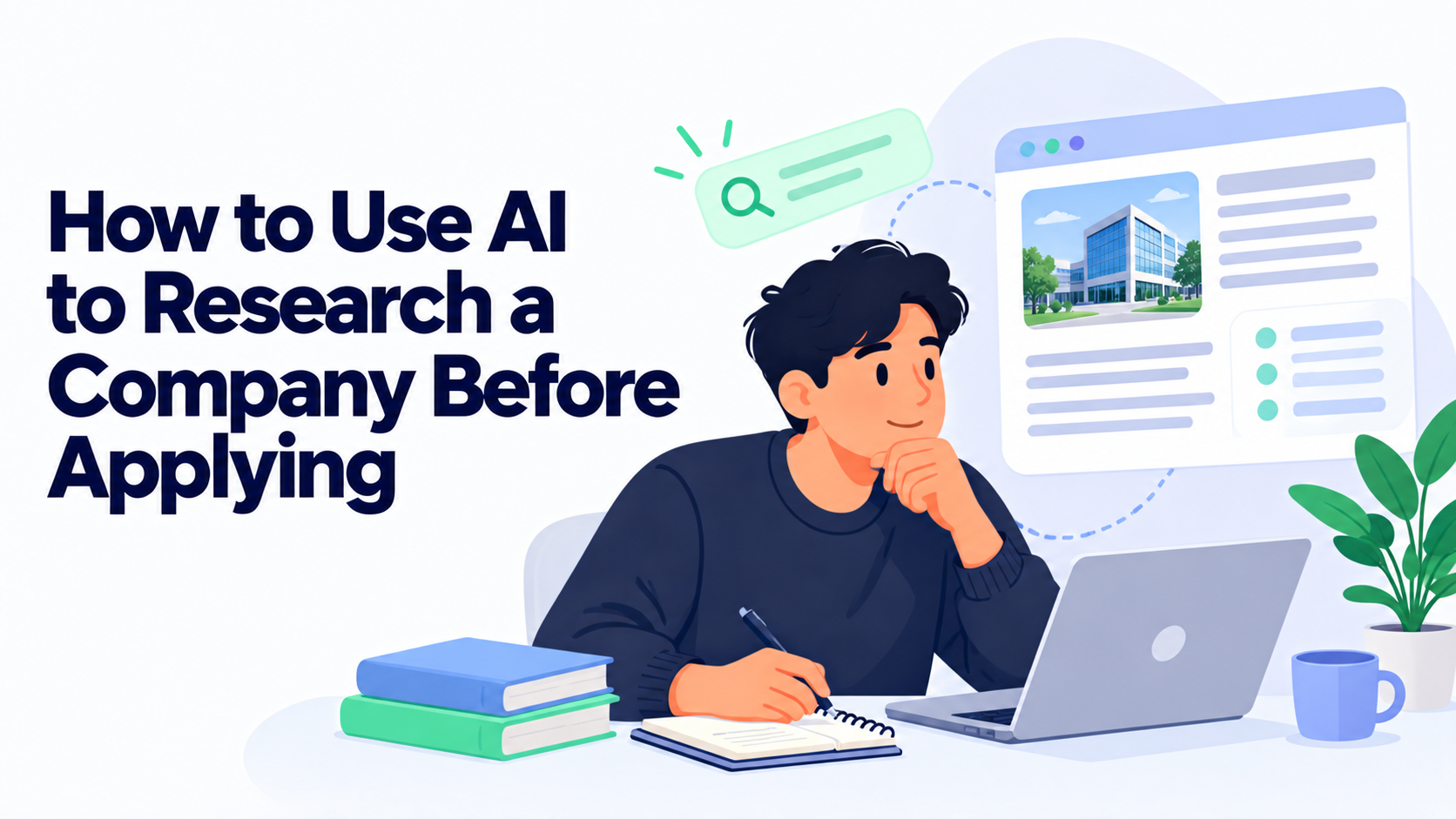

Most job seekers either skip company research entirely or spend an evening manually scrolling a careers page and a few news articles the night before an interview. Neither approach holds up well against how fast AI research tools have actually gotten. One of the clearest real-world examples of what's possible comes from Liam Lawson, host of The AI Report podcast, who built an automated system for exactly this kind of prep: a Claude Desktop scheduled task checks his calendar daily, and if an event matches a known pattern, like an upcoming podcast interview, it automatically triggers a research brief through Perplexity and Claude, saves it to Notion, and pings him, fully automated pre-meeting prep with zero manual research time.
You don't need to build a scheduled automation to get the same benefit for a job application. The underlying workflow, structured research pulled together quickly and organized before you need it, is exactly what effective AI company research for job seekers looks like. Here's how to build a repeatable version of it.
Why this actually saves real time, not just theoretical time
A Senior Director of Partnerships at Adobe offers a concrete, lived example of what this shift actually looks like day to day. He notes that partner and company research that used to take his team a day or two, and still come back incomplete, is now done through AI research tools before a first meeting. He describes this as his own genuine "aha moment" with AI, not a hypothetical benefit. The same logic applies directly to job hunting: the research that used to eat an entire evening before an interview can now be compiled in minutes, which means there's no good reason left to walk into an application or interview under-researched.
Build one repeatable prompt sequence, not a new process every time
The core idea behind Lawson's system is repeatability. He didn't build a one-off research brief. He built a pattern that triggers the same structured process every time a relevant event shows up. For AI company research for job seekers, the equivalent is a single, reusable prompt sequence you run on every company before you apply, rather than researching each one from scratch in a different way.
A practical version covers five areas in one pass:
Products and business model. Ask an AI research tool what the company actually sells, who its core customers are, and how it makes money, in plain terms rather than marketing language. This matters more than it seems. A surprising number of applicants can't clearly explain what a company does beyond its tagline by the time they're in an interview.
Strategy and direction. Ask what the company has publicly said about its priorities over the last six to twelve months, pulling from earnings calls if it's public, leadership interviews, or product announcements. This is where you find the specific detail that makes a cover letter or an interview answer sound like you actually did the work, not a generic "I'm excited about your mission" line.
Competitors and market position. Ask who the company's main competitors are and how it's publicly positioned itself against them. This gives you a sharper sense of what the role you're applying for is actually there to help the company win, which is a stronger frame for an interview answer than describing the job description back to the interviewer.
Culture and recent sentiment. Ask for a summary of recent employee reviews, public statements from leadership about culture or values, and any recent news about layoffs, leadership changes, or controversy. This is the category most applicants skip entirely, and it's often the most useful for deciding whether a role is actually a fit before you invest more time in the process.
Recent developments. Ask specifically what's happened at the company in the last 30 to 90 days, funding news, product launches, leadership changes, partnerships. This is the detail most likely to come up naturally in an interview and the one most applicants have no answer for when it does.
Don't trust a single source, cross-reference the way the best systems already do
Vivek, who leads Adobe's Digital Insights team, describes a specific reliability pattern worth borrowing directly for this workflow. He explains that AI shopping agents don't just trust a brand's own claims about itself. They actively cross-reference those claims against third-party review sites and social and community conversation before serving a confident recommendation. That's a useful discipline to apply to your own company research. Don't just ask an AI tool to summarize a company's own website and press releases. Explicitly ask it to also check what's being said about the company externally, in reviews, in the press, and in public discussion, and to flag where the company's own messaging and outside sentiment don't match. That gap is often the most useful thing you can walk into an interview knowing.
Turn the research into something you'll actually use
The last part of Lawson's system worth copying is where the output ends up. His automated brief gets saved to Notion and pings him, so the research is sitting somewhere accessible before he needs it, not buried in a chat history he has to go dig through right before a call. Whatever tool you use for AI company research for job seekers, save the output somewhere you'll actually open again: a dedicated note per company, organized the same way every time, so your five-category research brief is ready to skim thirty minutes before an interview rather than something you have to regenerate under time pressure.
Run it before applying, not just before interviewing
Most people only do this kind of research once they've landed an interview. Running the same workflow before you apply changes how you use it. A quick five-category brief before applying tells you whether a role is actually worth your time, gives you specific language to use in a cover letter, and means that by the time an interview is scheduled, you're refreshing research you've already done rather than starting from zero under a tighter deadline.
Keep the workflow sharp as the tools keep improving
The tools behind effective AI company research for job seekers are improving quickly enough that a workflow built six months ago may already be missing a faster way to do this. Subscribe to The AI Report for ongoing coverage of how AI is reshaping job searching and hiring, so your research process keeps pace with what's actually possible.