

400,000+ business leaders (and teams at IBM, AWS & Zapier) start their day with The AI Report. 5 minutes. Plain English. No hype.
AI News in 5: Google Pulls Medical AI, OpenAI's $10B Deal
Google pulls AI Overviews from some medical searches and OpenAI signs a $10B Cerebras deal, plus Claude for Healthcare, Slackbot and AI chip tariffs.
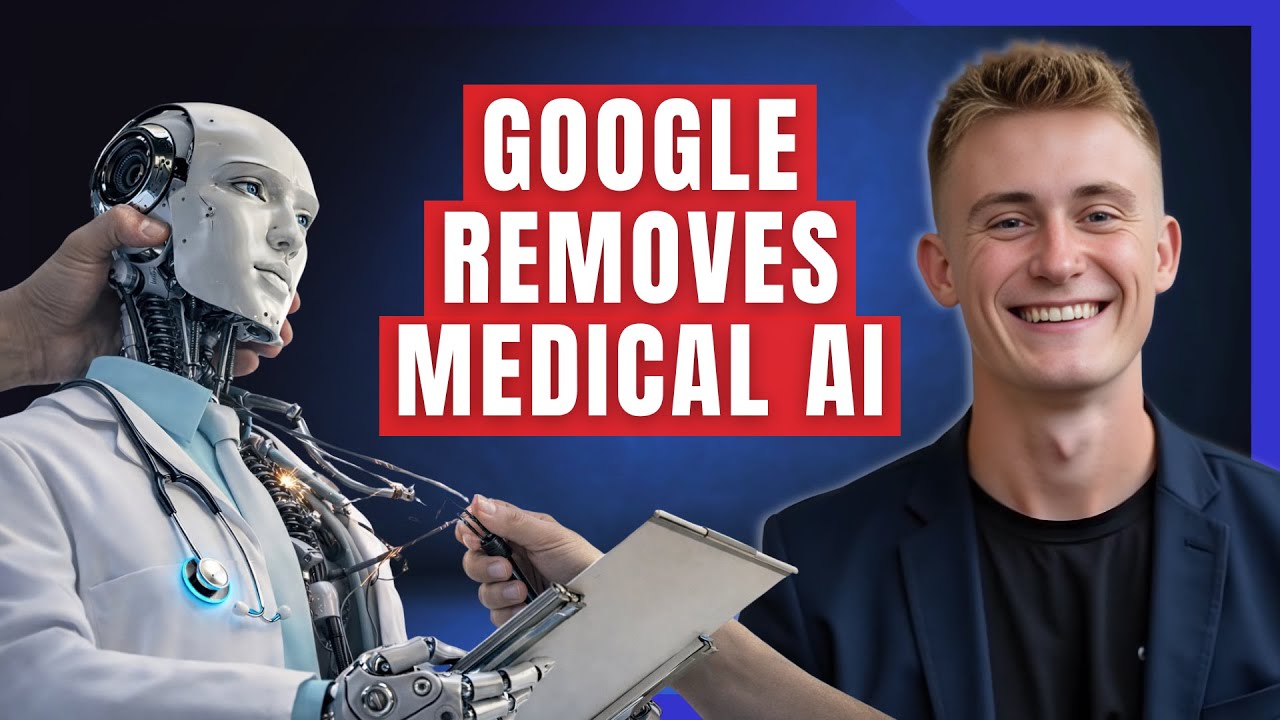

Watch on YouTube · Listen on Spotify or Apple Podcasts
Google quietly pulled some of its AI Overview summaries from medical searches after a Guardian investigation found they gave false and misleading health information, and OpenAI signed a $10 billion deal with Cerebras for 750 megawatts of computing power, according to this AI News in 5 episode with host Liam Lawson. The episode also reports on Anthropic's launch of Claude for Healthcare, Salesforce turning Slackbot into a full AI agent, and a 25% US tariff on advanced AI chips bound for China.
Key takeaways
- Google pulled AI Overviews from some medical searches. A Guardian investigation found the summaries gave false and misleading medical information, including telling pancreatic cancer patients to avoid high-fat foods and giving misleading liver test results. (00:36)
- It is a trust problem, not just a Google problem. Liam Lawson argues that if a trillion-dollar company still struggles with accuracy in life or death scenarios, businesses should think hard about guardrails before deploying AI. (01:08)
- Claude for Healthcare targets paperwork, not diagnosis. Anthropic connected Claude to medical databases, Medicare systems, medical coding standards and research libraries to handle prior authorizations and insurance documentation. (01:29)
- 230 million people a week already ask ChatGPT about their health. The episode uses the figure to show that AI in healthcare is already in use, not theoretical. (02:04)
- Slackbot became Salesforce's most adopted internal tool. The new agent finds information across the tech stack, drafts emails, schedules meetings and reaches into Microsoft Teams and Google Drive without leaving Slack. (02:24)
- OpenAI's $10 billion Cerebras deal is about speed. OpenAI is buying 750 megawatts of computing power over three years, and Cerebras chips can run AI inference up to 15 times faster than traditional GPUs. (03:13)
- The US takes a 25% cut on AI chips sold to China. Chips made in Taiwan now route through the US for testing before going to China, and the episode says America manufactures only 10% of the chips it needs. (04:09)
Why did Google pull AI Overviews from medical searches?
Google removed some AI-generated health summaries after a Guardian investigation found its AI Overviews provided false and misleading medical information that could put users at risk of harm, the episode reports. Liam Lawson cites two examples from the investigation: telling pancreatic cancer patients to avoid high-fat foods, which experts say could increase their risk of dying, and giving misleading liver test results that might make seriously ill people think they are fine.
His business lesson is about trust. Google is a trillion-dollar company with virtually unlimited resources, he says, and it still cannot get AI to handle basic health information reliably. If it struggles with accuracy in life or death scenarios, companies should ask what that means for deploying AI in their own operations without serious guardrails.
What is Claude for Healthcare?
Claude for Healthcare is Anthropic's healthcare launch, and according to the episode it goes after the paperwork problem rather than trying to replace doctors. Liam Lawson says it targets prior authorizations, insurance documentation and the administrative work that keeps doctors buried in forms instead of seeing patients.
Anthropic has plugged Claude into medical databases, Medicare systems, medical coding standards and research libraries, the episode reports, so it can handle work that does not need years of medical school. Liam adds that 230 million people already talk to ChatGPT about their health every week. His takeaway for any industry: find where AI can remove friction without removing expertise.
What can the new Slackbot AI agent do?
Salesforce has turned Slackbot from a simple helper into a full AI agent, the episode reports. According to Liam Lawson, it can find information across a company's entire tech stack, draft emails, schedule meetings, and reach into Microsoft Teams and Google Drive without the user leaving Slack.
The detail he highlights is adoption: when Salesforce tested the agent internally with its own employees, it became the company's most adopted tool ever, without being mandated. His read is that companies are past asking whether to use AI and are now asking which AI tools employees will actually use, and the winners fit into existing workflows rather than requiring people to learn something new.
What is OpenAI's $10 billion Cerebras deal?
OpenAI signed a $10 billion deal with Cerebras to buy 750 megawatts of computing power over the next three years, enough to power tens of thousands of homes, the episode reports. Liam Lawson says the entire deal is about speed: Cerebras chips can run AI inference up to 15 times faster than traditional GPUs.
He quotes the Cerebras CEO: just as broadband transformed the internet, real-time inference will transform AI. Liam notes that the jump from dial-up to broadband brought entirely new business models, not just convenience. The bigger takeaway, in his view, is that AI has entered an infrastructure arms race, and for anything that depends on AI responsiveness, such as customer service or real-time agents, speed is about to become the competitive moat.
What are the new US tariffs on AI chips?
The US is placing a 25% tariff on advanced AI chips, including Nvidia's H200, that are headed to China, the episode reports. Liam Lawson explains that the chips were approved for export to China on a Tuesday and hit with tariffs on the Wednesday. Because the chips are made in Taiwan, they now have to route through the US for testing before going to China, and when they touch American soil the 25% tariff applies.
The episode plays President Trump saying the US is "going to be making 25% on the sale of those chips," and Liam's read is that the move is less about blocking China and more about the US government taking a cut. He adds that America manufactures only 10% of the chips it needs, so the bigger aim is to push chip production back home, and businesses that depend on global supply chains should start stress testing for trade becoming transactional.
In his words
"This isn't just a Google problem. It's a trust problem. And in 2026, trust is everything." (01:24)
"Find where AI can eliminate friction without eliminating expertise. That's where the real value is." (02:18)
"Not mandated, adopted. That's the signal. We're past the should we use AI phase. We're in the which AI tools are employees actually going to use phase." (02:57)
"It's not just about having AI anymore. It's about having fast AI." (04:06)
"If you're running a business that depends on global supply chains, this is your wakeup call to start stress testing what happens when trade becomes transactional." (04:55)
Chapters
00:00 Intro
00:36 Google pulls AI Overviews from medical searches
01:29 Anthropic launches Claude for Healthcare
02:24 Salesforce turns Slackbot into an AI agent
03:13 OpenAI's $10 billion Cerebras deal
04:09 US tariffs on AI chips bound for China
05:04 Outro
About the host
Liam Lawson is CEO of The AI Report and host of The AI Report Podcast. Meet the team
Full transcript
Edited for readability. Quotes above are word for word from the recording.
Liam Lawson (00:00): Anthropic is expanding access to medical information by making its AI chatbot easier for patients and clinicians to use as it pushes deeper into the healthcare sector. Imagine a computer that can spot a sickness inside of you before you feel any pain. Sounds too good to be true? Well, Google's DeepMind AI is already doing this. OpenAI locks 750 megawatts of compute in a historic $10 billion pact with Cerebras. On Monday, President Trump announced that he would allow Nvidia to sell its powerful H200 chips to China, with the US pocketing 25% of the revenue.
Liam Lawson (00:32): Hi, I'm Liam Lawson. I'm your host for the AI News in 5 by The AI Report.
Liam Lawson (00:36): With our first story, Google just quietly pulled a bunch of its AI Overview summaries from medical searches. Honestly, this one's a big deal. The Guardian dropped an investigation showing that Google's AI was giving out straight-up dangerous health advice. Google removed some AI-generated health summaries after a Guardian investigation found its AI Overviews provided false and misleading medical information that could put users at risk of harm. We're talking telling pancreatic cancer patients to avoid high-fat foods, which experts say could literally increase their risk of dying, and providing misleading liver test results that might make seriously ill people think they're fine.
Liam Lawson (01:08): Here's why this matters for your business. Google is a trillion-dollar company with virtually unlimited resources, and they still can't get AI to handle basic health information reliably. If they're struggling with accuracy in life or death scenarios, what does that tell you about deploying AI in your operations without serious guardrails? This isn't just a Google problem. It's a trust problem. And in 2026, trust is everything. But that's just one story. Let's keep moving.
Liam Lawson (01:29): So, right after Google's pulling back their medical AI, Anthropic went full steam ahead and launched Claude for Healthcare, just after ChatGPT did. And here's a twist. They're actually being smart about it. Instead of trying to replace your doctor like some sci-fi movie, Claude is attacking the paperwork problem. We're talking prior authorizations, insurance documentation, all that administrative nightmare that keeps doctors buried in forms instead of seeing patients.
Liam Lawson (01:52): They've plugged Claude into actual medical databases, Medicare systems, medical coding standards and research libraries. So it can handle the boring stuff that doesn't need years of medical school. And get this, 230 million people are already talking to ChatGPT about their health every single week. That's not theoretical adoption. That's happening right now. So whether you're in healthcare or not, the lesson is clear. Find where AI can eliminate friction without eliminating expertise. That's where the real value is.
Liam Lawson (02:22): Speaking of real value, let's talk about our next story. So this one's massive. Salesforce just turned Slackbot, that little helper that's been sitting in your Slack workspace for a while, into a full-blown AI agent. [A line about a Salesforce executive's comment is unclear in the recording and is omitted here.] Here's what it can do now: find information across your entire tech stack, draft emails, schedule meetings, and it can reach into Microsoft Teams and Google Drive without you ever leaving Slack. It's basically your AI assistant living where you already work.
Liam Lawson (02:52): But here's the kicker. When Salesforce tested this internally with their own employees, it became their most adopted tool ever. Not mandated, adopted. That's the signal. We're past the should-we-use-AI phase. We're in the which-AI-tools-are-employees-actually-going-to-use phase. And the winners are the ones that fit into existing workflows, not the ones that require you to learn something completely new.
Liam Lawson (03:13): Next up, a reality check. OpenAI just signed a $10 billion deal with a company called Cerebras. And no, that's not a typo in the number. Over the next 3 years, they're buying 750 megawatts of computing power, enough to power tens of thousands of homes. But here's why this matters to you. The entire deal is about speed. Cerebras chips can run AI inference up to 15 times faster than traditional GPUs. And as Cerebras's CEO put it, just as broadband transformed the internet, real-time inference will transform AI.
Liam Lawson (03:46): Think about it. The difference between dial-up and broadband wasn't just convenience, it was entirely new business models. The macro takeaway here: we're entering the infrastructure arms race phase of AI. If you're building anything that depends on AI responsiveness, customer service, coding tools, real-time agents, speed is about to become your competitive moat. It's not just about having AI anymore. It's about having fast AI.
Liam Lawson (04:09): And here's our last story. Trump just dropped a 20% tariff on advanced AI chips, specifically Nvidia's H200 and an AMD chip. But here's where it gets wild. He approved these chips for export to China on Tuesday, then hit them with tariffs on Wednesday. Here's what's actually happening. These chips are made in Taiwan, and now they have to route through the US for testing before going to China. When they touch American soil, boom, 25% tariff. Trump literally said, "We're talking about 25% of the chip sales as part of the deal. We're going to be making 25% on the sale of those chips."
Liam Lawson (04:42): Basically, it's not really about blocking China. It's about the US government taking a cut. The bigger picture: America only manufactures 10% of the chips it needs. So this is less about today and more about forcing chip production to move back home. If you're running a business that depends on global supply chains, this is your wake-up call to start stress testing what happens when trade becomes transactional.
Liam Lawson (05:04): So that's AI News in 5. If you want to learn more, subscribe to our newsletter down below and listen to the podcast for top-tier interviews with operators, executives, founders and CEOs. Thank you.
Get the five-minute AI briefing
Join 400,000+ business leaders who start their weekday with The AI Report. Subscribe free
