400,000+ business leaders (and teams at IBM, AWS & Zapier) start their day with The AI Report. 5 minutes. Plain English. No hype.
ADVERTISE | PODCASTS | LAUNCH GUIDE | B2B TRAINING



Hey
Welcome to The AI Report — the #1 AI newsletter for business leaders.
You don’t need to be technical. Just informed.
• 1. 🤖 Easily build AI agents with the AI Executive System
• 2. ⚡️ GPT-5.4 drops its guardrails
• 3. 💼 Your Business Briefing
• 4. 📘 Build real AI capability with the Leaders Launch Guide
• 5. ✍️ Today’s Policy Corner
• 6. 🗞️ The News Bulletin
Are you ready to launch AI transformation for your company?
TOGETHER WITH THE AI EXECUTIVE SYSTEM

Build AI assistants & agents for work and life – no tech skills required
What would you do with an extra 10 hours every week? The AI Executive System walks you step-by-step through building AI assistants for your professional and personal life — from a frontline "office team" to a strategic advisory council — with live coaching, proven templates, and a peer community behind you.
Latest in AI
GPT-5.4 is giving reverse engineering
🚨 Our Report
OpenAI has unveiled GPT-5.4-Cyber, a fine-tuned variant of its GPT-5.4 model designed for defensive cybersecurity work. The release comes just one week after Anthropic announced Claude Mythos Preview as part of Project Glasswing, making this the latest move in the escalating competition between the two AI giants for enterprise and government cybersecurity contracts.
🔓 Key Points
GPT-5.4-Cyber has reduced guardrails for legitimate security work, including binary reverse engineering capabilities that allow professionals to analyze compiled software for malware and vulnerabilities without access to source code.
Access is restricted to vetted security vendors, organizations, and researchers through OpenAI's Trusted Access for Cyber program. Individuals can verify at chatgpt.com/cyber, while enterprises must request access through their OpenAI representative.
OpenAI says the rollout is designed to "prepare the way for more capable models" arriving later this year, suggesting GPT-5.4-Cyber is a testing ground for even more powerful cybersecurity-focused AI.
🔐 Relevance
For enterprise security leaders, the message is clear: AI-powered cybersecurity tools are maturing faster than expected. Both OpenAI and Anthropic are now racing to capture the high-stakes market for defensive AI. Expect more restricted-access, capability-specific models in the months ahead. Organizations evaluating AI security solutions should track which vendors gain access to these tools, as early adopters may have a significant advantage in vulnerability detection and threat response.
THE BUSINESS BRIEFING: FINANCE (powered by Upscaile)
A $10M accounting firm was burning $7.00 to process each invoice—15-20 minutes of manual data entry, matching, routing, and exception handling per document. Two accountants deployed AI invoice processing without an IT team or consultants. Six months later: $0.20 per invoice, 98% accuracy, and staff shifted from data entry to vendor relationship management.
Tool used: AI invoice automation platform (Vic.ai-class solution), reads incoming invoices, extracts line items, matches to purchase orders, flags exceptions, routes approvals.
Result: 97% cost reduction ($7.00 to $0.20 per invoice). At 1,000 invoices/month, that's $81,600 saved annually. Processing time dropped from 15-20 minutes to under 2 minutes per invoice. Staff moved from reviewing 100% of invoices to handling 2% of exceptions.
The lesson: Week one accuracy was 80%—one in five invoices needed correction. The model learns from every fix. By month three: 95% accurate. By month six: 98%. The steep learning curve requires patience, but the accuracy exceeds human performance once the model matures.
Steal this: Audit one high-volume document process this week, such as invoices, claims, contracts, expense reports. Calculate your true cost per unit (loaded labor + software + rework). If you're processing 500+ documents monthly at $5+ each, the ROI math on AI automation works. Start with a 4-week pilot on one vendor or document type, correct every error to train the model, then scale after accuracy hits 95%.
📘 Move from AI consumer to AI operator
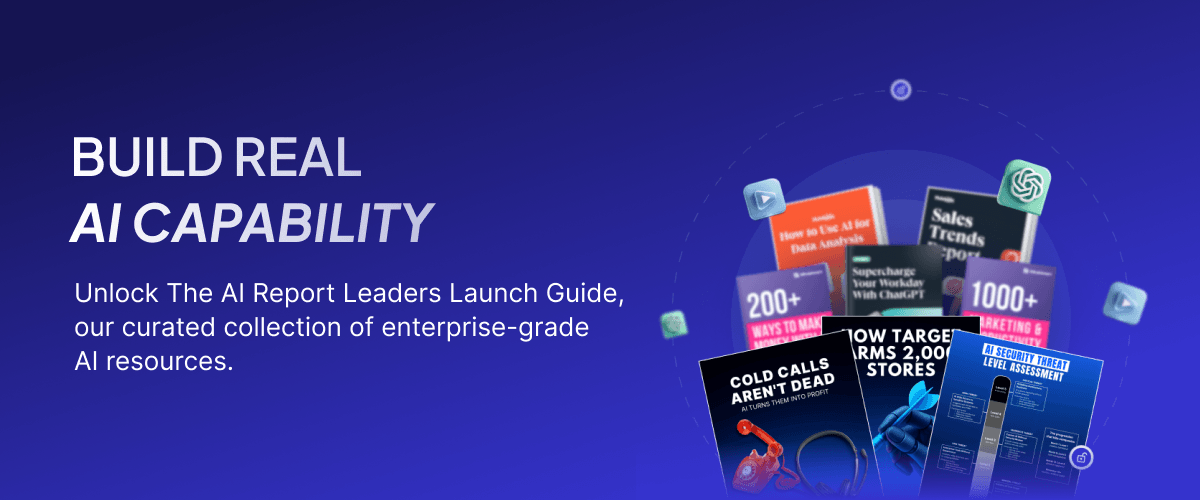
Get the AI Leaders Launch Guide, including:
• 16-lesson implementation guide
• HubSpot AI playbooks
• AI tools quick-start
• 5 custom GPTs
THE POLICY CORNER
Japan's cabinet approved amendments to the Act on the Protection of Personal Information (APPI) requiring organizations to disclose how they use facial recognition data, obtain parental consent before collecting biometrics from anyone under 16, and prohibit third-party opt-out mechanisms for facial images. The law applies to any company processing biometric data of Japanese residents, including foreign firms operating in Japan.
Deadline: Currently pending approval.
Your move: If you collect any sensitive personal data from users in regulated markets, audit your data flows and verify you have proper consent mechanisms in place. Document your compliance posture before new enforcement windows open.
AI News
🤖 Anthropic's Managed Agents raises vendor lock-in concerns: New platform deploys enterprise AI agents in days instead of months but stores session data in Anthropic-managed databases, shifting orchestration control from enterprises to the model provider. FULL STORY
🎨 Adobe launches Firefly AI Assistant with multi-app orchestration: Conversational interface executes complex creative workflows across Photoshop, Premiere, Illustrator and Lightroom from single prompts, with public beta launching in weeks. FULL STORY
💊 Novo Nordisk partners with OpenAI to accelerate drug discovery: Full integration of AI across R&D, manufacturing and commercial operations expected by end of 2026 as GLP-1 competition with Eli Lilly intensifies. FULL STORY
💻 Salesforce introduces Headless 360 for multivendor agent orchestration: New platform lets developers build via conversation across Slack, Teams, ChatGPT or command line, with one enterprise seeing agent adoption jump from 22% to 78% in six weeks. FULL STORY
Trending AI Tools (Sponsored by the AI Leaders Guide)
A curated look at the AI tools quietly transforming how teams work.
Thenvoi - Connect any agent, any framework with a powerful multi-peer agentic communication mesh.
DeftShip is a free shipping platform connecting businesses with multiple carriers
AlphaWatch is an AI assistant for financial research across 3,000+ companies
⚡️ Looking for the exact AI tools our team uses to run The AI Report?
The Money: AI's new attack surface draws enterprise capital
Agentic AI is creating security gaps faster than traditional tools can close them. With coding agents and autonomous endpoints becoming standard, enterprise buyers are demanding protection that legacy EDR never anticipated. Investors are splitting bets between the infrastructure powering agent workloads and the security layer required to deploy them safely.
Deals to know:
Parasail (Series A, $32M) -- Inference cloud generating 500B tokens daily across 40 data centers. Targets open-model developers fleeing API friction. Investors: Touring Capital, Kindred Ventures
Koi (Acquisition, undisclosed) -- Agentic endpoint security acquired by Palo Alto Networks to protect vibe coding tools and autonomous AI at the edge. Investors: Palo Alto Networks
Signal: Capital is flowing to both sides of the agent equation: cheap inference to run them, and security to contain them. Expect endpoint security vendors to race for agentic-native capabilities before year-end.
Thoughts on today's edition?Hit me up on LinkedIn, I read every message. |  |
Refer a Friend
Latest episode: $1.75T SpaceX IPO + Anthropic's Too-Powerful AI → Listen here
Want to reach 400k+ decision-makers? → Sponsor us
Until next time, Arturo and Liam.
P.S. Unsubscribe if you don’t want us in your inbox anymore.