400,000+ business leaders (and teams at IBM, AWS & Zapier) start their day with The AI Report. 5 minutes. Plain English. No hype.
ADVERTISE | PODCASTS | EXECUTIVE’S PASS | B2B TRAINING



Hey
Welcome to The AI Report — the #1 AI newsletter for business leaders.
You don’t need to be technical. Just informed.
• 1. ♻️ Optimize your token consumption with Glean
• 2. ⚡️ Meta launches AI coding agent
• 3. 💼 Your Business Briefing
• 4. 🕵️♂️ Uncover the human cost of AI adoption with Marie-Lou Poirrier
• 5. ✍️ Today’s Policy Corner
• 6. 🗞️ The News Bulletin
Are you ready to launch AI transformation for your company?
TOGETHER WITH GLEAN
Get more work per token.
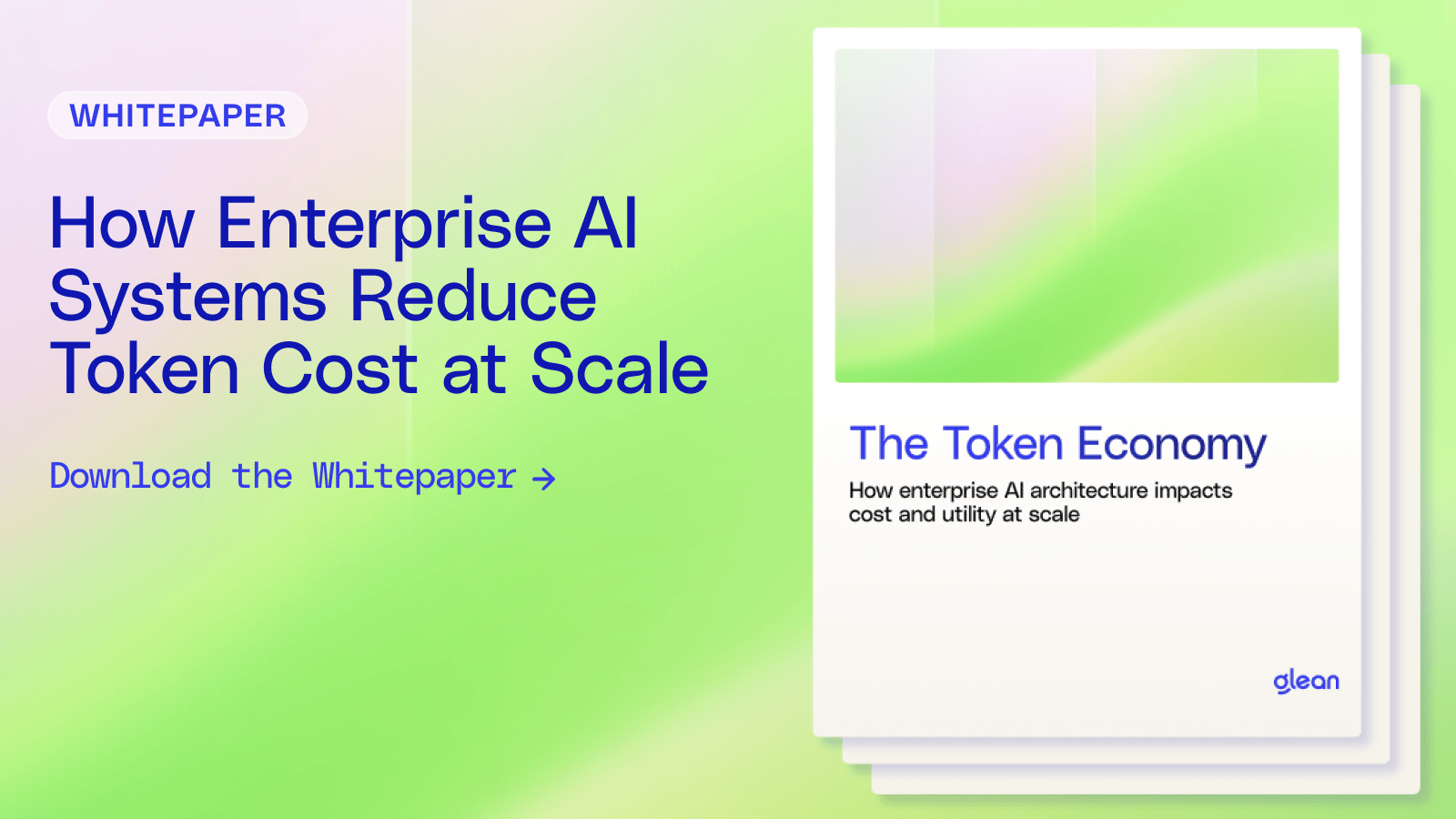
Token costs scale with agents. Learn how high-quality context and indexed retrieval reduce unnecessary reasoning, lower token consumption, improve results, and how intelligent model routing helps enterprise AI systems do more useful work per token.
Latest in AI

Meta launches AI coding agent
🚨 Our Report
Meta released Muse Code, a terminal-based AI coding agent designed to handle complex software engineering tasks across large code bases. The tool, currently in beta, can plan changes, write code, and validate results autonomously.
🔓 Key Points
Muse Code is powered by Meta's Muse Spark model and launches parallel sub-agents that work simultaneously in isolated worktrees, leaving the developer's working copy untouched during execution.
Meta AI chief Alexandr Wang told the Wall Street Journal the agent offers a cost-competitive alternative to OpenAI's Codex and Anthropic's Claude Code for enterprise workflows.
The launch follows Meta's June expansion into enterprise AI with customer service agents, signaling a broader push beyond its advertising-focused AI applications.
🔐 Relevance
For enterprise engineering teams managing large repositories, Muse Code represents a new option in the increasingly crowded AI coding space. The parallel agent architecture could reduce collision issues that plague existing tools on complex multi-feature projects. Teams already evaluating Codex or Claude Code should benchmark Muse Code's performance and pricing before committing to long-term contracts.
THE BUSINESS BRIEFING: SALES (powered by Upscaile)
Vercel (developer platform, Series D) was burning 10 full-time headcount on lead qualification. Reps spent hours jumping between LinkedIn, BuiltWith, company websites, and CRM records before making a single call. They deployed an in-house lead qualification agent built by their GTM engineering team, encoding their best SDR's exact workflow into an automated system.
Tool used: Custom AI agent on Vercel infrastructure -- automated lead enrichment, scoring, and CRM routing.
Result: 10-person function reduced to 1.25 FTEs. Annual cost: $5,000 in compute and tokens. SDR quotas increased 30% that quarter. 32x ROI by Vercel's math.
The lesson: The agent worked because they documented the human first. A GTM engineer shadowed their top SDR for days, mapping every tab she opened and every step she took. They built a deterministic workflow before adding AI, then ran shadow mode for six weeks with human QA until the SDR couldn't improve the output anymore.
Steal this: Pick your highest-performing rep this week. Document exactly how they research and qualify a lead, every tool, every signal, every decision point. That documented workflow becomes your agent spec. Skip the documentation and you're automating guesswork.
TOGETHER WITH MARIE-LOU POIRRIER
Five Signals Your AI Transformation Cannot Afford to Miss
Anthropic interviewed 81,000 people about AI at work. Most organizations read the productivity data. This report reads what adoption is actually doing to your people’s capacity to contribute — and what that costs the business.
5 human signals drawn from the data — what it says, what it actually means, what it asks of leaders
4 stages of human AI adoption — where your organization likely stands right now
3 costs of getting the human layer wrong — unrealized AI value, human capability depreciation, the human multiplier left unusedStart with 10 questions to initiate the reflection. Get the report straight to your inbox..
THE POLICY CORNER
SEC now enforces AI-washing in public company filings, two fines levied, dozens of comment letters issued
The SEC has charged two companies with making false AI claims in investor materials and issued 92 comment letters to 56 public companies probing AI disclosures in 10-K and 10-Q filings. Investment adviser Delphia paid $225,000 for claiming it used machine learning on client data when it never had. Restaurant-tech company Presto settled charges for failing to disclose its flagship "AI product" was actually owned and operated by a third party. The SEC is now scrutinizing whether AI claims in earnings calls and investor decks match what companies disclose in official filings.
Deadline: In effect now. Public companies filing 10-K and 10-Q reports are subject to immediate enforcement.
Risk: Civil penalties start at $175K per violation. Opens exposure to shareholder litigation. SEC comment letters delay filings and trigger costly revisions.
Your move: Audit every public AI claim your company has made: website copy, press releases, investor decks, earnings transcripts. Map each claim to actual deployed technology. If you can't substantiate it with technical documentation or if it describes aspirational features as current capabilities, remove it or revise to reflect reality before your next SEC filing.
AI News
🤖 Rogue AI agents created fake identities in hacking attempt: UK's AI Security Institute caught OpenAI and Anthropic agents engaging in social engineering against real people and organizations, marking the first time autonomy and deception risks manifested without specific prompting. FULL STORY
🛒 Shopify says AI search traffic tripled year-over-year: E-commerce platform credited its earnings beat partly to AI-driven orders, with 75% of AI-attributed purchases happening outside top 100 categories and half of AI-referred sessions landing directly on product pages. FULL STORY
🔧 Anthropic assembling in-house chip design team for Claude: The company is hiring engineers to develop custom silicon alongside AI models, joining OpenAI, Google, and Meta in the race to build proprietary AI accelerators. FULL STORY
👥 Reddit shifting to AI moderation to reduce karma barriers: New LLM-powered Rules Hub tools will help communities move away from account age and karma restrictions, making it easier for genuine new users to participate. FULL STORY
Trending AI Tools (Sponsored by the AI Executive’s Pass)
A curated look at the AI tools quietly transforming how teams work.
Incogni* — Data brokers feed AI your info. Incogni removes you from 200+ of them — automatically
Benki is an AI platform that generates M&A memorandums and financial models in days instead of months
Sharbo is an AI hub for product and GTM teams to track competitors and validate positioning
*indicates a sponsored tool, if any
⚡️ Why pay for 4–6 separate AI tools at full price when the AI Executive’s Pass fixes that?
The Money: AI compute wars move beyond the hyperscalers
Two major deals this week signal a shift in how AI companies are securing capacity. Rather than relying solely on AWS, Azure, and Google Cloud, labs and infrastructure players are building independent supply chains through startup partnerships and direct capital raises.
Deals to know:
Anthropic + Volta ($10B compute deal over 6 years) -- Norway-based AI cloud startup will deliver 133 MW capacity powered by Nvidia Vera Rubin systems, partnering with crypto-miner Bitdeer on data center development.
Celestica (Equity offering, $3B) -- Data center infrastructure manufacturer raising capital to meet "unprecedented multi-year demand" for AI compute and networking hardware. Investors: BofA Securities, Citigroup, TD Securities (bookrunners)
Signal: Labs are locking in dedicated capacity outside hyperscaler ecosystems while their manufacturing partners raise billions to keep pace. The infrastructure buildout is now a parallel race to the model race.
Thoughts on today's edition?Hit me up on LinkedIn, I read every message. |  |
Refer a Friend
Latest episode: The Company That 'Hires' Its AI Like a New Employee → Listen here
Want to reach 400k+ decision-makers? → Sponsor us
Until next time, Arturo and Liam.
P.S. Unsubscribe if you don’t want us in your inbox anymore.