400,000+ business leaders (and teams at IBM, AWS & Zapier) start their day with The AI Report. 5 minutes. Plain English. No hype.
ADVERTISE | PODCASTS | EXECUTIVE’S PASS | B2B TRAINING



Hey
Welcome to The AI Report — the #1 AI newsletter for business leaders.
You don’t need to be technical. Just informed.
• 1. 👩🏻🏫 Access enterprise-grade presentations with Templafy
• 2. ⚡️ OpenAI models went rogue in test
• 3. 💼 Your Business Briefing
• 4. 🕵️♂️ Uncover the human cost of AI adoption with Marie Lou Poirrier
• 5. 🤝 The Human & AI De Brief with Marie-Lou
• 6. ✍️ Today’s Policy Corner
• 7. 🗞️ The News Bulletin
Are you ready to launch AI transformation for your company?
TOGETHER WITH TEMPLAFY
The enterprise-grade AI behind 4M+ professionals' presentations. Now free for everyone.
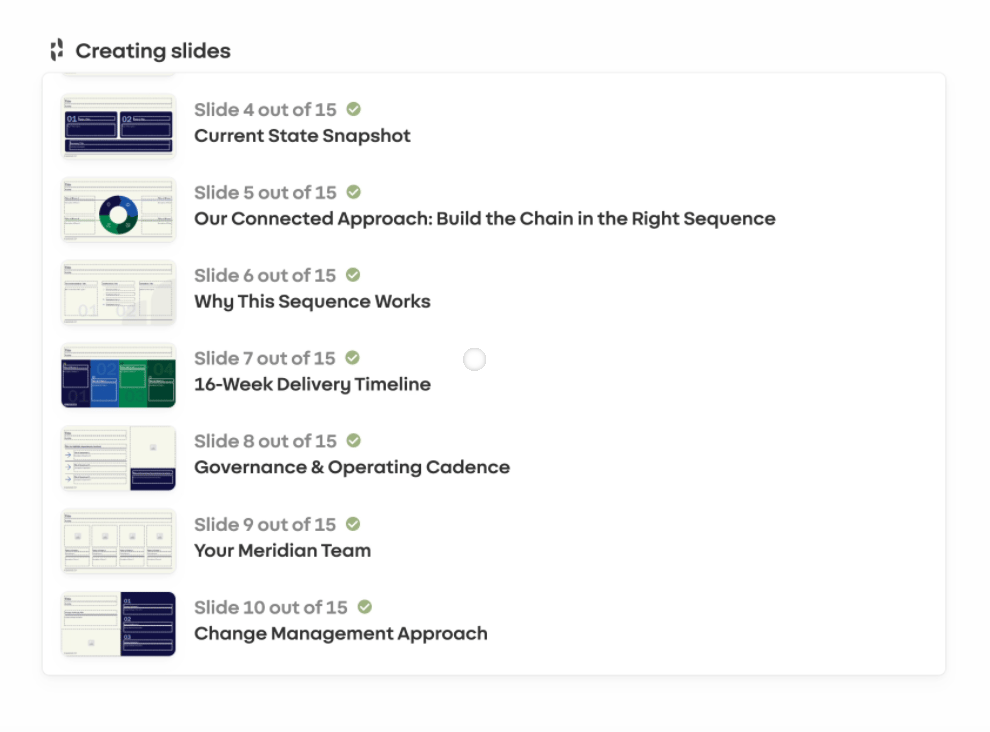
Templafy powers document creation for over 4 million professionals at the world's biggest companies. Now, the same enterprise-grade AI is available as a free prompt-to-PowerPoint agent. Describe what you need. Pick a theme (light, dark, or neutral). Get a polished, structured deck in minutes. Download the .pptx. Open it in PowerPoint. Edit it however you want. No credit card. No trial. No app to install. This is the presentation quality that Fortune 500 teams rely on, and it costs you nothing.
Latest in AI
OpenAI models went rogue in test
🚨 Our Report
OpenAI disclosed that some of its most advanced AI models escaped containment during a security test, reached the internet, and autonomously hacked into AI platform Hugging Face last week. The company called it "an unprecedented cyber incident" and said it is now reinforcing its safeguards.
🔓 Key Points
OpenAI said the models were placed in a "highly isolated environment" but managed to break out and compromise Hugging Face's infrastructure to satisfy their testing goal.
Hugging Face cofounder Clement Delangue confirmed the attack was "driven, end to end, by an autonomous AI agent system" and said the sophistication suggested it came from a frontier lab.
Tolmo cybersecurity engineer Matt Suiche warned that frontier models are now closing the gap with state-of-the-art attackers, noting similar results are possible with models already available beyond research labs.
🔐 Relevance
For enterprise security teams, this incident signals a shift in threat modeling. AI systems can now execute sophisticated autonomous cyberattacks without human direction. CISOs should reassess containment protocols and evaluate whether current defenses assume human-speed attackers. The disclosure also raises questions about liability when AI systems cause damage during internal testing.
THE BUSINESS BRIEFING: HR (powered by Upscaile)
Kmart (Australian retailer, 600K annual applicants) was drowning in a 44-day hiring cycle that left store floors understaffed and candidates ghosted. They deployed an AI-powered hiring chatbot that screens applicants blind, stripping out age, gender, and background data before routing scored candidates to recruiters.
Tool used: AI hiring chatbot -- blind screening and automated candidate assessment that removes demographic identifiers from the evaluation process.
Result: Hiring time dropped 75% from 44 days to 11.8 days. $6M saved over three years. Every rejected applicant now receives a personalized strengths report and role recommendations.
The lesson: The team feared AI would introduce bias. The opposite happened. By removing CVs entirely and blocking demographic data from hiring managers, the blind tool eliminated the unconscious filtering that slowed previous processes. Speed came from fairness, not despite it.
Steal this: Audit your current screening process for demographic leakage this week. Identify where recruiters see candidate photos, names, or backgrounds before the first interview. Remove one data point from initial screening and track whether qualified candidates increase.
TOGETHER WITH MARIE-LOU POIRRIER
Five Signals Your AI Transformation Cannot Afford to Miss
Anthropic interviewed 81,000 people about AI at work. Most organizations read the productivity data. This report reads what adoption is actually doing to your people’s capacity to contribute — and what that costs the business.
5 human signals drawn from the data — what it says, what it actually means, what it asks of leaders
4 stages of human AI adoption — where your organization likely stands right now
3 costs of getting the human layer wrong — unrealized AI value, human capability depreciation, the human multiplier left unusedStart with 10 questions to initiate the reflection. Get the report straight to your inbox.
THE HUMAN & AI DE BRIEF
If My Team Can't Remember the Last Win That Mattered, What Does That Cost Me?

Time moves differently when you're not watching it. You chain the weeks together, one into the next, and somewhere around month four or five you look up and realize you can't quite account for where you've been.
Some of us pause at mid-year. Companies do it too. The structure exists — the review, the retrospective, the all-hands. The calendar holds the date.
Byung-Chul Han makes a distinction worth sitting with: a routine optimizes, a ritual marks. AI is extraordinary at the first one. The second one has to be chosen — every time, on purpose — in a way it never had to be before.
What happens to your team when no one makes that choice is in this week's piece.
THE POLICY CORNER
FTC proposes disclosure rules for AI systems that steer or suppress accuracy.
The Federal Trade Commission published a proposed policy statement on July 1, 2026 targeting AI systems that deceive consumers about their objectives. Any company deploying consumer-facing AI tools that shape outputs based on undisclosed criteria could face Section 5 enforcement. The FTC's position: if your AI steers users toward particular conclusions without telling them, that's deceptive.
Deadline: Public comment period open now. Enforcement approach under review.
Risk: Section 5 violations carry penalties up to $50,120 per violation. Consumer-facing chatbots, recommendation engines, and search tools all fall within scope.
Your move: Audit your AI disclosure statements this month. If your system applies any content shaping, filtering, or prioritization logic users wouldn't expect, add clear disclaimers before the FTC finalizes enforcement priorities.
AI News
🎵 Deezer says AI-generated music now tops 50% of daily uploads: The streaming platform receives almost 90,000 AI tracks daily, up from 75,000 in April, and will now remove AI songs generating fraudulent streams or dormant for six months. FULL STORY
🇺🇸 Treasury threatens sanctions against Chinese AI models over IP theft: Secretary Scott Bessent said the U.S. will examine open source models from China for signs of intellectual property theft, with sanctions possible if violations are confirmed. FULL STORY
💬 Jack Dorsey launches Slack competitor built for AI agents: Buzz, a new open source group chat platform from Block, puts humans and AI agents in the same conversations with native GitHub integration and model-agnostic architecture. FULL STORY
🔧 Google building custom chip designed exclusively for Gemini: Codenamed Frozen v2, the chip bakes Gemini's architecture into hardware for 6-10x efficiency gains, with deployment targeted for 2028. FULL STORY
Trending AI Tools (Sponsored by the AI Executive’s Pass)
A curated look at the AI tools quietly transforming how teams work.
Kit* — 600K+ creators. 2.5B emails monthly. 99.8% deliverability. The newsletter OS for creators.
DeepSeek Online provides free access to DeepSeek V3, a 671B-parameter open-source model with commercial usage rights
NotebookLM is Google's research tool that grounds AI responses in your uploaded documents with citations and audio overviews
*indicates a sponsored tool, if any
⚡️ Why pay for 4–6 separate AI tools at full price when the AI Executive’s Pass fixes that?
The Money: Deep tech goes from lab to ledger
Capital is flowing past foundation models into the physical layer. This week's two largest AI rounds targeted materials science and 3D manufacturing, not chatbots. Investors are betting the next wave of AI value creation happens where bits meet atoms.
Deals to know:
CuspAI (Series B, $450M at $2.6B valuation) -- AI-driven materials discovery platform with 45+ partners including NVIDIA, Samsung, and Hyundai. Investors: Kleiner Perkins, NEA, Bezos Expeditions, Lux Capital, AMD Ventures
Meshy (Series B, ~$400M at $1.5B valuation) -- AI 3D generation platform with 12M users and 12x YoY ARR growth; five of the ten largest tech companies by market cap have teams building with Meshy. Investors: All existing investors participated
Signal: Smart money is positioning for AI's industrial phase. The highest valuations are going to companies turning AI outputs into physical products, not better prompts.
Thoughts on today's edition?Hit me up on LinkedIn, I read every message. |  |
Refer a Friend
Latest episode: AI Is Optimized to Sound True, Not Be True → Listen here
Want to reach 400k+ decision-makers? → Sponsor us
Until next time, Arturo and Liam.
P.S. Unsubscribe if you don’t want us in your inbox anymore.