400,000+ business leaders (and teams at IBM, AWS & Zapier) start their day with The AI Report. 5 minutes. Plain English. No hype.
ADVERTISE | PODCASTS | EXECUTIVE’S PASS | B2B TRAINING



Hey
Welcome to The AI Report — the #1 AI newsletter for business leaders.
You don’t need to be technical. Just informed.
• 1. 💳 Build the financial stack your AI agents need with Circle
• 2. ⚡️ OpenAI launches a physical keypad
• 3. 💼 Your Business Briefing
• 4. ✍️ Today’s Policy Corner
• 5. 🗞️ The News Bulletin
Are you ready to launch AI transformation for your company?
TOGETHER WITH CIRCLE
The first financial stack built for agents.
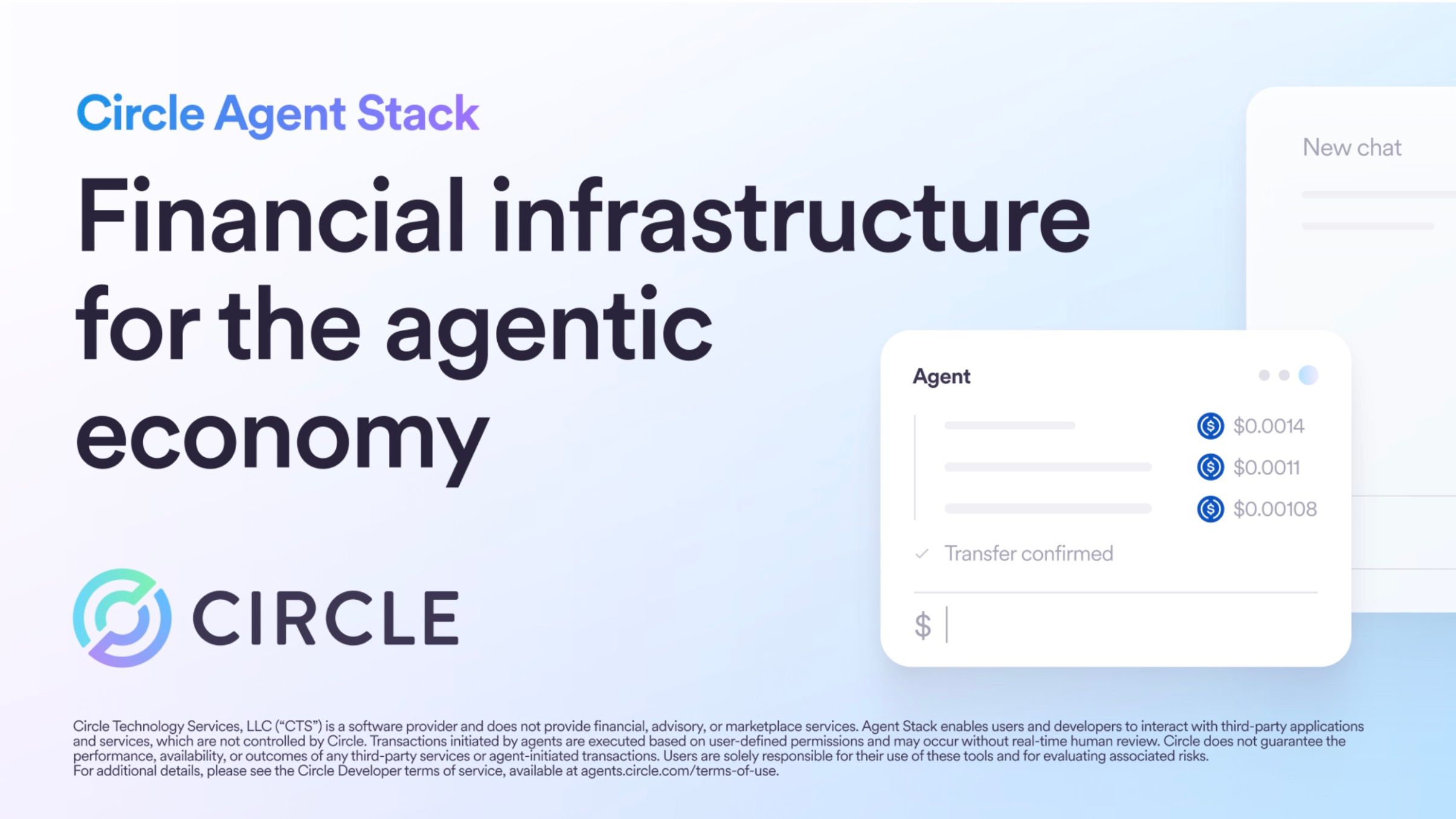
AI agents can write code, browse the web, and automate complex workflows. But when they need to pay for an API or premium service, autonomous workflows break down. They stop and wait for a human to sign up, enter a payment card, and approve the transaction.
Circle Agent Stack helps reduce those barriers.
Built on USDC, Circle Agent Stack gives agents the infrastructure they need to hold funds, discover services, and pay autonomously.
With Agent Wallets, developers define spending limits while agents transact independently. Agent Marketplace lets agents discover and pay for services in real time, without checkout flows or API keys. Nanopayments powered by Circle Gateway make transactions as small as $0.000001 practical, enabling pay-per-call and pay-per-token pricing.
Agents are evolving from assistants into economic actors. Purpose-built infrastructure lets them transact without breaking autonomous workflows, so they can keep working.
Latest in AI

OpenAI launches a physical keypad
🚨 Our Report
OpenAI shipped the Codex Micro, a $230 physical keypad built with keyboard maker Work Louder, designed exclusively for controlling its agentic coding tool Codex. The device features six frosted keys with LEDs that track agent status, plus programmable controls for accepting code, branching threads, and switching between reasoning levels, making it the company's first consumer hardware product ahead of its rumored Jony Ive-designed smart speaker.
🔓 Key Points
The keypad includes customizable controls like a dial for adjusting Codex reasoning levels and a joystick for switching between workflows, with additional keycaps for personalized shortcuts.
OpenAI recently merged Codex into a "super app" combining ChatGPT, Codex, and the new productivity agent ChatGPT Work, the keypad simplifies navigation for power users juggling multiple workflows.
Work Louder warns it has only a "limited quantity" available, suggesting the device may sell out quickly despite its $230 price point.
🔐 Relevance
For enterprise teams running agentic coding workflows, the Codex Micro signals OpenAI's bet on dedicated hardware for heavy AI users. Companies testing Codex across dev teams now have a physical interface option that could reduce context-switching and improve agent control. This also hints at OpenAI's broader hardware strategy, if dedicated controls improve adoption for coding agents, expect similar products for other enterprise use cases.
The AI Report Podcast
Why AI Adoption Fails Most Companies | Scott Likens, Global Chief AI Engineer, PwC
Stop wasting time researching AI tools

The hardest part of adopting AI isn't finding tools, it's knowing which ones are actually worth using.
That's why we've upgraded our Tool Database into a completely redesigned Tool Index, featuring 5,500+ AI tools, structured comparisons, powerful search and filtering, and a new AI Stack Builder that recommends the best tools for your business based on your team, budget, and existing workflow.
Spend less time researching and more time implementing AI.
THE BUSINESS BRIEFING: CUSTOMER SUPPORT (powered by Upscaile)
Electra (EV charging infrastructure, 300 employees across 10 countries) was drowning in escalated support tickets that required agents to pull context from Slack conversations, Notion docs, and backend charging data. They deployed three specialized Dust AI agents for invoices, refunds, and complex technical inquiries.
Tool used: Dust -- custom AI agent builder with native integrations for Intercom, Slack, Notion, and backend systems via Model Context Protocol.
Result: 80% reduction in time spent resolving escalated tickets. Agents now resolve complex cases in 3 minutes instead of extensive manual research. 70-80% weekly active users across the company within the first month.
The lesson: Specialized agents outperform generic ones. Electra built three separate agents accessing the same data sources but with different prompting strategies. The refunds agent follows decision policy rules. The invoices agent investigates their specific backend module. Generic support questions get broader prompts. Same data, different expertise.
Steal this: Identify your three most time-consuming support ticket categories this week. Map what data sources agents currently search to answer each type. Build one specialized prompt per category instead of one catch-all assistant.
📚 RETHINKING YOUR CAREER? START HERE
80,000 Hours: How to Have a Fulfilling Career That Does Good by Benjamin Todd
If you're rethinking your career path (or just want to make sure you're spending your working years well), this one's worth a look.
Todd breaks down how to find work that's genuinely fulfilling and makes a real impact: practical, research-backed advice rather than vague "follow your passion" platitudes. Great pick for anyone weighing next steps or feeling stuck in a career rut.
THE POLICY CORNER
China’s AI companion regulation takes effect, emotional AI features now subject to mandatory anti-addiction controls and security filings.
China’s Interim Measures for the Administration of AI Anthropomorphic Interactive Services officially took effect July 15, 2026, requiring platforms that offer emotionally interactive AI to implement anti-addiction systems, real-time dependency detection, parental consent for users under 14, and formal algorithm filings once they cross user thresholds. The rule targets AI services designed to simulate human personalities for sustained emotional interaction, not standard customer service or productivity bots. Major platforms including ByteDance’s Doubao and Alibaba’s Qwen shut down companion features rather than retrofit them.
Deadline: In effect now (July 15, 2026).
Risk: Violations can trigger penalties under China’s Personal Information Protection Law, including fines up to 50 million yuan or 5% of prior-year revenue, plus forced feature shutdowns.
Your move: If you operate emotionally interactive AI, conduct an immediate compliance review: confirm addiction controls, minor protections, dependency monitoring, and required algorithm filings before relaunching or expanding features.
AI News
🍎 Apple Intelligence approved for China with Alibaba's Qwen: The Cyberspace Administration of China greenlit Apple's AI services after the company integrated Alibaba's model into iOS, iPadOS, macOS, and visionOS, with U.S. shares of Alibaba jumping over 6% on the news. FULL STORY
🛡️ OpenAI deploys AI red team to harden GPT-5.6 against prompt injection: GPT-Red succeeded in 84% of internal attack scenarios versus 13% for human red teamers, with the automated system trained through self-play reinforcement learning to find vulnerabilities before deployment. FULL STORY
🔐 Microsoft patches record 570 security flaws, credits AI discovery: The largest Patch Tuesday in company history includes two zero-days already exploited in the wild, with Windows boss Pavan Davuluri warning that AI-assisted vulnerability detection will drive higher patch volumes going forward. FULL STORY
🤖 71% of enterprise "agents" are still chatbot wrappers: VentureBeat survey of 101 enterprises finds Anthropic's Claude leads orchestration platforms at 40%, but only 10% of organizations have crossed the halfway mark on deploying true multi-step agentic workflows. FULL STORY
Trending AI Tools (Sponsored by the AI Executive’s Pass)
A curated look at the AI tools quietly transforming how teams work.
Intercom is an AI customer support platform with automated agents that resolve 89%+ of questions.
Day One Careers is an AI-driven Amazon interview coaching and career preparation platform.
Free Network Monitor is an AI-powered network monitoring and automated security testing solution.
⚡️ Why pay for 4–6 separate AI tools at full price when the AI Executive’s Pass fixes that?
The Money: Implementation over innovation
AI labs and private equity are betting the next trillion-dollar business isn't building better models, it's deploying them inside enterprises. Two major capital commitments this week signal a strategic shift: frontier labs now view implementation services, not model licenses, as the path to sustained enterprise revenue.
Deals to know:
Ode with Anthropic (Joint venture, $1.5B) -- AI implementation firm deploying engineers to enterprise customers, built on acquisition of Fractional AI. Focuses on CEO-priority workflows and custom system builds. Investors: Blackstone, Hellman & Friedman, Goldman Sachs, Anthropic
Oak (Seed, $60M) -- Identity management for AI agents and hybrid workforces, addressing IAM gaps legacy tools can't handle. Already deployed at undisclosed enterprise clients. Investors: Accel, CRV, Greylock Partners
Signal: Capital is flowing to companies solving enterprise deployment friction, not incremental model improvements. Labs spinning off billion-dollar implementation arms suggests services margins beat model margins at scale.
Thoughts on today's edition?Hit me up on LinkedIn, I read every message. |  |
Refer a Friend
Latest episode: AI Can't Replace Human Judgment→ Listen here
Want to reach 400k+ decision-makers? → Sponsor us
Until next time, Arturo and Liam.
P.S. Unsubscribe if you don’t want us in your inbox anymore.