400,000+ business leaders (and teams at IBM, AWS & Zapier) start their day with The AI Report. 5 minutes. Plain English. No hype.
ADVERTISE | PODCASTS | EXECUTIVE’S PASS | B2B TRAINING



Hey
Welcome to The AI Report — the #1 AI newsletter for business leaders.
You don’t need to be technical. Just informed.
• 1. 🔐 Deploy AI you can actually trust with Leebry by MacPaw
• 2. ⚡️ US demands allies pick AI sides
• 3. 💼 Your Business Briefing
• 4. 🚀 Deploy AI you can actually trust with Jack and Jill
• 5. 🤝 The Human & AI De Brief with Marie-Lou
• 6. ✍️ Today’s Policy Corner
• 7. 🗞️ The News Bulletin
Are you ready to launch AI transformation for your company?
TOGETHER WITH LEEBRY BY MACPAW
Most companies deploy AI, then find out the hard way what they missed.
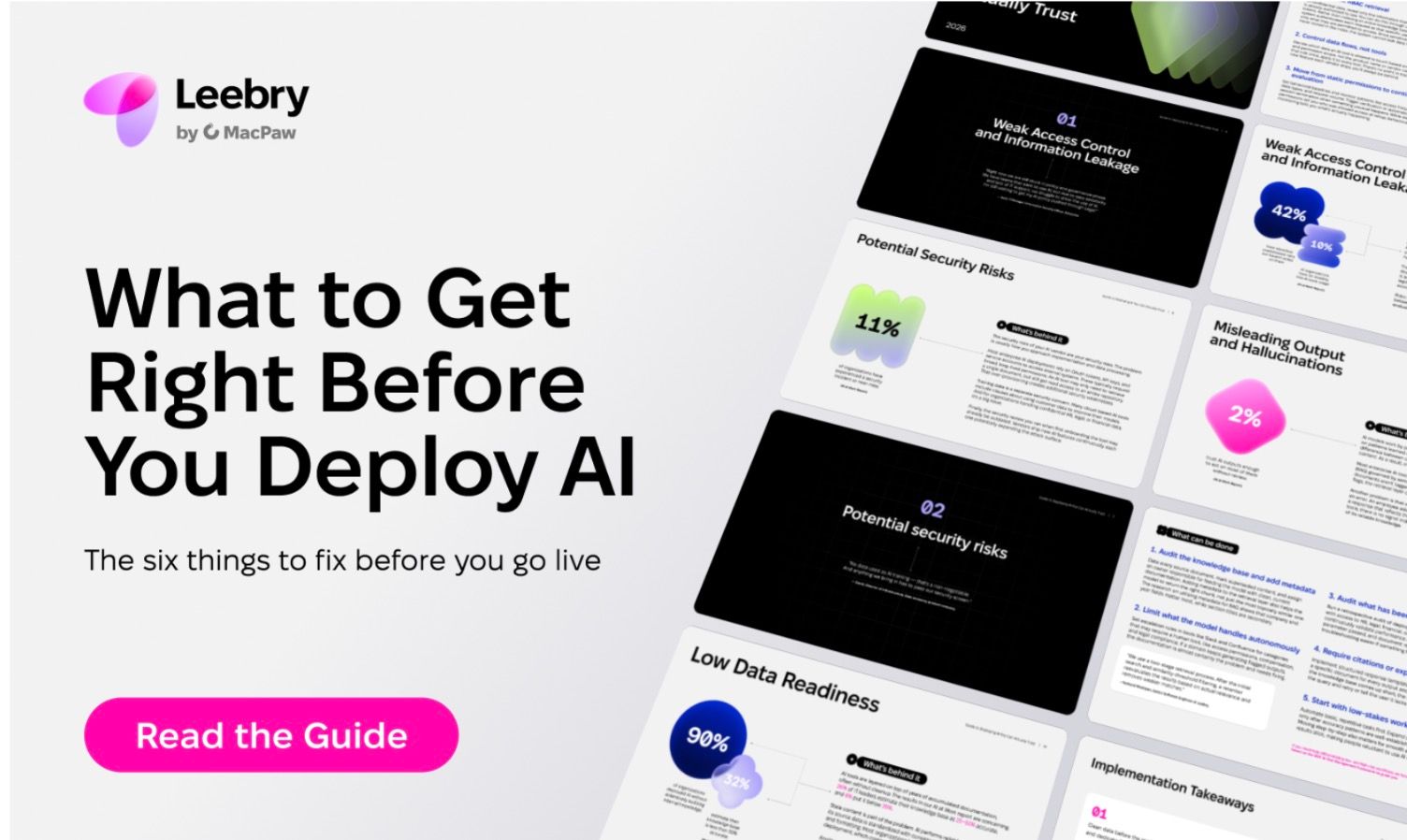
Leebry's "Guide to Deploying AI You Can Actually Trust" asked IT Directors, Heads of IT, and CIOs what actually worries them about AI deployment. The same six concerns came up every time: access control, security, hallucinations, data readiness, human review, and the verification cost nobody budgets for.
A practical, six-part framework walks through what's behind each one, and exactly what to do about it.
Latest in AI
US demands allies pick AI sides
🚨 Our Report
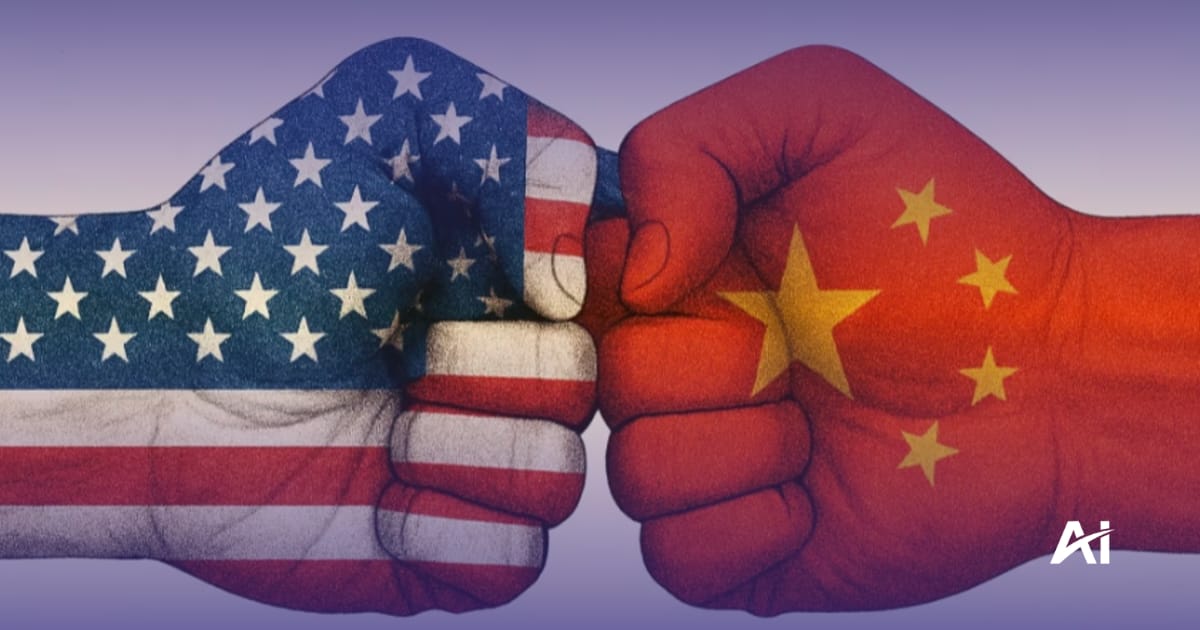
The State Department is preparing to send allied nations an ultimatum: choose the American AI ecosystem or the Chinese one, but not both. A draft diplomatic letter obtained by Reuters tells the 35 countries that signed June's "AI Opportunity Statement" that membership in both coalitions is no longer acceptable.
🔓 Key Points
The mechanism is Pax Silica, a US-led initiative launched last year to secure supply chains for AI models, semiconductors, and critical minerals. Members get access to shared AI investment opportunities. Countries that also join China's framework get excluded.
Roughly two dozen nations have signed on, including Japan, Australia, and South Korea. Kazakhstan is currently the only country sitting in both camps, thanks to its critical mineral reserves, but that position may soon become untenable.
China launched a competing "World Artificial Intelligence Cooperation Organization" in July, built around open-weight technology and explicitly open to any country willing to join. Beijing is even weighing restrictions on overseas access to its best models.
🔐 Relevance
For enterprise leaders operating globally, this marks a fundamental shift in how AI infrastructure decisions will be made. The comfortable era of multi-vendor hedging across US and Chinese systems is ending. Companies with operations in allied nations should expect procurement constraints, supply chain audits, and compliance requirements tied to which AI ecosystem their host country joins. Europe's "strategic autonomy" positioning offers no clear escape, and the letter reportedly provides no room to negotiate a middle path.
THE BUSINESS BRIEFING: OPERATIONS (powered by Upscaile)
Octopus Energy (UK-based energy company, operating in 18 countries) was drowning in invoice processing. Their template-based OCR system required a new ticket for every supplier layout change, leaving hundreds of requests permanently open. The AP team touched 70–80% of all documents manually, with no bandwidth left for anything else. As an Ofgem-regulated company, late payments to critical energy suppliers meant reputational risk. They deployed Rossum's AI-powered invoice processing with NetSuite integration and automated GL coding.
Tool used: Rossum -- AI document processing that extracts invoice data without pre-built templates and auto-populates line-item coding.
Result: 85% automation for critical suppliers within 9 days of going live. 50% of the AP team promoted into higher-skilled roles elsewhere in finance. Leadership now receives regular data-driven reporting on AP KPIs for the first time.
The lesson: Template-based automation creates a support ticket backlog that grows faster than you can clear it. Octopus picked a system that processed blind documents live during the demo. If your vendor can't handle an invoice layout they've never seen, you're buying a ticket queue, not automation.
Steal this: Count your open OCR or data extraction tickets this week. If the backlog is growing, evaluate whether your current system requires templates for every new supplier. That dependency is the bottleneck.
TOGETHER WITH JACK AND JILL
Meet Jack and Jill.
Jack is a free AI agent that gives unimaginably good support as you take the next step in your career. Jill is an AI agent that hires for your company.
Jack and Jill have thousands of conversations every day, making thoughtful introductions when there is a match between companies and professionals.
Get direct introductions to jobs for free. /jack
Get direct introductions to remarkable talent for free. Only pay if you successfully hire. /jill
THE HUMAN & AI DE BRIEF
“My manager wants me to use AI but I don’t want to. What do I do?”
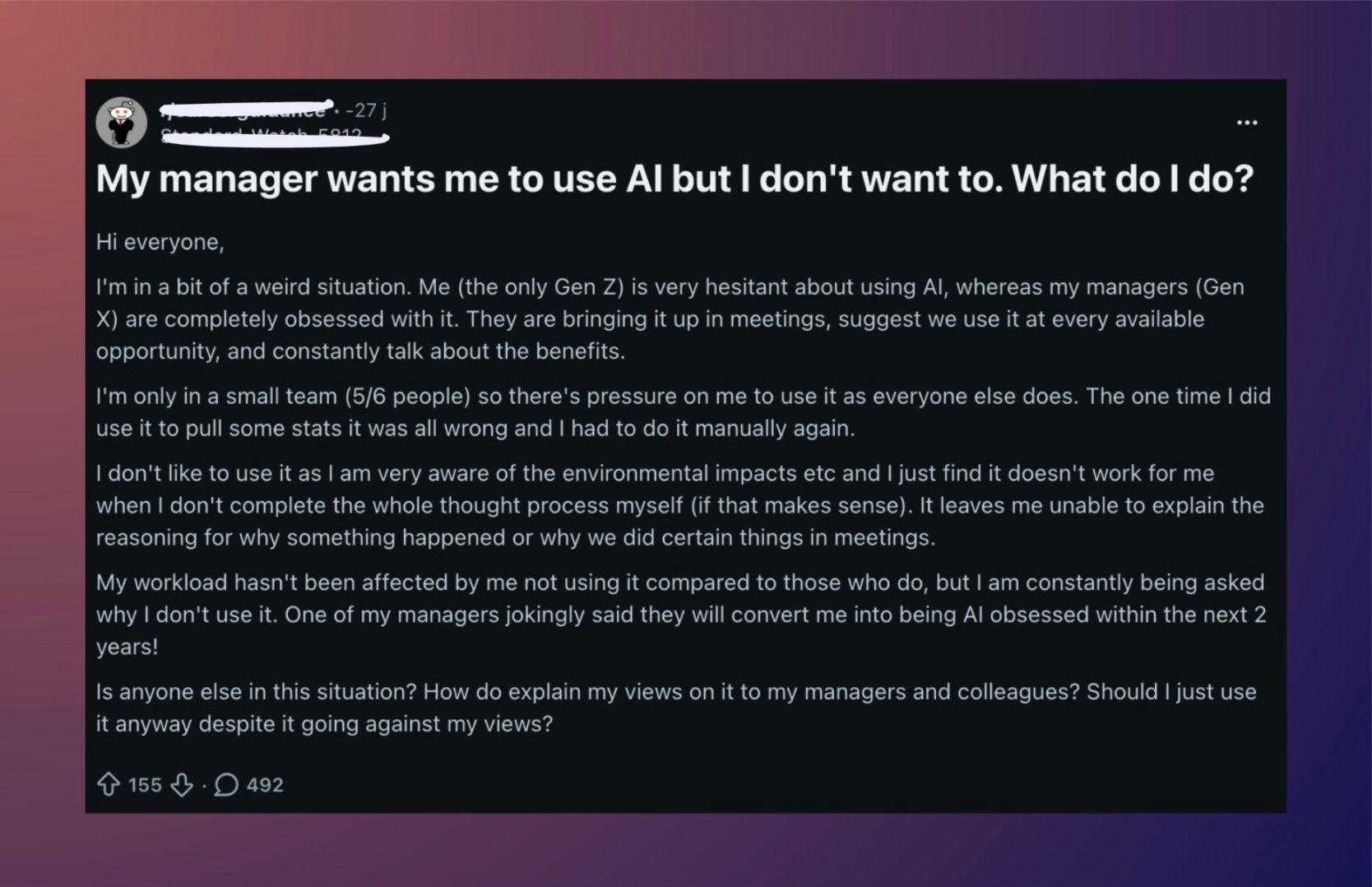
Last Friday I went looking for clues on Reddit, what employees actually say about AI when no one from the office is listening. What I found were real voices: the developer who rebuilt 10,000 lines of AI-generated code from scratch, the team being tracked on daily token usage, the employee gaming the system just to survive. Behind all of it, one thing. This week I break down what is actually going on, and what leaders can do that is more generous than anything the usual change management playbook suggests.
THE POLICY CORNER
Illinois BIPA now counts repeat scans as single violations after 2024 amendment takes full effect.
Any company collecting fingerprints, face scans, or other biometric data from Illinois residents must still obtain written consent before the first scan and publish a retention policy. The 2024 amendment (Public Act 103-769) caps damages exposure by treating repeated collections of the same biometric identifier as one violation rather than per-scan liability. The Seventh Circuit confirmed in April 2026 that this single-violation rule applies retroactively to pending cases.
Deadline: In effect now. Five-year statute of limitations on claims.
Risk: $1,000 per negligent violation, $5,000 per intentional violation, plus attorney fees. BIPA remains the only state biometric law with a private right of action. Approximately 150 class actions were filed in 2025 alone.
Your move: Audit your timekeeping and access systems this week. If employees scan fingerprints or badges without signed consent forms on file, fix it before a plaintiff's firm does the audit for you.
AI News
👶 OpenAI launches ChatGPT for Teens with content restrictions: New version for ages 13-17 blocks suicide, self-harm, and romantic chats while providing homework help designed to guide rather than answer; linked parental controls offer quiet hours and safety notifications. FULL STORY
🎧 Apple's camera-equipped AirPods confirmed in macOS leak: Researcher found footage showing Visual Intelligence feature that lets users ask Siri about objects they're looking at; cameras capture low-resolution data for AI queries, not photos or video, with LED indicator when sharing visual data. FULL STORY
📉 Amodei admits AI companies haven't delivered on promises: Anthropic CEO wrote that saying "AI will cure cancer" is now a cliché and only genuine breakthroughs will win public trust, weeks before a listing backers expect to value the company at $2T. FULL STORY
🇮🇳 Perplexity's free India offer created 56M downloads, now testing paid conversion: Airtel partnership gave free Pro subscriptions to 360M customers; monthly active users peaked at 22M and India revenue hit $156K in July as earliest subscribers face renewal decisions. FULL STORY
Trending AI Tools (Sponsored by the AI Executive’s Pass)
A curated look at the AI tools quietly transforming how teams work.
Gamma* — Create stunning presentations and websites from a single prompt, no design skills required
1029th is an AI thumbnail generator for YouTube creators with analytics and A/B testing
MyGPT is a platform for building custom Telegram bots with ChatGPT, DALL·E 3, and voice recognition
*indicates a sponsored tool, if any
⚡️ Why pay for 4–6 separate AI tools at full price when the AI Executive’s Pass fixes that?
The Money: Inference hardware commands premium valuations
Capital is chasing inference speed, not model training. Etched doubled its valuation to $21B in a single month after Jane Street tested its custom inference chips and installed a rack in its own datacenter. The quant fund's endorsement signals that financial firms see inference bottlenecks as the constraint worth paying to solve.
Deals to know:
Etched (Series C extension, $700M at $21B valuation) -- Custom inference chips with cluster-scale memory for frontier model deployment. Valuation up from $10.3B one month ago. Investors: Jane Street (lead), Kleiner Perkins, Sequoia Capital, Andreessen Horowitz, Peter Thiel, Tiger Global, Blackstone
Reach Capital Fund V (Fund raise, $265M) -- Sector-focused AI applications across learning, health, and work; $1M–$10M checks from pre-seed through Series A. Investors/LPs: Capricorn Investment Group, Los Angeles Fire and Police Pensions, LEGO Foundation, College Board
Signal: Smart money is betting inference costs, not training costs, will determine which AI applications reach profitability. Hardware that cuts latency now commands faster valuation step-ups than frontier model companies.
Thoughts on today's edition?Hit me up on LinkedIn, I read every message. |  |
Refer a Friend
Latest episode: He Almost Went Out of Business Four Times → Listen here
Want to reach 400k+ decision-makers? → Sponsor us
Until next time, Arturo and Liam.
P.S. Unsubscribe if you don’t want us in your inbox anymore.