
400,000+ business leaders (and teams at IBM, AWS & Zapier) start their day with The AI Report. 5 minutes. Plain English. No hype.


My manager wants me to use AI but I don’t want to. What do I do?
Expert analysis from
Marie-Lou Poirrier.jpg)

.svg)
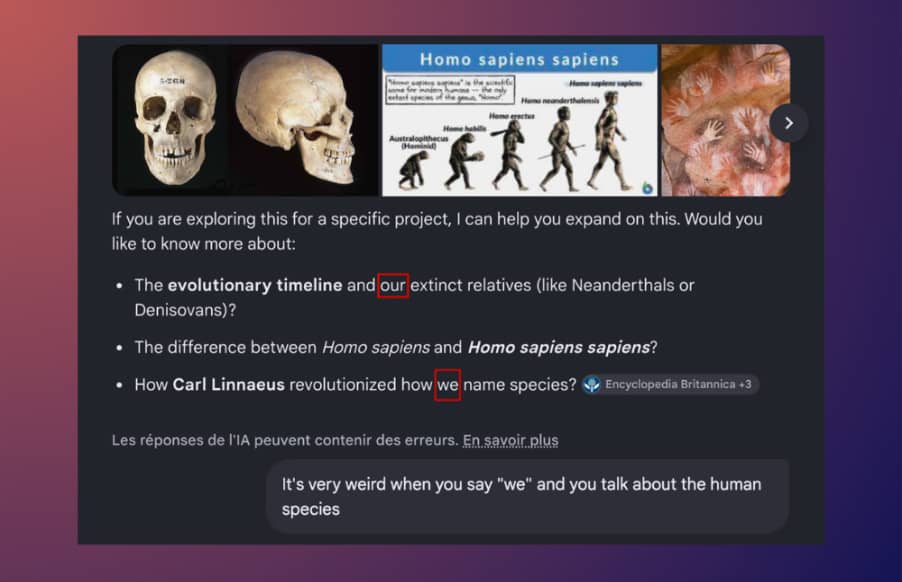
I found that thread on a Friday afternoon. I was doing research, scrolling Reddit, looking for clues from the employee side. One of the answers to a survey I’d run had stayed with me all week. Someone had written, simply: “I just want to fix adoption.” And that same day, a friend had told me she tries to use AI as little as possible at work.
So I went looking. What’s actually in the way?
That thread stopped me cold.
I recognized it immediately. I was reading a conversation between two people who couldn’t hear each other. A leader somewhere, genuinely excited about AI, maybe for business reasons, maybe because they actually believe in it, pushing their team forward. And on the other side, an employee who didn’t know how to say out loud what they were putting in a Reddit comment at God knows what hour.
I wanted to turn the volume up so they could hear each other.
Here is what the employees are actually saying.
One commenter’s wife works at Ford. They made the team log AI usage daily, required it. Then, months later, flipped to capping how much they could use. “Turns out it cost too much.” Another inherited a project built almost entirely on AI-generated code. Ten thousand lines. An hour to recognize it was junk. A week to rebuild from scratch, into a thousand better lines. “That’s my go-to example now when my boss pushes AI.” And then there’s the person gaming the token tracker, feeding documents into the tool just to hit the daily quota, translating files into five languages to burn through the number. And this one, which I keep coming back to: “There’s pressure on me to use it as everyone else does. One of my managers jokingly said they will convert me into being AI-obsessed within the next two years.”
Each one of those lands differently. But they’re all saying the same thing underneath.
“If there is a risk to your employment, then you have to think about whether or not it’s worth it to you.”
That’s the question sitting behind every single comment in that thread. Do my leaders have my interests in mind, or am I a variable in a cost equation? That question doesn’t get answered by a rollout plan, or training sessions, or adoption KPIs. It gets answered in the small moments. In whether a leader notices. In whether they ask. In whether they actually want to hear the answer.
Here is what I know about what happens when that question goes unanswered for too long.
You build resentment. You lose meaning, the sense of who you are. You erase yourself, a little, every day. Gallup calls the endpoint “active disengagement,” employees so resentful their needs aren’t being met that they start, consciously or not, undermining the work of everyone around them. But before you get to that label, there are months of someone swallowing something uncomfortable every morning before they open their laptop. That’s the human cost. You won’t find it in your adoption metrics.
So what do you do with this?
The first move is a posture. Before you walk into any conversation, you need to make a genuine internal decision: to understand. To hear something uncomfortable and let it land without immediately reaching for a response. To go in curious mode.
Because if trust is already low, and based on what I read in that thread, it often is, you could ask directly and get a “no, no, everything’s fine.” A polite nod. And a person who goes home and writes a Reddit comment that night.
Then, give them something real to do. Ask them to explore where AI could support their work, on their terms. Ask them to report back where it works and where it falls short. Ask them what they would do with the time freed up, and help them see how that’s genuinely beneficial to them, then to the business, even better, to your clients. Encourage them to share with each other, peer to peer, what they’re finding.
The answers are already in your team. Quotas and jokes about converting people into believers push those answers underground. Ownership and genuine curiosity bring them out.
This moment asks people to reinvent their relationship with work itself, not just a workflow. That’s a big ask. The leaders who get it right are the ones who treat their team as the people most qualified to figure it out.
When they talk, and they might not at first, your only job is to say: “Thank you, I’m glad you told me.” Stay there. No roadmap slide, no defense of the strategy. If you get that far, you’re already ahead of most.
You’re reading this, which means you’re already asking the right question. Most leaders don’t go looking for what their team is saying on Reddit at midnight. The gap is closeable. It starts with deciding you actually want to close it.
If you try this and you’re not sure what to do with what you hear, come find me on LinkedIn. That’s exactly the kind of conversation I’m here for.
About
The technology is ready. The question nobody is asking is: ready for what, exactly?MarieLou believes everyone has a role in shaping what comes next, and that it starts with owning how we navigate it. Her work is about making sure they have the awareness and capacity to play that role. She already took that belief to the TEDx stage. She spent four years inside AI-forward companies watching what the transition was actually doing to the people in those rooms.Now she works with organizations in the middle of AI transformation, helping their people build the human capabilities that make the change actually work. That is the layer she works on.At The AI Report, she writes the Human & AI Debrief, where the focus is always that same human layer underneath the technology.



.svg)
.jpg)
.jpg)
.jpg)
.png)
