
400,000+ business leaders (and teams at IBM, AWS & Zapier) start their day with The AI Report. 5 minutes. Plain English. No hype.


What an Athlete’s Mistake Taught Me About Judgment in the Age of AI
Expert analysis from
Marie-Lou Poirrier.jpg)

.svg)
A friend of mine races obstacle courses at Elite level. After his last competition, he posted this:
“I knew my shoes had poor grip in wet conditions and I still raced in them. That decision came back to bite me on the final ramp, where I slipped and had to go around.”
One sentence. One costly mistake. And the most honest thing about it is the first word: I knew.
(Bear with me. This is about AI.)
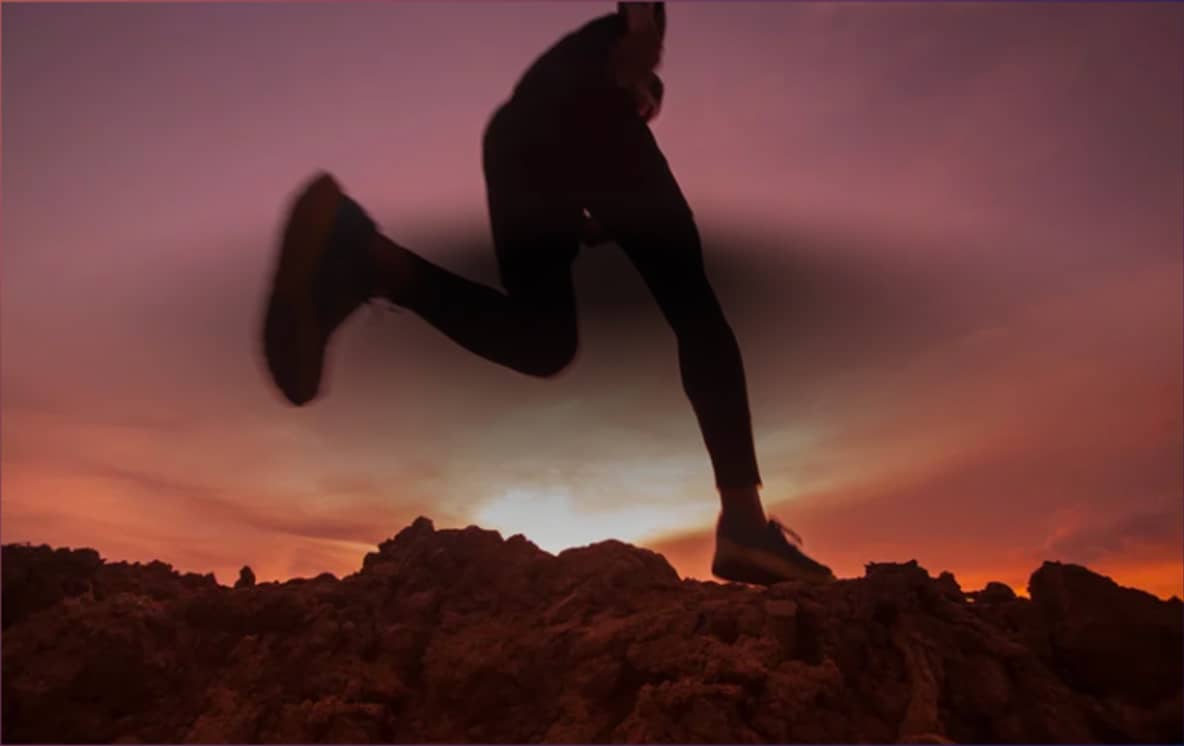
Good judgment has two requirements. The first is reasoning well: analyzing the situation, weighing options, thinking clearly. The second is harder: accurately reading the conditions that are influencing that reasoning in the first place.
My friend reasoned fine. He looked at his shoes. He made a call. What he couldn’t see was that his identity was running that call. “I have never been a material guy,” he wrote. That’s not a neutral observation. That’s a frame. And inside that frame, the shoes didn’t register as a real risk. They registered as a detail that didn’t fit who he was.
He chose the wrong shoes because he couldn’t see what was doing the thinking for him.
And the only thing that fixed it was the mud.
He slipped. He felt it. He lost time on that ramp, did the math on what it cost him, and wrote: “next season I’ll definitely change that.” Not just the shoes. The identity. The part of him that decided shoes were not worth caring about.
The slip was the data. The friction was the teacher. He needed reality to show him what his reasoning couldn’t. That’s not a failure. That’s how good athletes, and good thinkers, actually develop judgment. Through accumulated experience of getting it wrong in conditions that make the mistake visible and traceable.
Now think about AI integration as athletic performance. Organizations are training hard. Building strategy, capability, execution. Getting serious about the race. The best ones understand this is not just a sprint. You need a system. You need motion. You need to build real capability before you can create real impact.
What no training plan gives you is the slip.
And this is where AI enters the system in a way we are not talking about enough.
AI doesn’t just assist with tasks. It participates in the conditions that shape judgment. It generates the alternatives you choose between. It surfaces, or doesn’t surface, the counterarguments. It pulls together information, recommends conclusions, increases confidence, shapes the frame before you even start thinking. It makes polished outputs feel easier to trust. It reduces friction. It catches you before you fall.
Which means it removes the very mechanism through which you would have caught yourself.
Your identity is still running the call. The unexamined assumption is still in the room. But now there is no mud. No ramp. No moment where reality pushes back hard enough to make the invisible visible.
You don’t slip. So you don’t update.
And the capacity that would have caught you, knowing what is running your reasoning before it runs you (part of what is metacognition), goes not just unused. It goes untrained.
Now, imagine my friend runs the race, crosses the finish line, the scoreboard says he is not qualified, and he has no idea why. He never saw the mud. He never felt his feet go. How does he fix what he never experienced breaking?
This is what happens when AI absorbs the friction entirely. You end up on the other side of an output, something is wrong, and you cannot trace it back. Because the reasoning happened without you in it. The only way to find the error is to understand the choices you made upstream: the frame you gave the AI, the prompt you wrote, the assumptions you built in. But if you were never inside the process, you cannot read your own fingerprints in it.
The first work is to heighten metacognition: the awareness and leadership of your own thinking. Noticing what is happening in your reasoning. Understanding what is shaping it. Evaluating your own reliability. And then deciding and acting from that clearer place. Not thinking harder. Thinking with more self-knowledge. For those who want to train that capacity, that is exactly what I work on with leaders and teams.
The second work is to deliberately recreate contact with friction: the situations, the dialogues, the practices that put you back in the discomfort AI is now removing. For those building AI tools and processes, that means designing systems with deliberate checkpoints, moments where the human has to reason out loud before the tool moves forward. (That deserves its own article. It’s coming.)
My friend is going back next season (Let’s wish him good luck!). Harder training, better preparation, new shoes. He wrote it himself. He knows what he is updating and why, because he felt the ground go out from under him.
That loop, slip, see it, update, is the loop we need to protect.
Because the margin between a great race and a costly one has always been small. AI is not making it smaller. It is making it invisible. And invisible margins are the ones that compound, until the damage is very hard to trace back to a pair of shoes you already knew were wrong.
About
The technology is ready. The question nobody is asking is: ready for what, exactly?MarieLou believes everyone has a role in shaping what comes next, and that it starts with owning how we navigate it. Her work is about making sure they have the awareness and capacity to play that role. She already took that belief to the TEDx stage. She spent four years inside AI-forward companies watching what the transition was actually doing to the people in those rooms.Now she works with organizations in the middle of AI transformation, helping their people build the human capabilities that make the change actually work. That is the layer she works on.At The AI Report, she writes the Human & AI Debrief, where the focus is always that same human layer underneath the technology.


.jpg)
.svg)
.jpg)
.jpg)
.png)
