400,000+ business leaders (and teams at IBM, AWS & Zapier) start their day with The AI Report. 5 minutes. Plain English. No hype.
How to Use AI to Find a Job
Learn how to use AI to find a job faster, from role discovery and resume tailoring to research and application strategy, without sounding like everyone else.


Job searching has always been part strategy and part grind. AI hasn't removed the grind, but it has changed where it sits. The tedious parts, like scanning hundreds of postings, decoding what a job description actually wants, and researching a company before an interview, can now be handed off almost entirely. What AI can't do is have the actual conversations, make the judgment calls, or bring your specific experience to the page in a way that sounds like you. Knowing how to use AI to find a job means understanding exactly where that line sits.
Here's a practical walkthrough of how to use AI to find a job at every stage of the search, along with where to be careful.
Start with role discovery instead of job boards
Most job seekers open a job board first and start scrolling. A better starting point is figuring out, with AI's help, what you're actually looking for. Describe your background, your non-negotiables, and the direction you want your career to grow, then ask an AI tool to suggest several specific role titles that fit, including ones you might not have thought to search for since job titles vary widely across industries for similar work.
A useful prompt looks something like this: list several roles that match this background, along with typical salary ranges, the skills employers are asking for in each, and which industries are hiring most for that role right now. This turns a vague sense of "I want something in marketing" into a focused list of ten or fifteen actual titles worth searching, which is one of the most underused parts of how to use AI to find a job efficiently rather than applying at random.
Use AI to decode what a job description is really asking for
Job descriptions are often a mix of genuine requirements, wish-list items, and boilerplate. AI is good at separating the two. Paste several postings for roles you're targeting into a chatbot and ask it to identify the skills or qualifications that show up repeatedly across all of them. That repetition is a strong signal of what actually matters to employers, versus what's just filler in one particular listing.
This same exercise doubles as a gap analysis. Once you can see what keeps coming up across postings, you can compare it honestly against your own resume and know exactly where you're already strong and where a course, project, or reframed bullet point would help. This kind of analysis is a core part of how to use AI to find a job that's genuinely a good fit, rather than chasing titles that sound impressive but don't match what you actually offer.
Tailor your resume for each application, not just once
Applicant tracking systems have gotten more sophisticated. Older keyword-stuffing advice increasingly falls short, since many systems in 2026 use semantic search that reads for genuine context rather than just matching exact words. The right approach is building one comprehensive master resume containing everything you've done, then asking AI to tailor a trimmed, relevant version for each specific posting, adjusting your summary and top bullet points to reflect what that employer is actually asking for.
Keep your prompts specific: paste the job description alongside your master resume, and ask the AI to align the top three bullet points under each role with that posting's language, using only true details from your real experience. A resume-matching tool can then help confirm how closely your tailored version lines up with the posting before you submit it.
Research companies before you apply, not just before the interview
AI-powered research tools that cite their sources are worth building into the early stages of your search, not saving for interview prep. Before applying, a quick AI-assisted look at a company's recent news, funding, leadership changes, and public priorities tells you whether the role and the company are actually a fit, and gives you specific details to reference in a cover letter or an outreach message later. This is a quieter but genuinely valuable piece of how to use AI to find a job, since most candidates skip company research until the interview is already scheduled.
Once you have a system in place, a good next step is to start looking for opportunities to work with. Exploring job boards such as Jooble can help you discover relevant openings from different companies and sources, giving you a broader pool of roles to evaluate and apply for.
Be careful with how visible the AI is in your output
This is the part of using AI in a job search that trips people up. Recruiters are now flooded with applications that all sound the same, because they were generated from similar prompts, and a meaningful share of recruiters say they can spot AI-written text within seconds. Common tells include generic superlatives without real detail, uniform sentence lengths, and achievements that read like a template rather than something a specific person actually did.
The fix isn't avoiding AI. It's using it as a drafting and editing tool rather than a final-answer machine. Have AI generate a first pass, then rewrite it in your own voice, add real numbers and specific project names, and vary your sentence structure so it doesn't read like every other AI-assisted application in the pile. Cover letters in particular are worth this extra effort. A meaningful portion of recruiters still read them closely, and a genuinely personal one stands out precisely because so many candidates are skipping that step or phoning it in.
Build an application system, not a scattershot habit
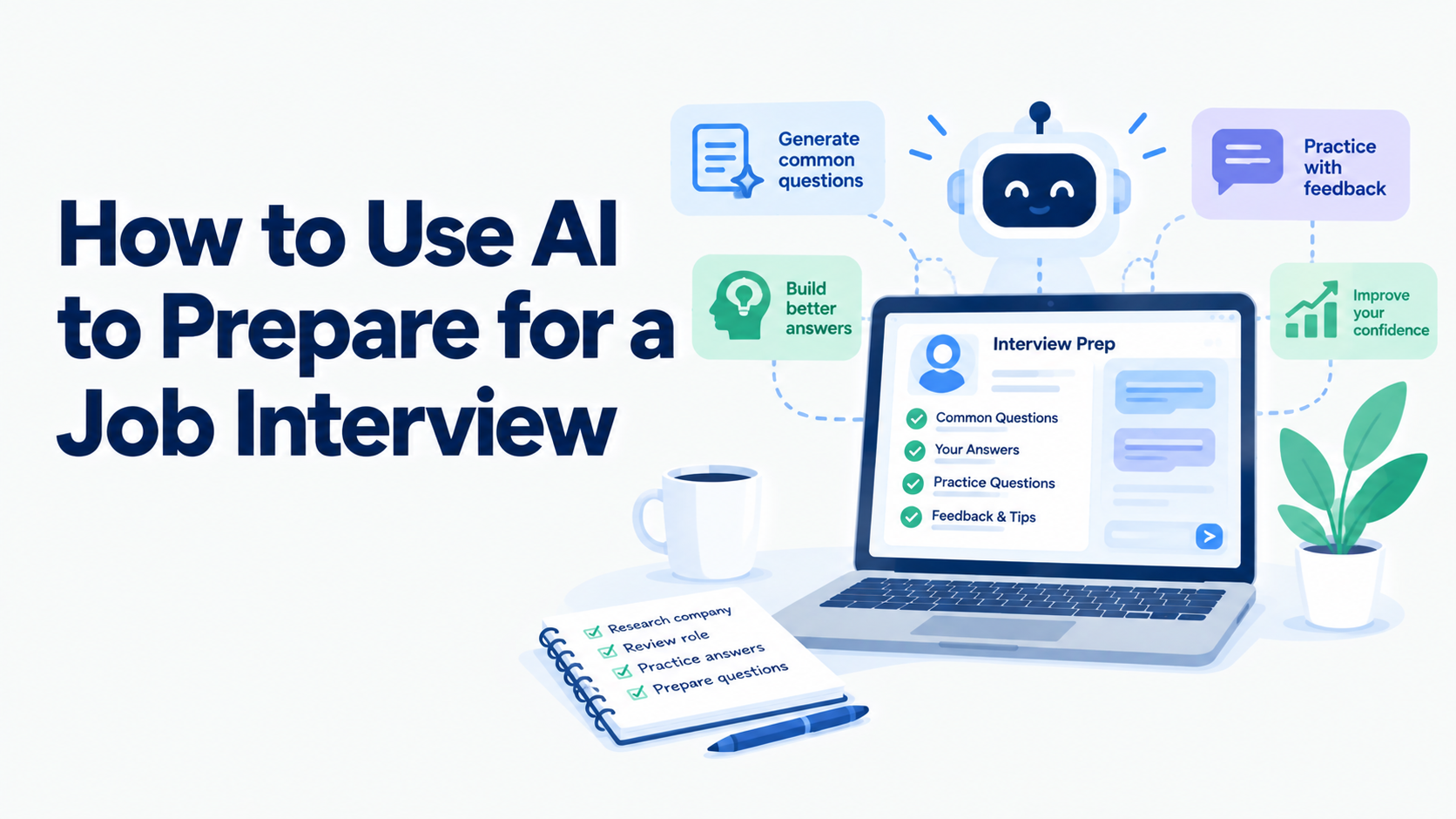
The last piece of how to use AI to find a job well is treating your search like a repeatable process rather than a one-off task each time you see a posting. Set up a simple system: a master resume, a standard set of AI prompts for tailoring and company research, and a tracker for where each application stands and what follow-up is due. AI can help you draft outreach messages to people at target companies, prep likely interview questions based on the job description, and even role-play a first-round interview with you. The time you save on repetitive prep is time you can put toward the parts of a job search that AI genuinely can't do for you: the actual conversations and the relationships that come out of them.
Stay current as the tools and tactics keep shifting
The tools and best practices for how to use AI to find a job are changing quickly, and what worked six months ago, from specific prompts to which platforms recruiters trust, may already be outdated. Subscribe to The AI Report for ongoing coverage of how AI is reshaping hiring and job searching, so your approach stays sharp as both sides of the hiring process keep evolving.