400,000+ business leaders (and teams at IBM, AWS & Zapier) start their day with The AI Report. 5 minutes. Plain English. No hype.
How to Use AI to Prepare for a Job Interview
A practical guide to AI interview preparation, covering mock interviews, question generation, answer feedback, research, and role-specific practice.
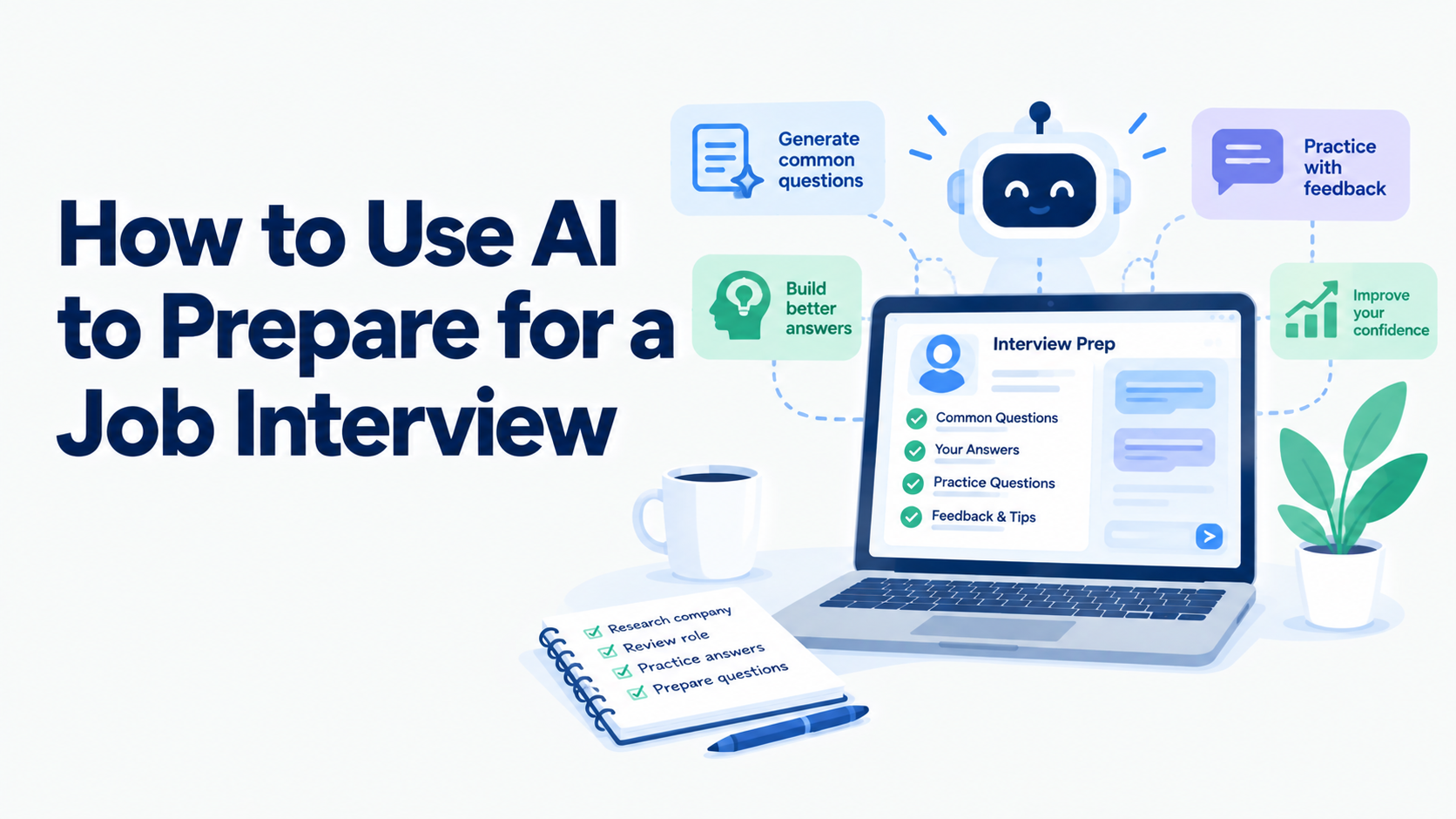

Nearly half of U.S. job seekers now use AI somewhere in their interview preparation, according to a 2026 survey of active candidates. Most of them are underusing it. Pasting "give me common interview questions" into a chatbot and reading the answers back is a start, but it leaves most of what AI interview preparation can actually do for you sitting untouched.
Here's how to use it properly, across the five parts of prep that matter most: generating the right questions, running real mock interviews, getting useful feedback on your answers, researching the company, and preparing for the specifics of the role.
Generate questions that match the actual role, not a generic list
Generic interview question lists are a reasonable starting point, but they miss what a specific role and company are actually likely to ask. Paste the full job description into an AI tool and ask it to generate likely interview questions based on the specific responsibilities and qualifications listed, separated into behavioral, technical, and role-specific categories. This single step turns AI interview preparation from a generic warmup into something closer to actual scouting.
Push further by asking what a hiring manager in that specific industry tends to probe for beyond what's written in the posting. A finance role and a marketing role listing the same word, "stakeholder management," will usually get asked about it differently, and AI can help you anticipate which angle is more likely for your specific situation.
Run real mock interviews, not just a Q&A list
The bigger upgrade in AI interview preparation isn't the questions themselves. It's practicing out loud, under something resembling real conditions, rather than silently reading questions and mentally drafting answers. A growing number of dedicated tools, including free options like Google's Interview Warmup, let you speak your answers aloud to an AI interviewer and get a transcript and structured feedback afterward, which surfaces problems that reading never will: rambling, filler words, and answers that sound fine in your head but don't land out loud.
If you're using a general-purpose AI chatbot instead of a dedicated tool, you can still simulate this reasonably well. Ask it to act as an interviewer for a specific role, ask one question at a time, wait for your answer, and follow up the way a real interviewer would based on what you actually said, rather than dumping every question at once. The back-and-forth format matters. Real interviews rarely go in a straight line, and practicing for follow-up questions is a meaningfully different skill than reciting a memorized answer.
Get specific feedback on your actual answers
This is where AI interview preparation earns its keep over practicing alone or with a friend who isn't in your industry. After a mock answer, ask directly what was vague, what lacked a concrete result, and where a stronger example would land better. AI is particularly good at catching structural issues: an answer that never actually states the outcome, a story that buries the point in the setup, or a response that answers a different question than the one asked.
The STAR format (situation, task, action, result) remains the most reliable structure for behavioral questions, and AI can quickly flag which part of that structure your answer is missing. If your answer to "tell me about a time you handled conflict" spends four sentences on the situation and one vague line on the result, that's an easy, specific fix, and it's the kind of feedback that's hard to get from reading advice alone.
Research the company before the interview, not the night before
AI-powered research is one of the more underused parts of interview preparation. Before your interview, ask an AI tool with web access to pull together recent company news, its stated priorities or values, and anything notable about the specific team or department you're interviewing with. This gives you two things: informed questions to ask at the end of the interview, and specific reference points you can weave into your own answers to show you've actually done the homework.
This matters more than it might seem. A generic "why do you want to work here" answer is instantly forgettable. One that references a specific initiative, product launch, or challenge the company is publicly navigating stands out precisely because most candidates skip this step.
Prepare for the specifics of the role, not just the interview format
Different roles get interviewed differently, and generic AI interview preparation advice tends to flatten that distinction. A technical role will often include a coding or case component that benefits from role-specific practice tools built for that format. A leadership role will lean harder on situational judgment questions about managing people and ambiguity. A career-change candidate needs to prepare an answer for the pivot itself, since that question is almost guaranteed to come up.
Tell AI specifically what kind of role and interview format you're preparing for, and ask it to weight its questions and feedback accordingly. Generic prep treats every interview the same. Good AI interview preparation adjusts for what your specific interview will actually look like.
Put it together the night before, and the day of
A simple pre-interview routine using AI looks like this: confirm the questions most likely for this specific role, run one or two mock rounds out loud with feedback on your weakest answers, review your company research one more time, and prepare two or three questions to ask that reference something specific you learned. None of this replaces genuine expertise or real practice over time, but it removes the guesswork about where to focus your limited prep time before something that matters.
Stay ahead of how interview prep keeps evolving
The tools and techniques for AI interview preparation are moving fast, from new mock interview platforms to how AI is used on the hiring side of the table. Subscribe to The AI Report for ongoing coverage of how AI is reshaping hiring and job searching, so you're always prepping with what actually works right now.