
400,000+ business leaders (and teams at IBM, AWS & Zapier) start their day with The AI Report. 5 minutes. Plain English. No hype.


We Gave Our People AI to Move Faster. Why Does Everyone Still Feel Behind?
Expert analysis from
Marie-Lou Poirrier.jpg)

.svg)
I opened the fridge and felt that specific kind of shame that only hunger brings. Nothing ready. Real cooking required. One tap away from Uber Eats, I decided against it, on some principle I couldn’t quite name. Something about not taking the easy way out. I cooked something quickly, it was a mess, and somewhere between the chopping and the waiting, the clearest idea I’d had all day arrived.
I wasn’t trying to think. I was trying to eat.
There’s a video going around from a smart, credible investor worth listening to, Sophia Amoruso. Her argument: ideas are cheap now. What matters is execution and speed. She’s describing the game as it actually is. But she triggered something in me. Because the implication, that thinking slowly is a liability, landed somewhere uncomfortable.
A day earlier, Simon Sinek said almost the opposite. In a team, thinkers and executors are different animals. The person who thinks well rarely executes fast. The person who executes fast rarely does their best thinking. A design, he said. Not a flaw.
Two smart people. Two different arguments. Both true, depending on what you’re optimizing for.
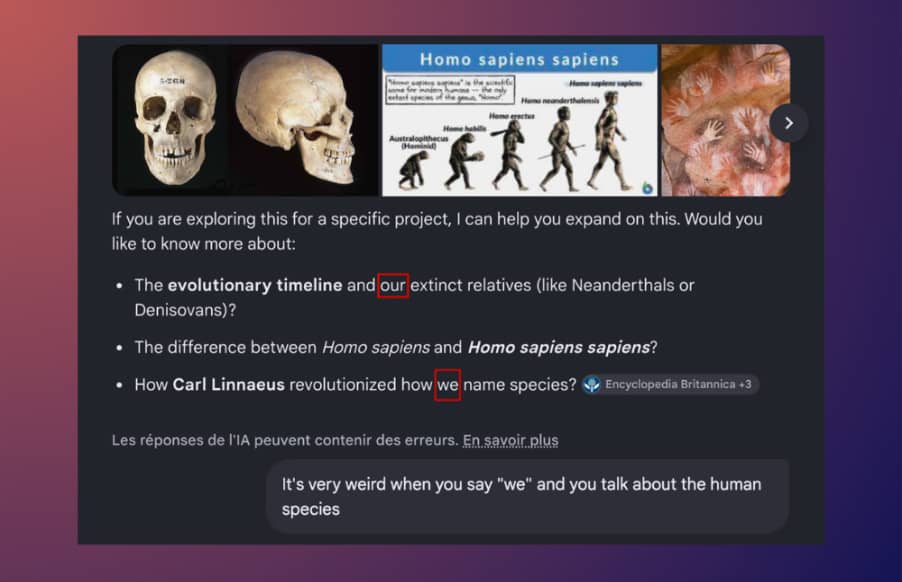
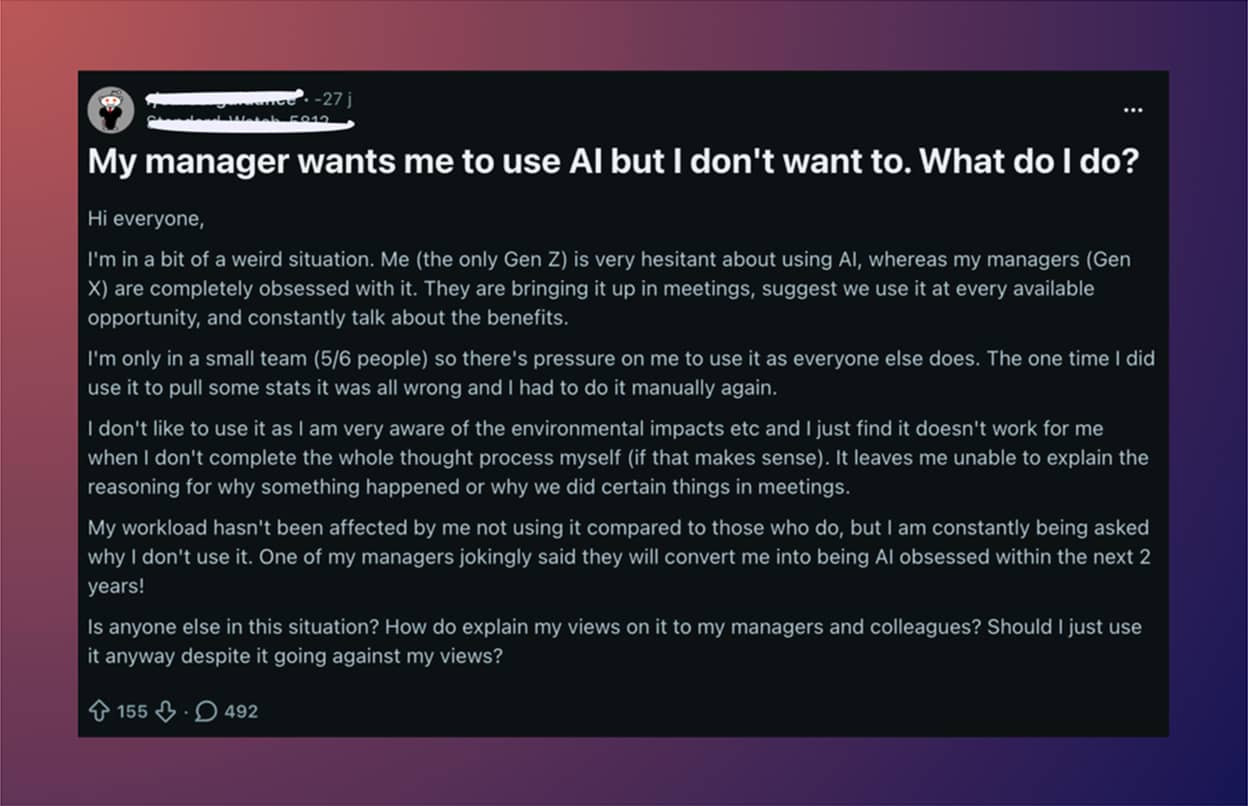
And here’s the irony: one of the loudest conversations about AI right now is that we are outsourcing our thinking to it. Losing our capacity to reason, to judge, to be original. That’s real. But if we pause, literally, the way I paused to cook a meal I hadn’t planned, something else comes into focus. The outsourcing isn’t happening because we’re lazy. It’s happening because we’ve accepted a pace that doesn’t leave room for thinking in the first place.
We built the conditions that made thinking impossible. Then we called it a human limitation problem. Then we handed it to AI to fix.
That’s the irony worth sitting with.
Your people are wearing a lot of hats right now. Strategist. Decision-maker. People leader. Culture builder. Communicator. Commercial driver. Operator. And now, on top of everything else, AI transformation leader, not optional, not “when you have time,” but now, alongside everything else. Nobody asked them if they wanted that last one.
AI makes it feel manageable. Things move faster, some tasks get lighter. But there is a certain amount the mind can hold. And we are developing a very convincing illusion that we can carry more, because the tools make it look possible. That’s not the same as it being sustainable.
The pace we built didn’t arrive with AI. We brought it with us. AI just made it faster to run and harder to question.
Most organizations are somewhere in this loop right now. The tools get better. The output goes up. The thinking gets thinner. Nobody decides that. It just happens, because the pace doesn’t leave room for anything else.
And the thinking that gets lost isn’t abstract. It’s the kind that happens between the chopping and the waiting. The idea that arrives when you stopped trying to have it. Judgment. Perspective. The moment when something that seemed right suddenly doesn’t. These don’t show up in a usage report. They show up in the quality of decisions, over time, in ways that are hard to trace back.
I had a messy lunch and an idea I hadn’t planned for. The idea came because I stopped. Just long enough to be somewhere without an agenda.
That’s how thinking actually works. And we are optimizing it away.
The question worth asking, before the pace gets any faster, is whether the thinking we’re losing is the kind we actually needed.
.png)

.svg)
About
The technology is ready. The question nobody is asking is: ready for what, exactly?MarieLou believes everyone has a role in shaping what comes next, and that it starts with owning how we navigate it. Her work is about making sure they have the awareness and capacity to play that role. She already took that belief to the TEDx stage. She spent four years inside AI-forward companies watching what the transition was actually doing to the people in those rooms.Now she works with organizations in the middle of AI transformation, helping their people build the human capabilities that make the change actually work. That is the layer she works on.At The AI Report, she writes the Human & AI Debrief, where the focus is always that same human layer underneath the technology.


.jpg)
.svg)
.jpg)
.png)
