400,000+ business leaders (and teams at IBM, AWS & Zapier) start their day with The AI Report. 5 minutes. Plain English. No hype.
AI Tools for Marketing and Content Creation
A practical guide to the AI marketing tools helping teams create more content, run smarter campaigns, and get more done with less manual work.
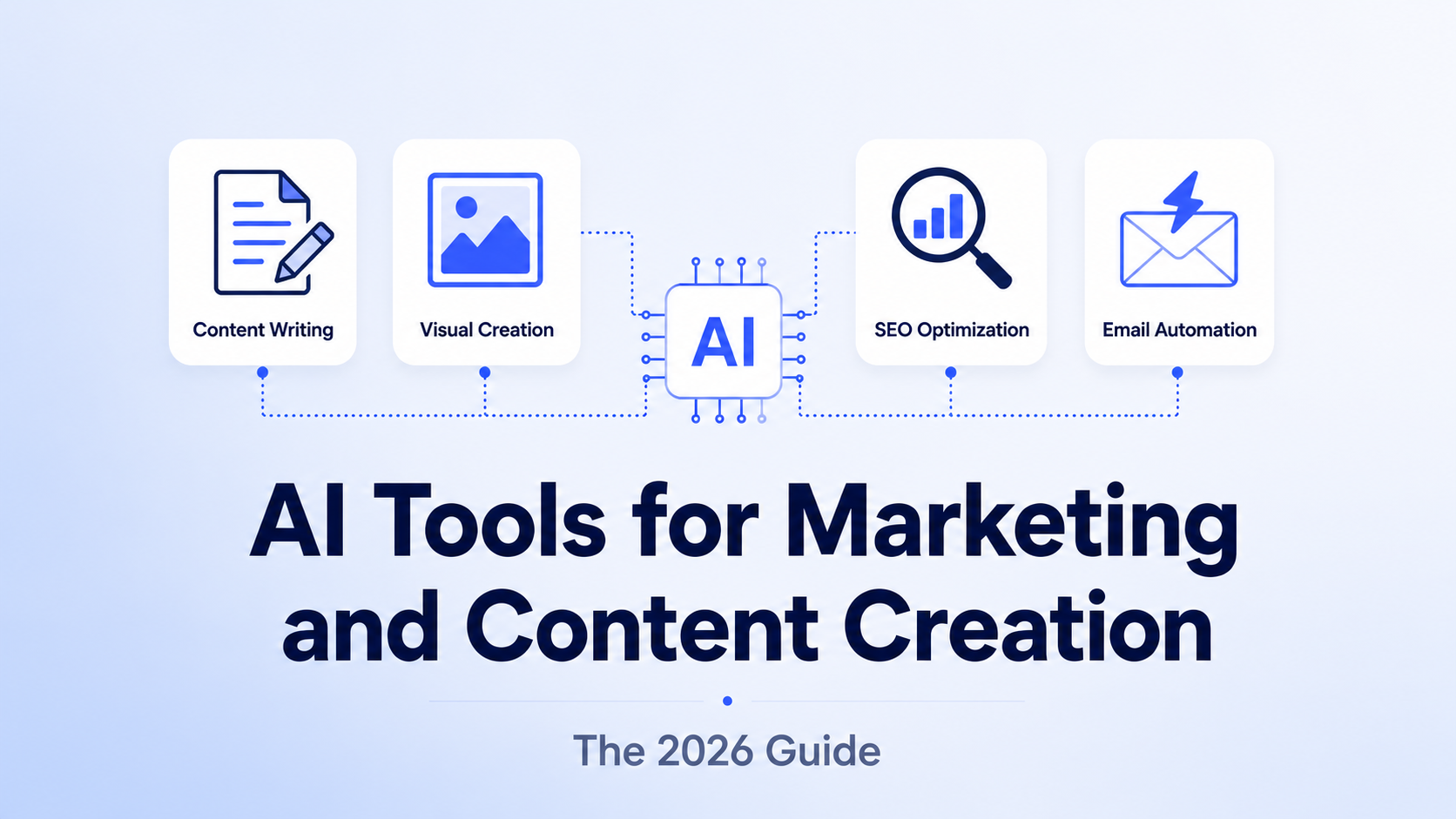

Marketing teams are expected to produce more content than ever, across more channels than ever, with budgets that rarely keep pace. For many teams, AI has become the answer to that gap. According to HubSpot's 2026 State of Marketing Report, 80% of marketers now use AI tools for content and media creation. The question is no longer whether to use AI in your marketing workflow. It is figuring out which tools to use and what to use them for.
This guide breaks down the main categories of AI marketing tools and the specific jobs they do best, so you can build a stack that actually fits the way your team works.
Content Writing and Ideation
The most immediate use case for AI in marketing is written content, and it is where most teams start. General-purpose tools like ChatGPT and Claude handle a wide range of writing tasks, from drafting blog outlines to repurposing long-form content into social posts. For teams producing content at higher volumes and needing consistent brand voice across multiple writers and formats, dedicated marketing writing platforms go further.
Jasper is one of the most widely used in this category. It stores your brand voice, style guidelines, and audience profiles, then applies them consistently across email campaigns, ad copy, blog posts, and landing pages. The results speak for themselves in real implementations: Adidas used Jasper to produce 7,500 product descriptions in 24 hours, and Anthropologie reports that 60% of their SEO content is now automated through the platform. These are not small experiments. They reflect what AI content tools actually look like when embedded into a production workflow at scale.
Copy.ai sits at the other end of the spectrum, better suited for shorter, faster outputs: social captions, ad copy, and email subject lines. For teams that need quick iteration across multiple copy variants rather than long-form production, it fills a different but equally useful role.
Image and Visual Creation
Not every marketing team has a designer available for every request. AI image generation has made it significantly more practical for marketers to produce original visuals without a creative bottleneck.
Canva's AI features are the most accessible entry point for most teams, built directly into a design tool that many marketers already use. It handles social graphics, presentation decks, and simple campaign assets with no prior design experience required. For campaigns that need more distinctive or artistic imagery, Midjourney produces higher-quality generative visuals and is widely used in industries where brand aesthetics matter. Teams already operating inside Adobe's suite can also use Adobe Firefly for AI image generation that stays connected to existing asset governance workflows.
For a more in-depth look at these tools and more, explore The AI Report's AI Tool Index, featuring structured comparisons across 5,500+ tools.
SEO and Content Optimization
AI has changed how marketing teams approach SEO, moving it from a post-writing checklist to something that shapes content from the start.
Surfer SEO analyzes your content against top-ranking competitors in real time as you write, surfacing what is missing and flagging issues before publication. It integrates directly with Google Docs and WordPress, which keeps it inside existing workflows rather than adding another platform to manage. Semrush goes broader, adding competitor research, keyword gap analysis, and AI visibility tracking to help teams understand not just how their content ranks on Google, but whether it is being surfaced by AI tools like ChatGPT and Perplexity.
Writesonic has shifted its focus in 2026 toward what the industry is calling Generative Engine Optimization, helping brands track and improve their visibility across AI search engines specifically. For teams whose audiences are increasingly finding content through AI-generated answers rather than traditional search, this is a meaningful shift in what optimization actually means.
The data behind that shift is more significant than most marketing teams realize. In a recent episode of The AI Report podcast, Vivek Pandya, Director of Adobe Digital Insights, shared figures that reframe the stakes entirely. AI-referred traffic to retail and e-commerce sites is up 393% year on year. A year ago, that traffic was underperforming every other marketing channel by 38%. Now it is outperforming all of them by 48%, with 37% higher revenue per visit and a 32% better bounce rate. His practical advice for brands: treat machine readability as the new SEO priority. Around a third of website content is currently not machine readable, meaning AI tools cannot effectively parse and surface it in generated answers. That includes FAQ pages, returns pages, and product descriptions, not just blog posts.
Watch the full conversation with Vivek Pandya on The AI Why podcast.
Campaign and Email Automation
Automated marketing goes well beyond scheduling emails. Modern platforms use AI to determine who to send to, when to send, what to say, and how to adapt based on how recipients behave.
ActiveCampaign's AI features handle audience segmentation, predictive send timing, and personalized campaign content based on contact data and engagement signals. HubSpot integrates similar capabilities directly into its CRM, which is its primary advantage: campaign automation, lead scoring, and content performance data all live in the same place, so the AI has more context to work with.
Automation even fits into spaces like media planning & buying.
Building Your AI Marketing Stack
The most common mistake marketing teams make is trying to solve every problem with one tool. The teams seeing the strongest results are treating their AI stack the way they treat any other part of their marketing infrastructure: different tools for different jobs, connected where it makes sense.
A practical starting point for most teams is to pick one area of the workflow that takes the most manual time and find an AI tool that directly addresses it. Prove the value there, build the team's confidence, and expand from there. The instinct to find one tool that does everything usually leads to choosing a platform that does many things adequately but nothing particularly well.
Build your AI marketing stack with The AI Report's stack builder, designed to help you compare tools, evaluate tradeoffs, and put together a setup that fits your team's actual workflow.
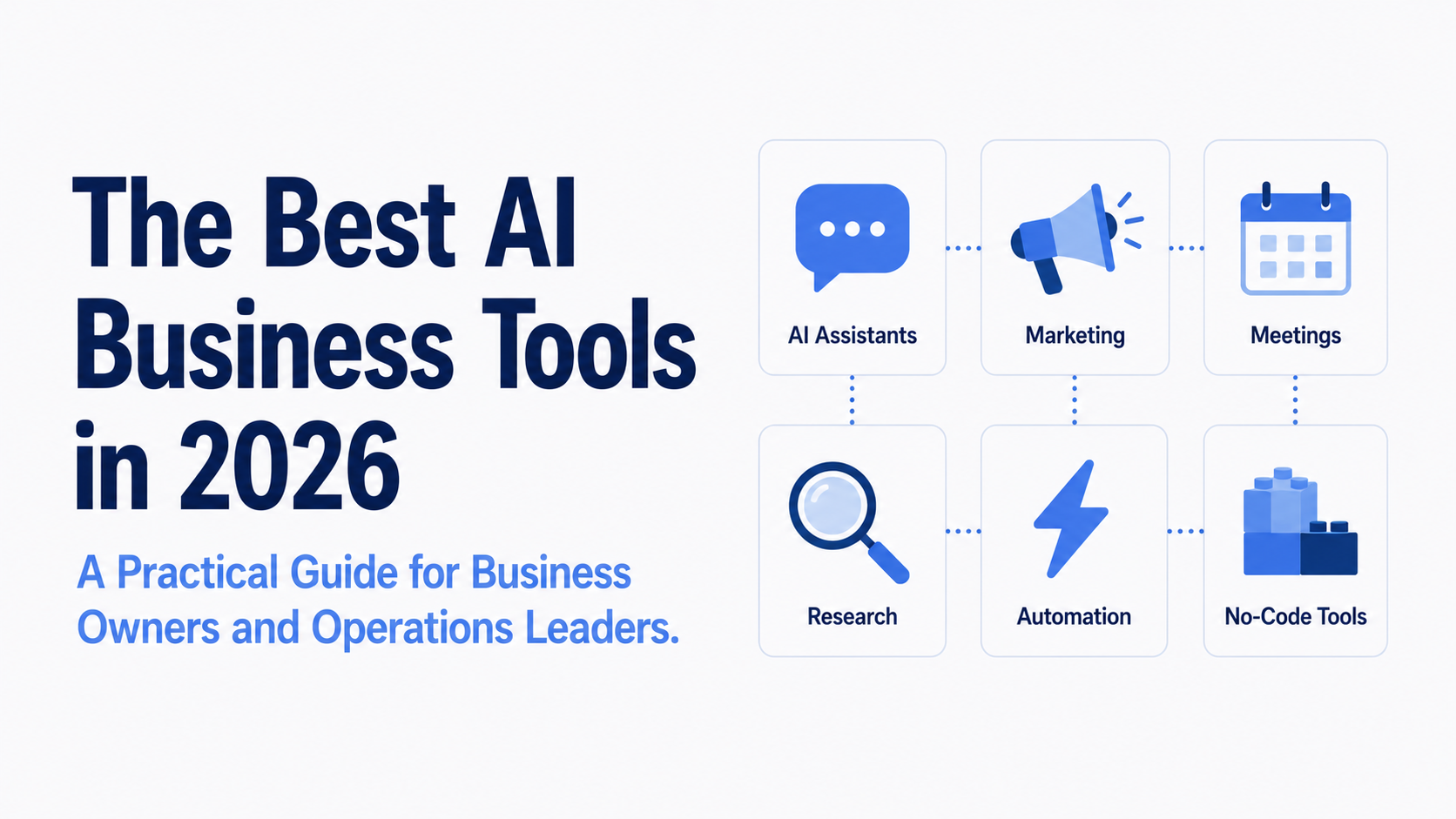
This article is part of our AI Tool Reviews and Tutorials content series. You might also find these useful: The Best AI Business Tools in 2026, ChatGPT vs Claude vs Gemini: 2026 Comparison, and Best No-Code App Builders in 2026.





.png)
.png)
.png)
.png)
.png)
.png)
.png)
.png)
.png)
.png)
.png)
.png)
.png)
.png)
.png)
.png)
.png)