400,000+ business leaders (and teams at IBM, AWS & Zapier) start their day with The AI Report. 5 minutes. Plain English. No hype.
Calculating AI ROI: A CFO's Framework
How to calculate AI ROI for enterprise programs. A CFO's framework covering implementation costs, efficiency gains, and how to measure AI impact.
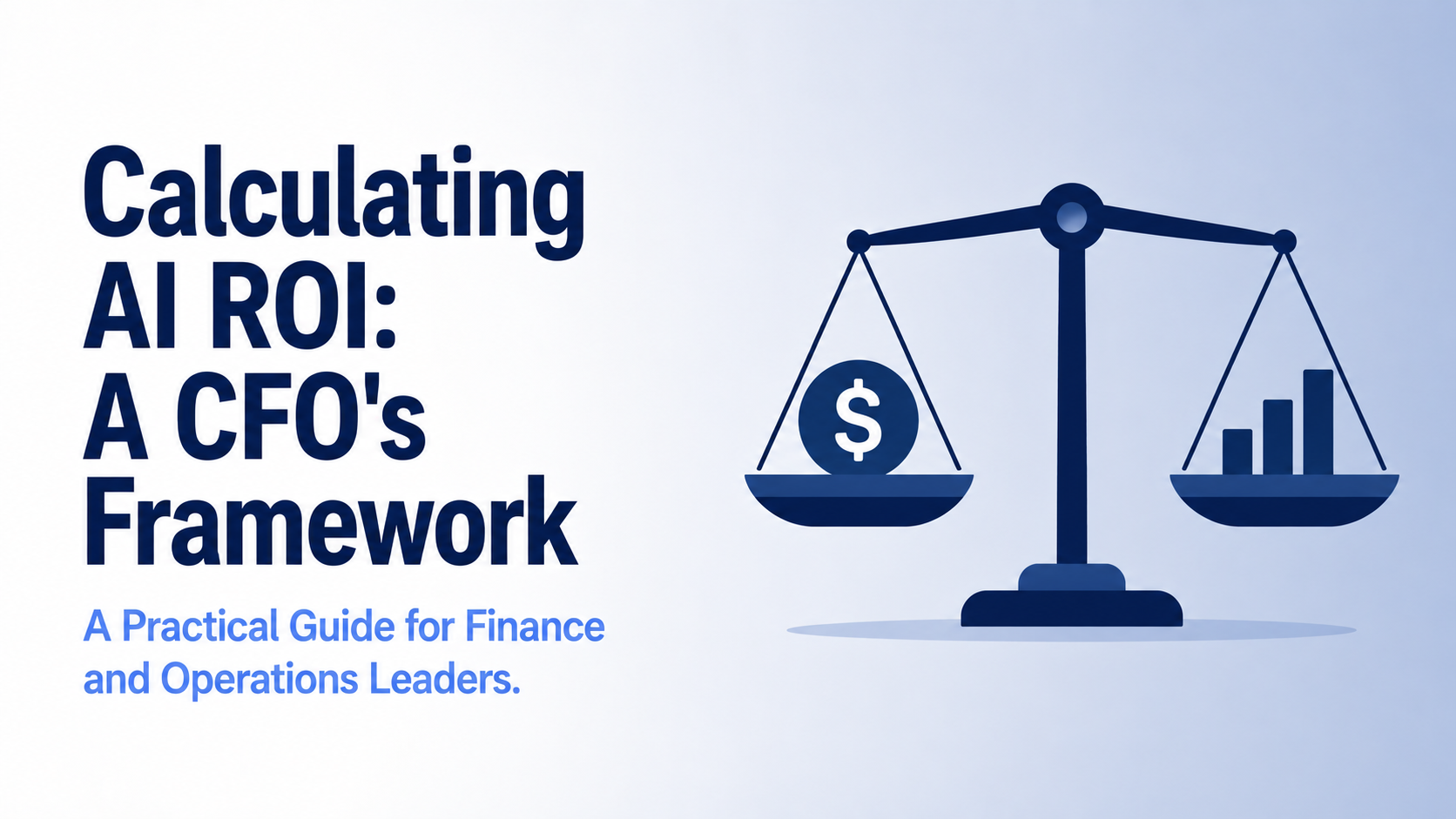

Boards no longer ask whether to invest in AI. They ask what the last round of investment actually delivered. For most enterprises, that question is still hard to answer. According to PwC's 2026 CEO Survey, 56% of CEOs report that AI has produced neither increased revenue nor decreased costs in the past twelve months. Only 12% report strong returns.
The gap is not primarily a technology problem. It is a measurement problem. Most organizations track what they spend on AI. Far fewer have a rigorous way of connecting that spending to measurable business outcomes. This guide offers a framework for doing that.
Why AI ROI Is Harder to Measure Than Other Technology Investments
Traditional IT investments have a relatively straightforward ROI calculation. You replace an old system with a new one, document what you were spending before, and measure whether costs go down or output goes up. AI investments are more complex for several reasons.
The benefits compound and shift over time. An AI tool that saves five hours per week in month one may save twelve hours in month six as the team learns to use it better and expands its application. That makes early measurements misleading.
The costs are more distributed than they appear. Most AI budget discussions focus on software subscriptions, but that number often represents a fraction of the real investment. The full cost picture includes data preparation and cleaning, system integration, employee training and change management, and the ongoing compute costs of actually running the tools. Missing any of these categories produces an ROI calculation that will not survive scrutiny.
And causation is difficult to isolate. When productivity goes up after an AI implementation, some of that gain comes from the AI, some from the process improvement that often accompanies implementation, and some from teams simply paying more attention to how they work. A credible ROI analysis has to account for this.
Building the Cost Baseline
A complete view of AI implementation costs covers three categories.
Upfront investment includes the direct cost of acquiring or building the solution, any custom model development or fine-tuning, data preparation (which is often the largest single cost in AI projects), and the integration work required to connect the AI to existing systems. It also includes the time your internal teams spend on implementation, which has a real cost even when it does not show up as an invoice.
Ongoing operational costs include software subscriptions, API or compute costs that scale with usage, and the staff time required to manage, monitor, and maintain the system. These are often underestimated in initial planning and are where AI programs most commonly exceed budget.
Training and change management is a category many organizations skip entirely in their cost accounting, which means it also gets underweighted in planning. The productivity dip that typically occurs while a team transitions to new ways of working is real and measurable. A CFO who ignores it will underestimate costs and overestimate early returns.
Measuring the Benefits
The benefit side of AI ROI falls into three categories, each of which requires a different measurement approach.
Time savings are the most commonly cited benefit and the most straightforward to quantify. The methodology is: measure the time currently spent on a process before AI implementation, multiply hours saved by the fully loaded cost of the employee doing that work, and track how that number changes after implementation. One thing worth noting here is that the same hour saved has different financial value depending on the seniority and cost of the person whose time is freed up. A CFO-level framing of time savings should always reflect actual labor costs, not average headcount costs.
Error reduction is harder to quantify but often produces the most significant financial impact. This requires documenting the cost of errors in the target process before implementation: rework time, customer compensation, compliance penalties, or downstream damage. If a process produces errors that cost the organization a measurable dollar amount per quarter, and AI reduces the error rate, that reduction has a calculable financial value.
Output and volume gains capture what happens when a team can handle more work without adding headcount. If a team previously processed 800 cases per month and processes 1,100 after an AI implementation, the additional 300 cases have a value based on what each case generates for the business. This matters most in revenue-generating functions like sales support, customer service, and underwriting, where higher volume directly connects to revenue.
The Baseline Problem: Measure Before You Implement
The most common reason AI ROI calculations fail is the absence of a pre-implementation baseline. Organizations implement AI, productivity improves, and then no one can prove how much of that improvement came from the AI because there is no documented starting point to compare against.
The right approach is to carefully track the target process before implementation begins. This means documenting task completion times, error rates, volume handled, and the cost of the relevant labor in enough detail that you can run a clean before-and-after comparison. Three months of baseline data is typically sufficient for most use cases.
In a recent episode of The AI Report podcast, Jason Li, CTO of AI time-tracking platform Laurel, described this problem from the vendor side. His observation was that many AI tool providers struggle to demonstrate ROI to their customers because measurement was never set up before implementation. What you can show, he noted, is that a customer was hoping to save time in a particular area. What is much harder to show, without pre-implementation measurement, is whether they actually did. EY's tax practice, one of Laurel's customers, uses AI-powered time-tracking to monitor where lawyer time is going before and after AI implementation to maintain a clear picture of efficiency gains.
Watch the full conversation with Jason Li on The AI Report podcast.
A Practical ROI Formula
Once you have the cost baseline and a measurement framework for benefits in place, the calculation itself is straightforward.
ROI = (Total Benefits over 12 months - Total Costs over 12 months) / Total Costs over 12 months × 100
The variables that matter most in that formula are the ones most organizations undercount on the cost side (training, integration, compute) and overcount on the benefit side (by attributing all productivity gains to AI rather than isolating the specific contribution).
A few norms worth knowing: most AI implementations take six to twelve months before they reach their full operating efficiency. Early ROI calculations will therefore understate long-term returns if you are measuring at the three-month mark. A quarterly review cycle, using consistent methodology each time, produces the most accurate picture over time.
What a Credible AI ROI Report Looks Like
The organizations reporting strong AI returns to their boards tend to share a few practices.
They define success before implementation, not after. They know specifically which process they are targeting, what they are measuring, and what the acceptable threshold for success is.
They separate early-stage pilots from scaled deployments in their accounting. A pilot's ROI should be evaluated on whether it validates the approach, not on whether it delivers enterprise-level returns.
They treat the measurement itself as an ongoing function, not a one-time event. The same discipline that drives good financial reporting drives good AI ROI reporting: regular data, consistent methodology, and honest accounting of what is working and what is not.
The AI Report's Leaders Launch program includes downloadable AI implementation resources and guides built for business leaders, including frameworks for measuring and communicating AI value internally.
This article is part of our C-Suite AI Strategy content series, you may also find these useful:
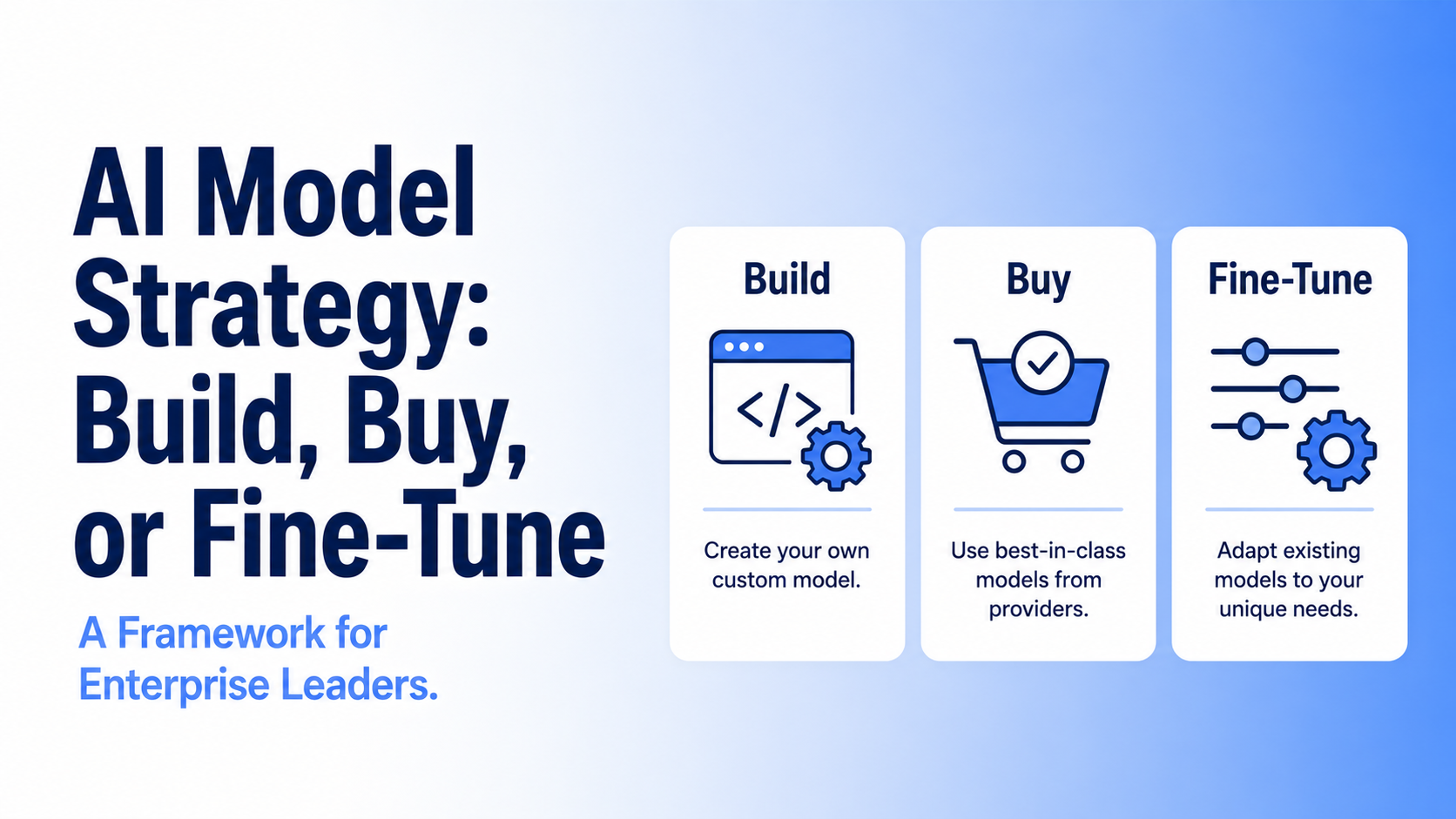
AI Model Strategy: Build, Buy or Fine-tune and AI Agents Are Transforming the SaaS Model




.png)
.png)
.png)
.png)
.png)
.png)
.png)
.png)
.png)
.png)
.png)
.png)
.png)
.png)
.png)
.png)
.png)