400,000+ business leaders (and teams at IBM, AWS & Zapier) start their day with The AI Report. 5 minutes. Plain English. No hype.
AI Agents Are Transforming the SaaS Model
How AI agents are transforming the SaaS model. Insights from Monday.com Co-Founder Roy Mann on what SaaS companies must change and why.
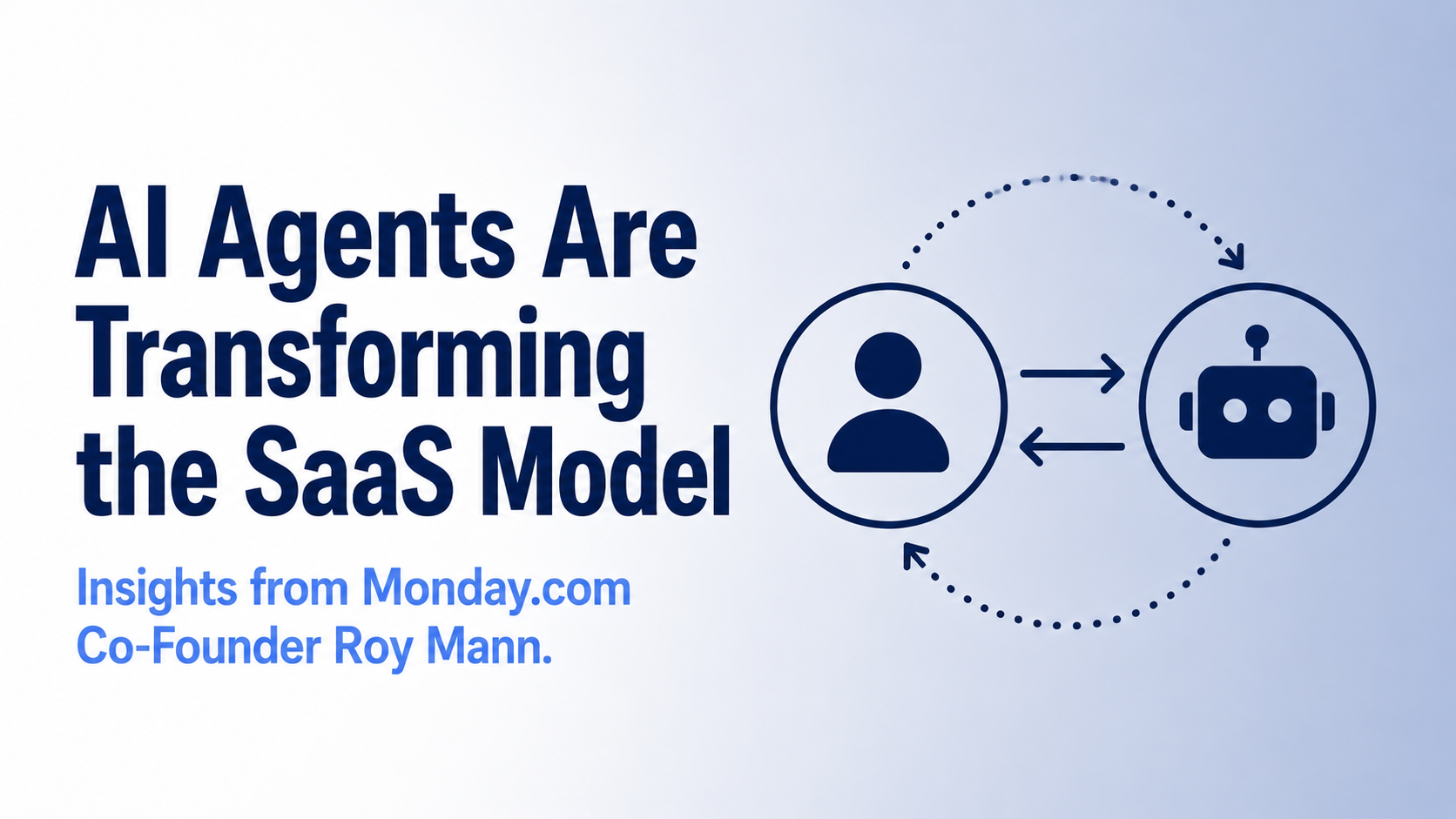

The most consequential shift happening in enterprise software right now is not a new feature. It is a change in what software is fundamentally for. For the past fifteen years, SaaS companies have been building tools to help people manage work. The next phase is about doing the work. That distinction sounds subtle, however, the implications for every software company in the market are anything but.
Roy Mann, Co-Founder of Monday.com, explored this shift in a conversation on The AI Report podcast. Monday.com serves more than 225,000 customers globally, with some of its largest accounts running over 60,000 seats. Mann has spent the past two years rebuilding its product strategy around this shift. What he described is one of the clearest frameworks available for how traditional SaaS companies need to think about their transformation.
Three Waves, Not One
Most conversations about AI in enterprise software treat it as a single event: the moment ChatGPT arrived and everything changed. Mann describes it differently. He sees three distinct waves, and he argues that most companies are still building for the second one while the third is already here.
The first wave was adding AI features to existing platforms: smarter automations, AI-assisted writing, faster workflows. Useful, but additive. The second wave brought vibe coding and automation agents, tools that could build things on behalf of users and complete multi-step tasks without constant direction. Genuinely powerful, but still operating within the same paradigm: the software helps you work faster.
The third wave is different in kind, not just degree. Mann describes it as the arrival of what he calls open-claw style agents: AI systems that can reflect on what they have done, self-improve, take ownership of ongoing tasks, and run continuously without a human prompting each step. When you have that capability, the job of the software platform changes completely. It is no longer about giving people tools to manage their work. It is about the software actually performing the work.
Monday.com changed its company vision to reflect this. The old vision was around workforce management. The new one is about being the platform where AI agents do the work that humans previously did themselves.
What the Architecture Actually Has to Change
The vision change is only the beginning. It cascades into decisions about how the product is built, how it is priced, and who the customer actually is.
Pricing models have to evolve. Traditional SaaS monetizes seats: each human user pays a license fee. When AI agents are doing significant portions of the work, a per-seat model starts to break down because agents do not consume software the way humans do. Mann acknowledged that Monday.com is introducing consumption-based pricing alongside its seat model to capture the value of work being done, not just access being granted. He also made a more counterintuitive point: GitHub's seat counts have actually gone up since AI arrived because agents need accounts too. The seat model is not dying, but it needs to coexist with something that measures output, not just access.
Agents have to be treated as customers. This is perhaps the most practically novel thing Mann described. Monday.com recently opened sign-up for agents, designing a flow specifically for non-human users. They built what they call HATCHA (Hyperfast Agent Task Challenge for Access), an agent-native reverse CAPTCHA that verifies a user is an AI rather than filtering one out. The reasoning is direct: if an agent decides to set up a project management workspace on behalf of a user, the software company needs to have already thought about how agents onboard, what they need to operate, and what a good experience looks like for a non-human user. Marketing to agents is an emerging discipline. The companies that figure it out early will have a meaningful advantage.
The platform has to become enterprise-grade out of the box. Mann made the point that the open-claw agent framework he referenced has received over 50,000 pull requests since its launch and is among the most starred open source projects in history. That does not mean it is easy for an enterprise to adopt. The gap between a cutting-edge open source tool and something a regulated company with 10,000 employees can safely deploy is enormous. He sees this as a core function of platform companies like Monday.com: taking the best available capabilities and packaging them in a way that is secure, governed, and accessible to organizations that cannot run their own AI infrastructure.
Watch the full conversation with Roy Mann on The AI Report podcast.
The People Side of the Architecture Shift
The hardest part of this transition is not the technology. It is getting people to change how they think about their own role.
Mann shared an example from inside Monday.com. A developer on his team was initially unsettled when Roy started delegating UI fixes to an AI agent that would read screenshots, make changes, and deploy them by the time the developer had finished reading the original message. Within a week, that same developer had shifted his thinking entirely. He described the change himself: he went from competing with the capability to operating it. Instead of asking where he fit alongside the AI, he started asking how to get the most out of it.
Mann described adaptability as the single most important quality for people in the current environment: the ability to leave behind a fixed idea of what your role is and find where you can add value in a workflow that now includes AI agents as participants.
He drew a parallel to what happened to professional photography when camera phones became ubiquitous. The profession did not disappear. It changed, and so did the skills that mattered within it. The same dynamic is now running across knowledge work, only faster and less predictably.
What This Means for Software Leaders
The framing Mann offered is useful for any executive running a SaaS business or evaluating software investment decisions.
The question is no longer whether your platform has AI features. Every platform has AI features. The question is whether your platform is architected to let AI agents perform meaningful work autonomously, and whether your pricing, onboarding, and product design account for agents as users alongside humans.
Mann used the Adobe transition as the reference point most people in software will recognize. Adobe moved from selling perpetual software licenses to subscription SaaS. It was disruptive, uncomfortable, and took time. From the outside, it looked like a risk. From the inside, Mann says, it was the only logical step because there was no sustainable alternative. He sees the current shift the same way.
The companies treating this as an add-on to their existing model are making the same mistake as companies that treated SaaS as just a different way to sell installed software. The architecture, the pricing, and the customer definition all need to change together.
The AI Executives Pass gives business leaders access to premium AI tool discounts, done-for-you AI content, and executive-level training to help navigate shifts like this one.
This article is part of our C-Suite AI Strategy content series, you may also find these useful:
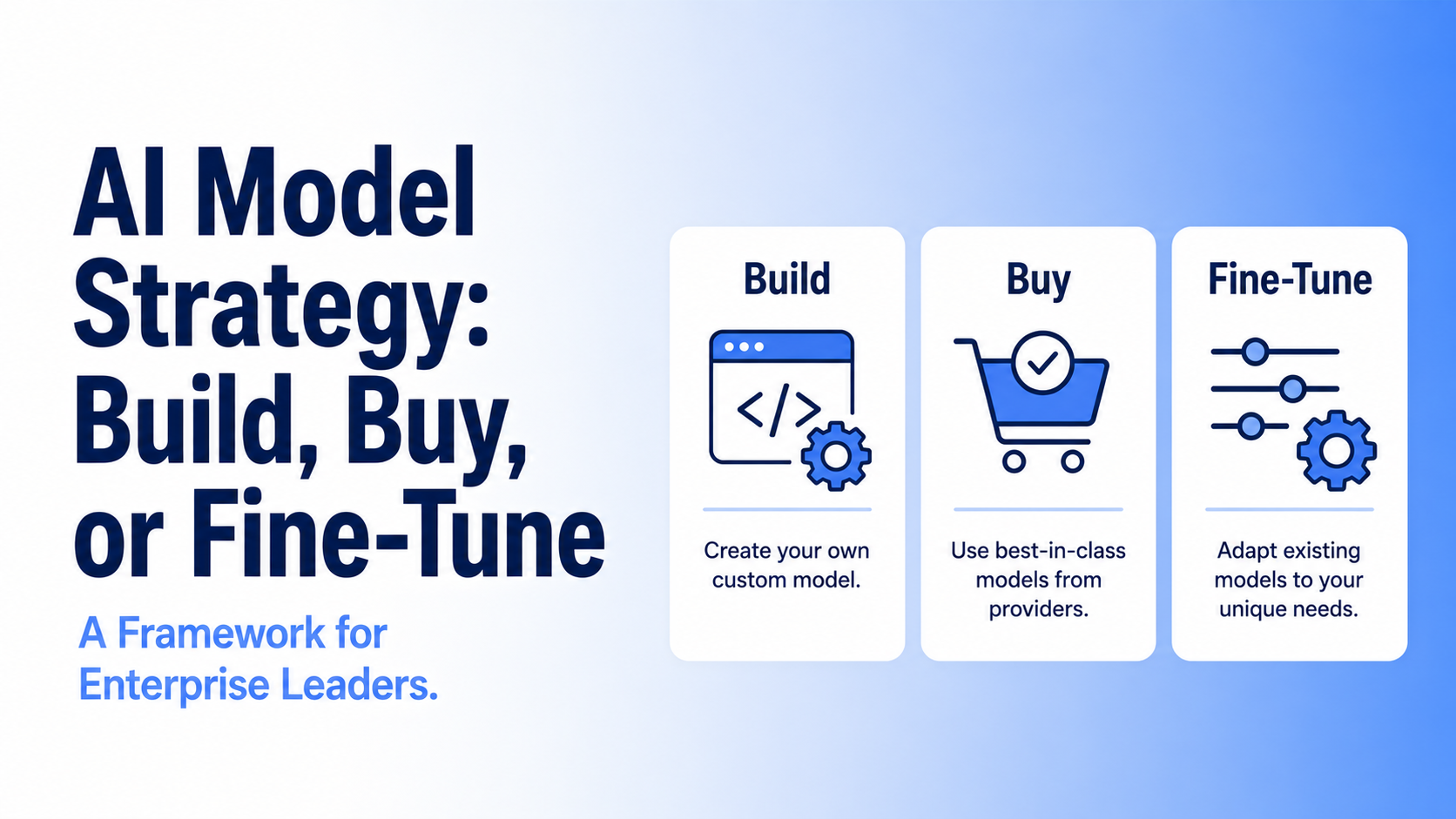
Calculating AI ROI: A CFO’s Framework and AI Model Strategy: Build, Buy or Fine-tune



.png)
.png)
.png)
.png)
.png)
.png)
.png)
.png)
.png)
.png)
.png)
.png)
.png)
.png)
.png)
.png)
.png)