400,000+ business leaders (and teams at IBM, AWS & Zapier) start their day with The AI Report. 5 minutes. Plain English. No hype.
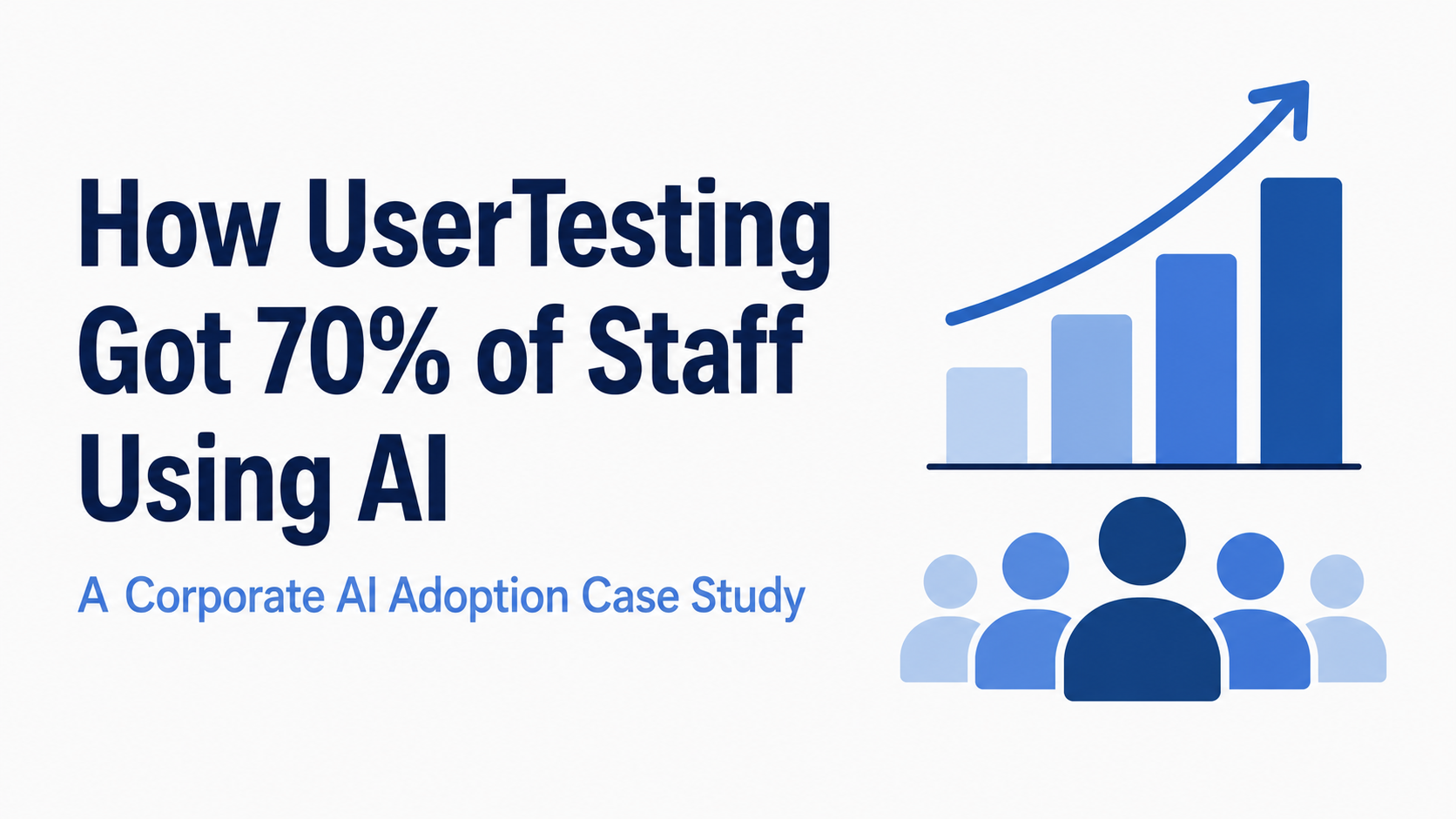
How UserTesting Got 70% of Staff Using AI
A case study on the tactics, incentives, and culture shifts behind one of the most successful corporate AI adoption programs.

Most organizations have access to AI tools. Getting people to actually use them consistently is a different problem entirely. That gap between access and adoption is where most corporate AI programs quietly stall.
UserTesting, the customer experience platform that works with 75 of the Fortune 100, has largely closed that gap. In a recent episode of The AI Report podcast, Michael Domanic, VP of AI at UserTesting, described how his team took the company from a standing start to over 70% weekly active AI users across an 800-person organization, and then kept going. Today, that number is virtually 100%.
This is a breakdown of exactly how they did it.
The Starting Point: Commitment Before Tools
In 2023, when most organizations were still weighing whether generative AI warranted serious investment, UserTesting's leadership made a clear decision: go all in, company-wide, from the start. Not a pilot program with a handful of early adopters but a full organizational commitment to giving every employee access to AI tools in a safe, secure environment.
That framing mattered. It was a company-wide signal that experimentation was expected, not optional. By the time AI tools were formally rolled out, people were already curious. The platform they chose was ChatGPT Enterprise, giving employees a private environment where data stayed within the company's infrastructure and eliminating the risk of employees using personal accounts for work.
Building the Center of Excellence
Rather than relying on a single AI team to drive adoption company-wide, UserTesting built a center of excellence: roughly two dozen people drawn from across every function in the business, from sales and marketing to product, finance, and customer success.
Domanic identifies two qualities above all others when choosing who to involve: fluency with AI tools, meaning people already experimenting on their own, and creativity. The second one is less obvious than it sounds. His central belief, stated plainly in the podcast, is that AI transformation is a creativity challenge, not a technology one. Unlike previous enterprise software, AI has no fixed list of use cases. The people best positioned to drive adoption are those who can think imaginatively about what these tools make possible, not necessarily those with the strongest technical backgrounds.
The Tactic That Actually Moved the Needle: Hackathons
The turning point in adoption came from a deceptively simple intervention: hackathons. UserTesting brought together small groups of employees from the same function for two to three hours with one goal: build a custom AI tool that addresses something in your own workflow.
The effect was immediate. Employees who arrived skeptical, unsure what to do with a general AI tool, left with a working solution to a problem they cared about. Once people experienced what it felt like to build something for their own workflow, adoption spread. Those custom solutions then traveled peer to peer. A business development rep who built a tool to improve their prospecting process showed it to their colleagues. Within weeks, others wanted access. Adoption stopped being a top-down push.
If your organization is working through how to structure this kind of program for your own team, Upscaile runs hands-on AI training built specifically around real workflows rather than generic theory. Talk to the Upscaile team.
A Concrete Example: The OKR Builder
One of the most instructive examples Domanic shares is a custom AI assistant the team built to help employees write their OKRs, the goal-setting framework used across the company each quarter.
On the surface it sounds like a minor administrative convenience. In practice it was something more significant. The tool was trained on John Doerr's OKR methodology and on the company's top-level organizational goals, then made available to every level of the business. When an individual employee sat down to write their goals, the tool already understood what the company was trying to achieve and could help align their objectives to it.
The result was not just faster goal-writing. It produced better, more coherent goals across a company of 800 people without requiring anyone to become an expert in the OKR process. The value was visible and usable immediately. That combination, Domanic notes, is what drives genuine adoption. People do not engage with tools they cannot see the point of.
What Actually Motivated People
A common assumption about AI adoption programs is that financial incentives drive behavior. UserTesting found they were not necessary.
For employees who were already curious, providing tools and a sanctioned way to experiment with them was enough. That curiosity did not need to be manufactured.
For others, the motivation was more straightforward: understanding what happens to those who do not engage. Domanic describes being direct with employees about the stakes, telling them plainly that someone who chooses to sit on the sidelines today will find it hard to stay relevant in a business setting within 12 to 18 months. That honesty, delivered without alarm, created a different kind of urgency.
The third motivator was the simplest: making people's work easier. UserTesting consistently reinforced the message that AI was not there to change what employees were hired to do. It was there to free them from the parts of their jobs that got in the way of doing it well.
Watch the full episode with Michael Domanic on The AI Why podcast.
What Other Organizations Can Take From This
The UserTesting story is instructive, but it is worth being honest about one part of it: the timing. Starting in 2023 gave them an advantage that no company can replicate in 2026. The organizations that built adoption habits early have two years of institutional knowledge, custom tooling, and practiced teams that took real time to develop. That gap is real.
That does not mean the window is closed. It means the strategy looks different now. Companies starting their AI adoption programs in 2026 cannot afford the slow, exploratory build that UserTesting had the space to run when generative AI was still new. The urgency is higher, the tools are more capable, and the competitive cost of a slow start is larger than it was three years ago.
For organizations starting now, the most direct path forward is to compress the timeline. Skip the broad awareness campaigns and go straight to specific, measurable workflows. Identify one or two areas where AI can produce a result that is immediately visible, build something that clearly works, and let the outcome make the case for expansion. The peer-to-peer spread that drove UserTesting's adoption does not require starting early. It requires starting with something worth spreading.
The underlying principles still hold: genuine executive commitment rather than a pilot mindset, a cross-functional team to own adoption, and honest communication with employees about why this matters. The difference in 2026 is that the case for moving quickly no longer needs to be made. Most employees already sense it. The job now is to give them a structured, supported way to act on it.
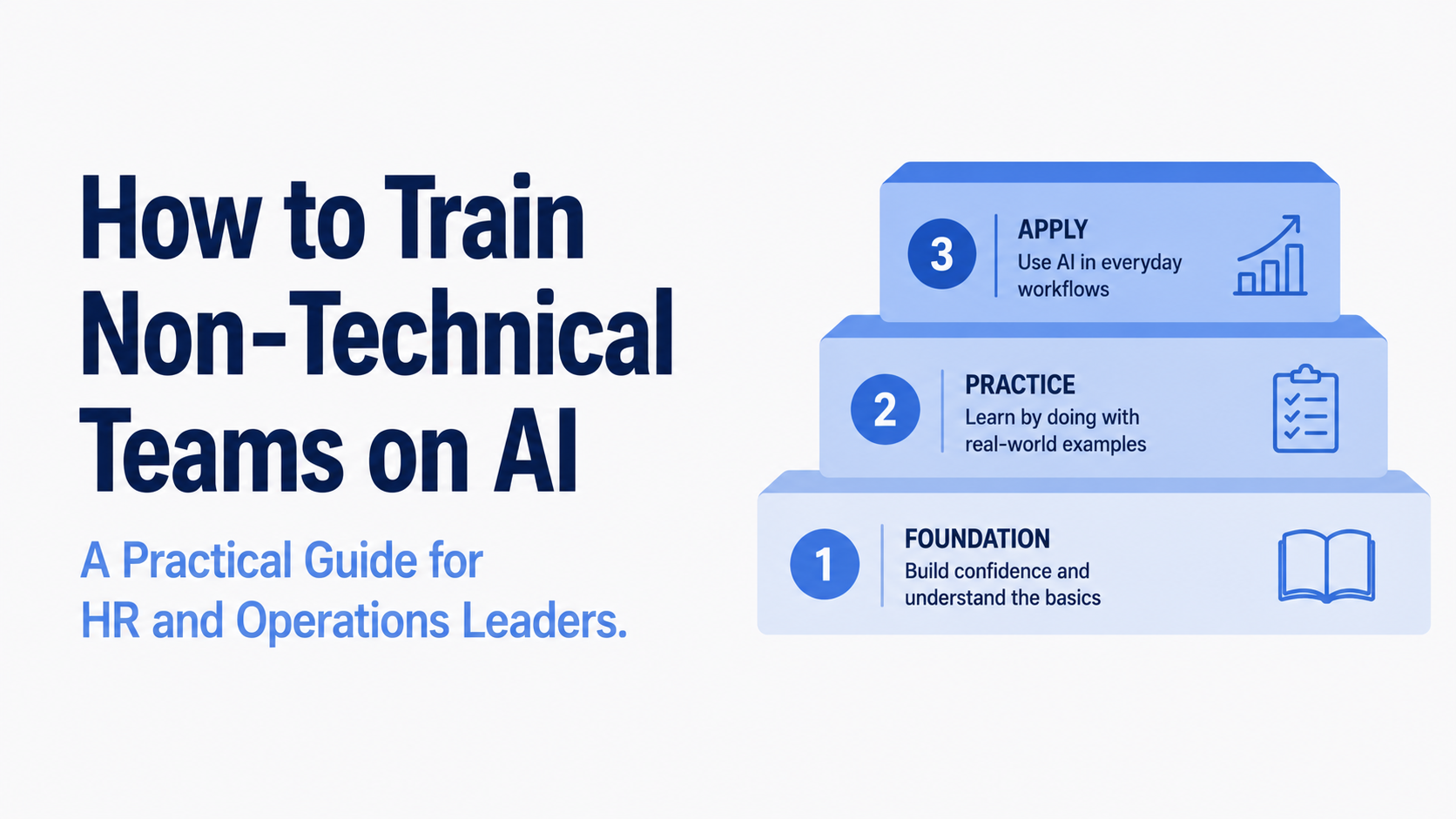
This article is part of our Corporate Upskilling content series. You may also find these useful: Scaling AI Literacy: Lessons From Coursera and How to Train Non-Technical Teams on AI.
Ready to build AI adoption across your team? Talk to Upscaile about hands-on AI training.




.png)
.png)
.png)
.png)
.png)
.png)
.png)
.png)
.png)
.png)
.png)
.png)
.png)
.png)
.png)
.png)
.png)