400,000+ business leaders (and teams at IBM, AWS & Zapier) start their day with The AI Report. 5 minutes. Plain English. No hype.
Claude AI Watermark: What You Need to Know
Claude now watermarks all AI-generated text. Here is what it means, how it works, and what The AI Report's readers think about the change.
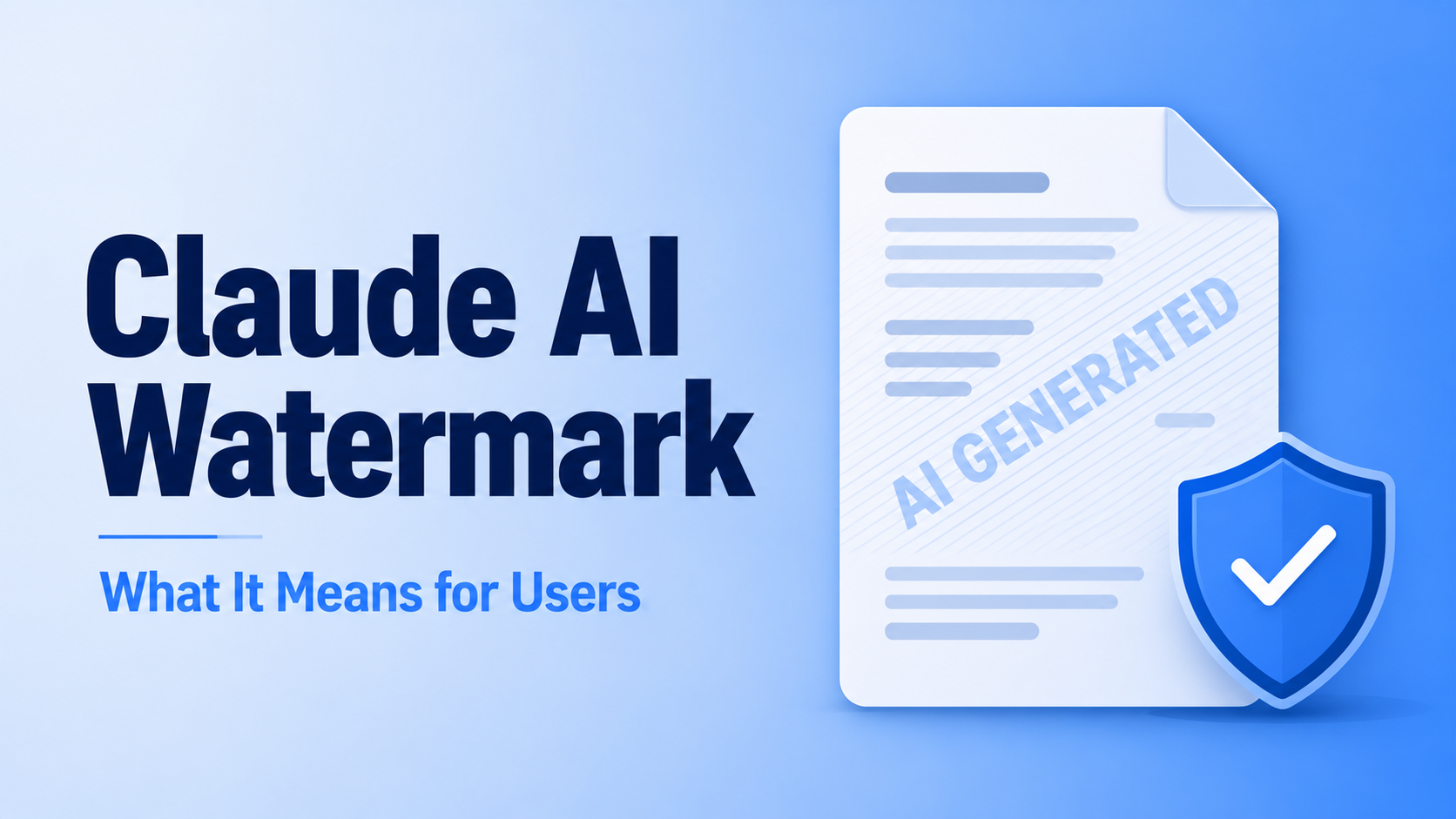

On August 11, 2026, Anthropic published a support page announcing that Claude models will now embed invisible watermarks in all AI-generated text and files. The move brings Anthropic into compliance with the EU AI Act's Transparency Code, which took effect August 2, 2026, and was signed in July by around 190 companies including Microsoft, Google, Meta, and OpenAI. Reaction from users has been genuinely split.
We put it to our newsletter audience directly, and the results reflect that tension.
What Anthropic Announced
Claude models launched on or after August 2, 2026 support watermarking at launch. Anthropic is also working to add marking support to Claude models released before that date. The markings cover output from supported models across all Claude products, including the Claude Platform API, Claude, Claude Code, Claude Cowork, and Claude Tag.
The watermark does not modify finished text after it is written. Instead, it changes the source of randomness Claude uses when making certain word choices during generation. Anthropic describes these as low-stakes choices that happen many times across a piece of text, leaving a pattern that is invisible to the reader but detectable to anyone with the corresponding key.
For files, Anthropic is taking a slightly different approach. Generated PNG, JPG, and SVG files will include digitally signed C2PA provenance metadata indicating that Claude was involved in creating or processing them, rather than a watermark embedded in the content itself.
How Persistent Is the Watermark?
Light editing probably will not remove the watermark completely. A complete rewrite where every word is replaced will. The watermark can only indicate that Claude was likely involved with the content at some point. It cannot tell the difference between text Claude wrote from scratch and text Claude simply edited.
Because the watermark is part of the text itself, it travels with the content when copied and pasted elsewhere and may persist through some editing. An Anthropic engineer confirmed that the model is not aware it is being watermarked, and that a text detection API allowing users and third parties to check content themselves is in development.
What Our Readers Think
We ran a reader poll in our newsletter asking a simple question: are you less likely to use Claude after the AI watermark announcement? With 187 responses, the split was closer than the public backlash might suggest.
56.68% said yes. 43.32% said no.
The comments help explain why. Readers on the yes side were mostly concerned about what an AI watermark means for their professional work, particularly anything client-facing or collaborative where being identified as AI-assisted could create friction or assumptions they did not invite.
Those who said no tended to frame the watermark as a reasonable and even necessary step. One reader put it this way: "I feel it is important to monitor what is AI and what is human-made. Everyone deserves to know the source, and watermarks are simply another way to maintain transparency."
The most nuanced take came from a yes voter who added context: "It depends on what I am using the Claude output for. If it is just for a simple agent bot trained on my personality, then I do not have a problem with it."
That last comment probably captures where a lot of professional users land. The concern is not the watermark itself but where and how it shows up in their specific workflows.
The Bigger Picture
Anthropic is not moving alone here. Google has been watermarking AI-generated images, and other platforms are following a similar path under both regulatory pressure and growing scrutiny over AI-generated misinformation. An Anthropic engineer described the current implementation as a first step, conceding that editing can remove it but calling it a meaningful move toward transparency.
Whether it changes how people actually use Claude in practice is still an open question. Our reader poll suggests that for a meaningful portion of users, it already has.
Stay up to date with the latest AI news and analysis. Subscribe to The AI Report.

















.png)
.png)
.png)
.png)
.png)
.png)
.png)
.png)
.png)
.png)
.png)
.png)
.png)
.png)
.png)
.png)
.png)